

Introduction to Agate
I still remember the first time I held a piece of agate in my hands. It was at a gem show in Tucson, and I was completely mesmerized by the swirling bands of color trapped inside what looked like an ordinary rock. That moment sparked a collecting obsession that’s lasted over fifteen years now, and I’ve learned that types of agate are as diverse as they are beautiful.
Agate is a variety of chalcedony, which itself is a form of microcrystalline quartz. What makes agate special is its distinctive banding patterns, formed over millions of years as silica-rich water deposits layer upon layer inside volcanic rock cavities. For collectors like myself, each piece tells a geological story that’s millions of years in the making.
Whether you’re just starting your collection or looking to expand your knowledge, understanding the different types of agate will help you appreciate these stones on a deeper level. Let me walk you through twelve varieties that I believe every serious collector should know.
1. Blue Lace Agate
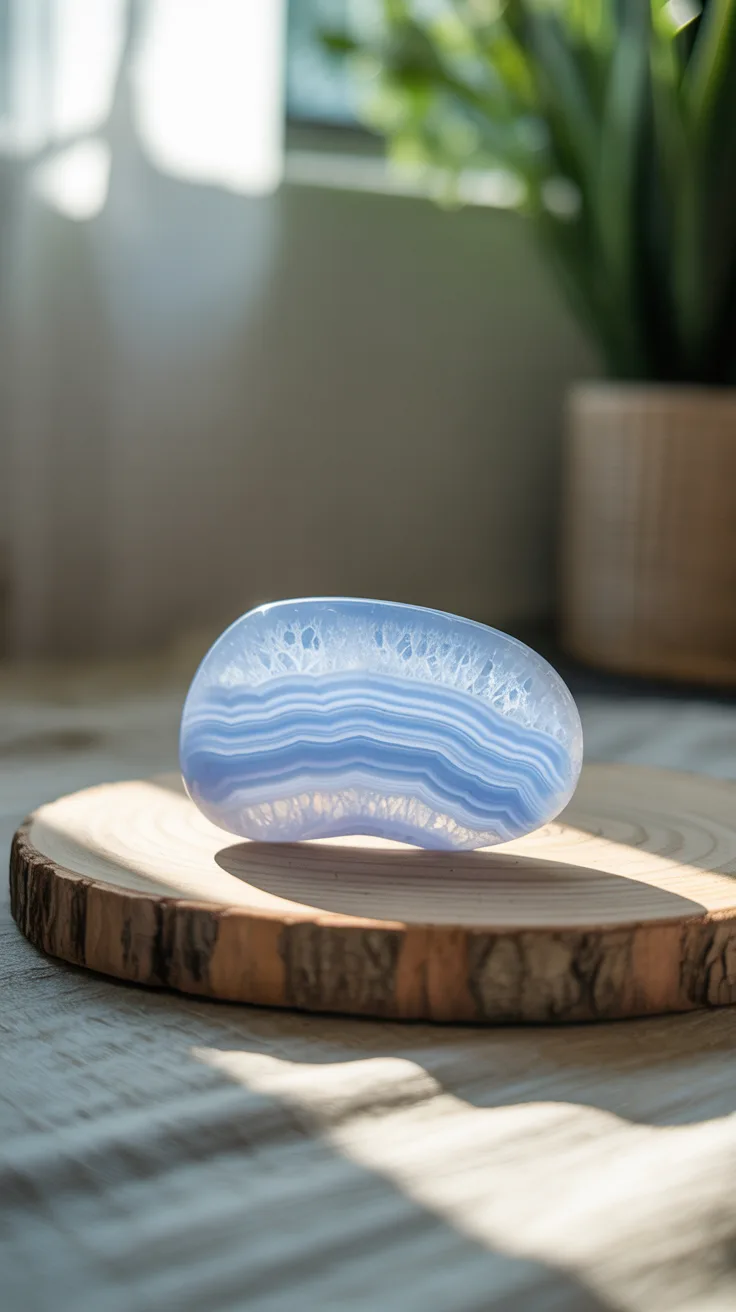
Blue Lace Agate is often the gateway stone for new collectors, and it’s easy to see why. Its soft, powder-blue bands create a calming, almost ethereal appearance that’s instantly appealing. I’ve found that many well-known specimens come from Namibia, where the coloring tends to be soft and the banding can be especially delicate.
This stone is particularly popular in jewelry making due to its soothing aesthetic. Some crystal enthusiasts associate Blue Lace Agate with tranquility and communication, although these beliefs are based on traditional metaphysical practices rather than scientific evidence.

View on AmazonAs an Amazon Associate, I earn from qualifying purchases.

View on AmazonAs an Amazon Associate, I earn from qualifying purchases.
Pro Tip: When shopping for Blue Lace Agate, hold it up to natural light. Genuine high-quality pieces will show subtle variations in their blue tones rather than a flat, uniform color that might indicate dye treatment.
2. Moss Agate
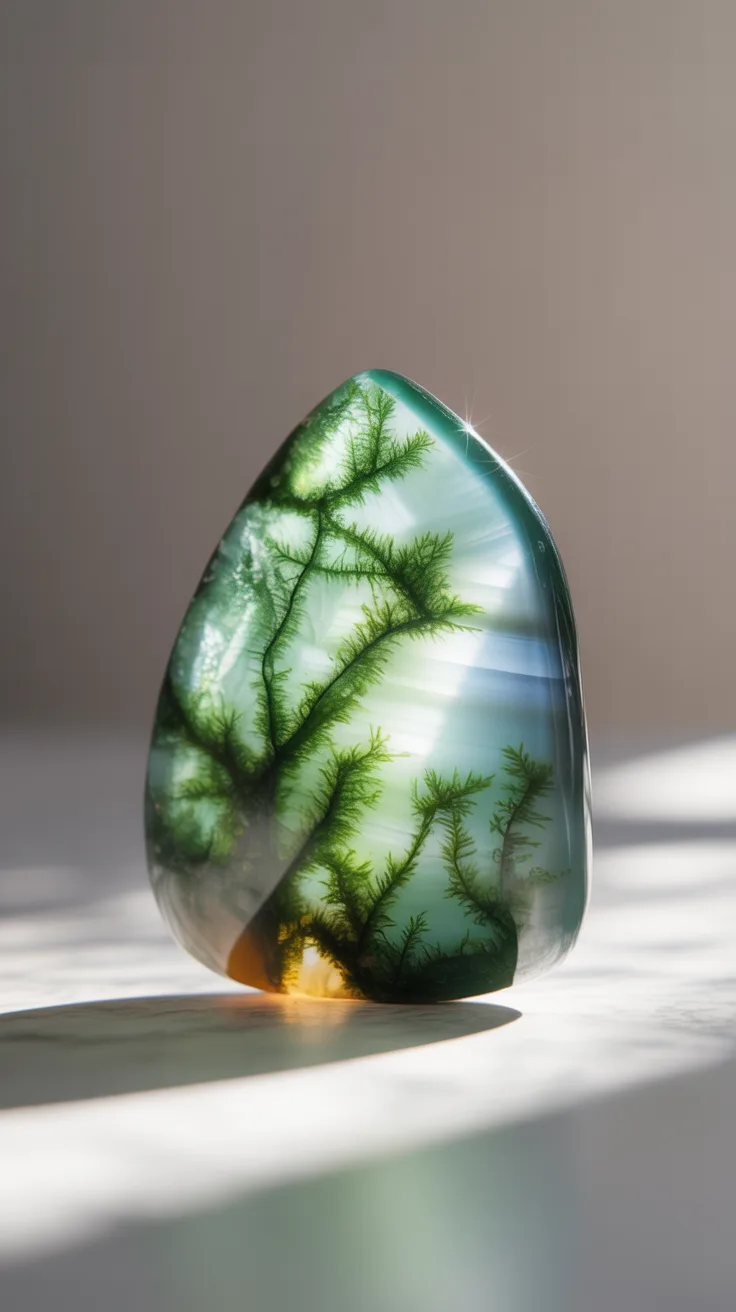
Here’s where things get interesting. Moss Agate technically breaks the rules because it doesn’t have traditional banding at all. Instead, it features green, moss-like inclusions of minerals such as manganese or iron oxides that create patterns resembling underwater plants or forest landscapes.
I made the mistake early in my collecting journey of passing on Moss Agate because it didn’t look “agate-like” enough. Don’t repeat my error—these stones are absolutely stunning when you find the right piece. The inclusions can create scenes that look like miniature forests frozen in time.

View on AmazonAs an Amazon Associate, I earn from qualifying purchases.

View on AmazonAs an Amazon Associate, I earn from qualifying purchases.
3. Fire Agate
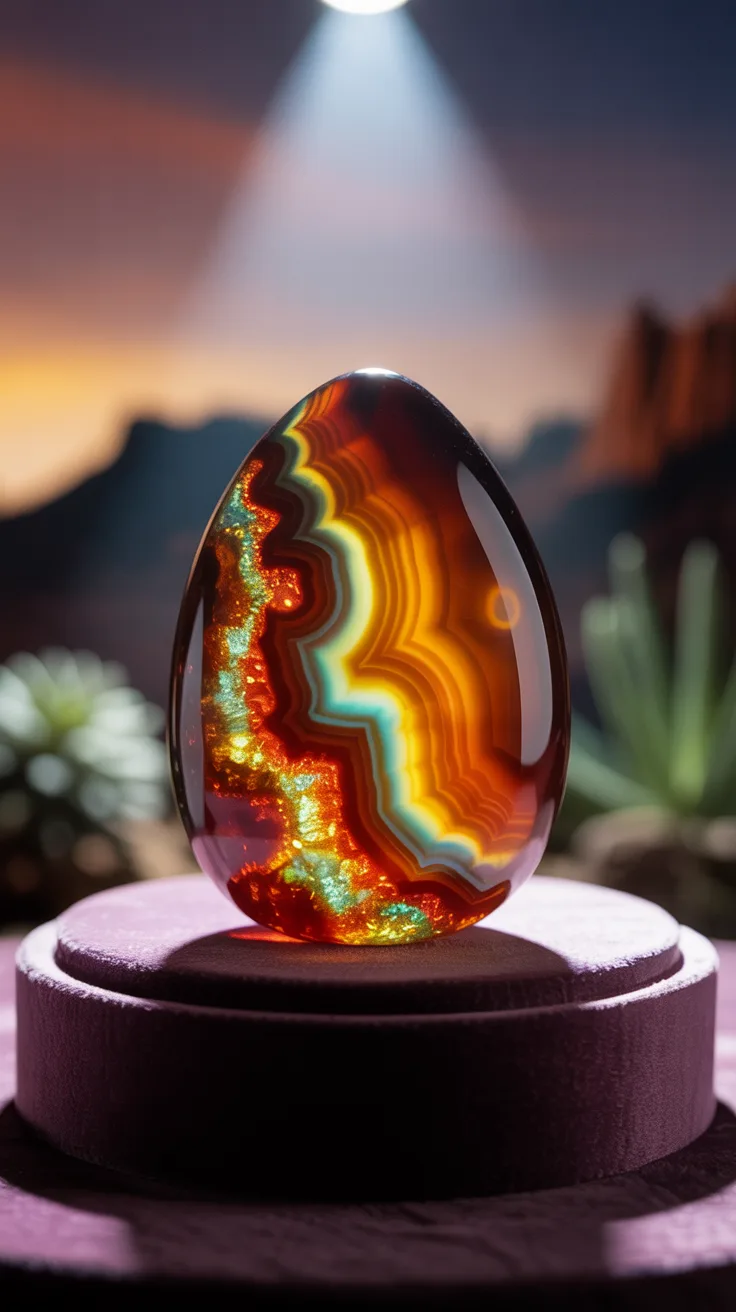
If there’s one agate that stops people in their tracks, it’s Fire Agate. This stone displays an iridescent play of color, known as schiller, that can be comparable to the colorful flashes seen in some opals. The fiery flashes of orange, red, green, and gold are caused by thin layers of iron oxide within the stone.
Most quality Fire Agate comes from Mexico and the southwestern United States. I’ll warn you now: once you see a really good Fire Agate in person, you’ll understand why collectors pay premium prices for exceptional specimens.

View on AmazonAs an Amazon Associate, I earn from qualifying purchases.

View on AmazonAs an Amazon Associate, I earn from qualifying purchases.
Pro Tip: Fire Agate needs to be viewed under direct light to appreciate its full beauty. When purchasing online, always request videos rather than just photos to see the play of color in motion.
A jeweler’s loupe for rocks and minerals makes it easier to inspect banding, inclusions, polish quality, and possible dye treatments.
4. Dendritic Agate
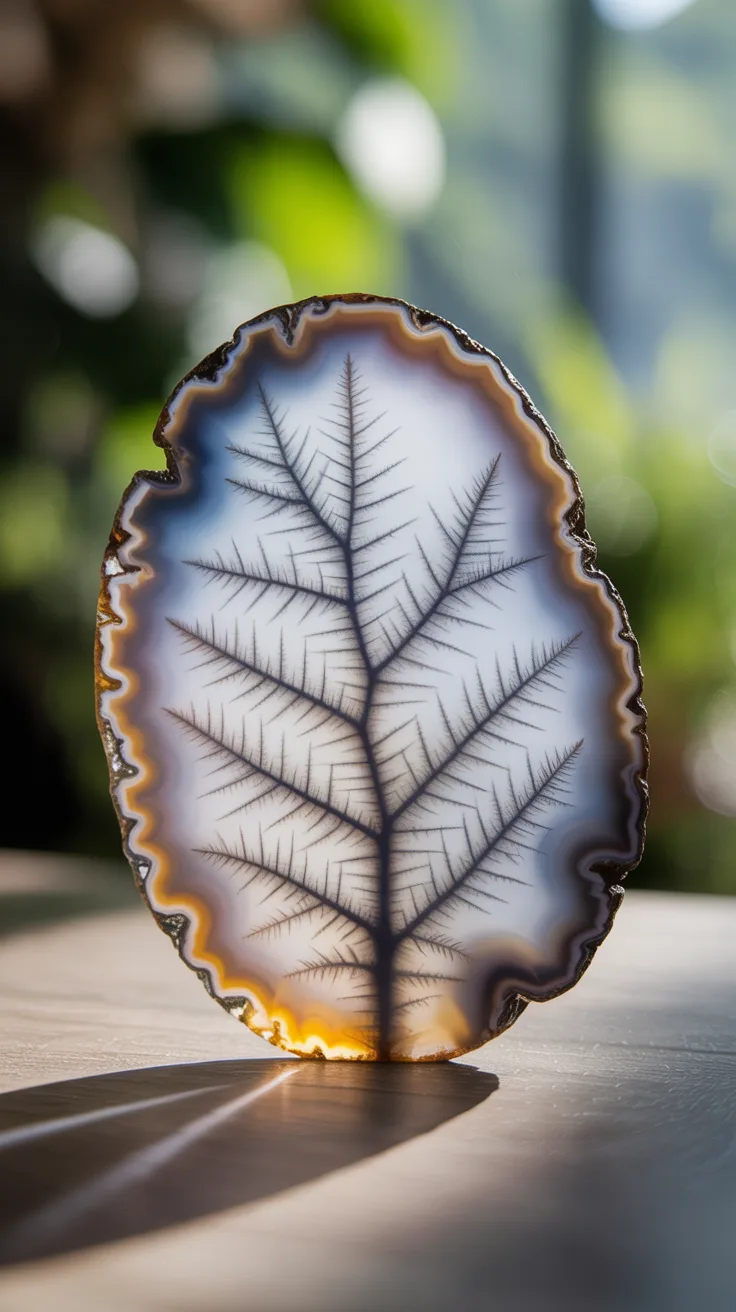
Dendritic Agate features tree-like or fern-like inclusions called dendrites, which are usually manganese or iron oxide formations. These create stunning natural artwork that looks like someone painted delicate branches inside the stone.
What I love about Dendritic Agate is that no two pieces are ever alike. Each stone is essentially a one-of-a-kind natural painting. Some collectors specifically seek out pieces where the dendrites form recognizable shapes or landscapes.
5. Crazy Lace Agate
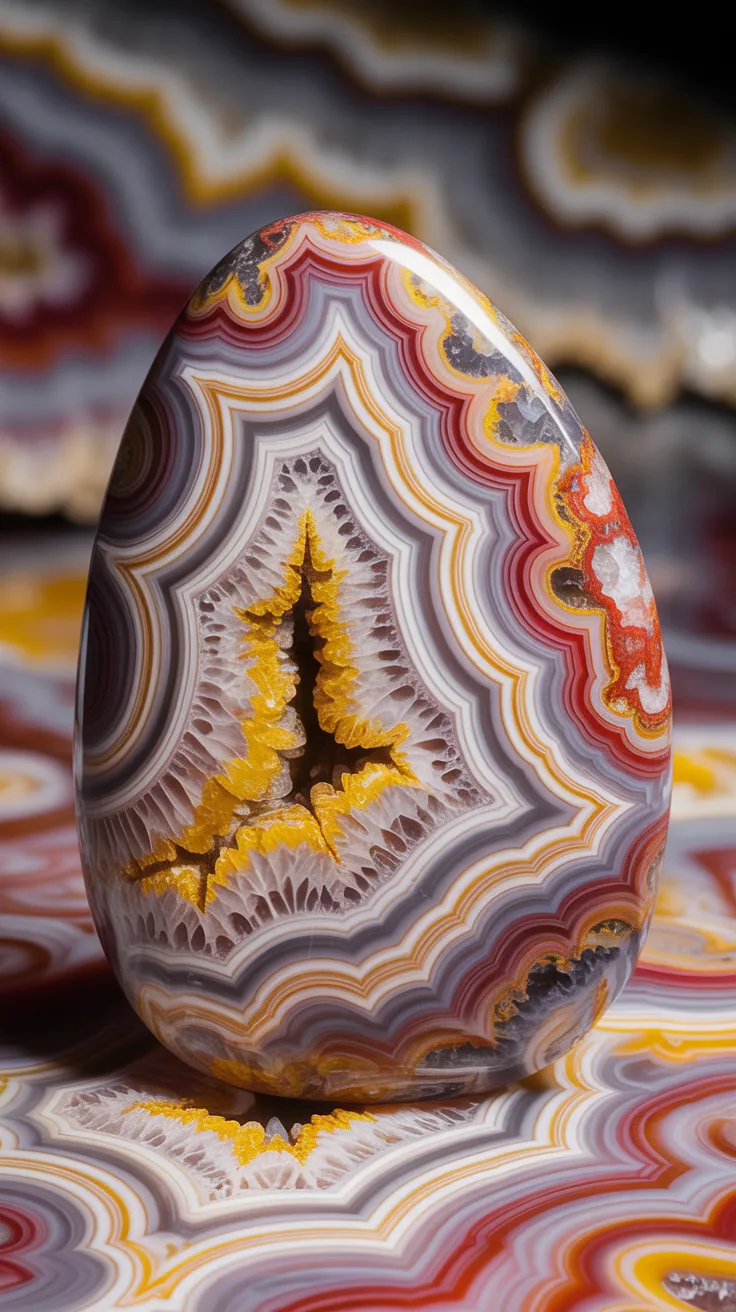
Often called the “laughter stone” or “happy lace,” Crazy Lace Agate is pure visual chaos in the best possible way. Its swirling, twisting bands of red, yellow, gray, and white create patterns that seem almost impossible in nature.
This variety is found primarily in Chihuahua, Mexico, and has been a collector favorite for decades. The complex patterns make each piece unique, and I’ve spent hours just studying the intricate layers in my favorite specimens.

View on AmazonAs an Amazon Associate, I earn from qualifying purchases.

View on AmazonAs an Amazon Associate, I earn from qualifying purchases.
6. Botswana Agate
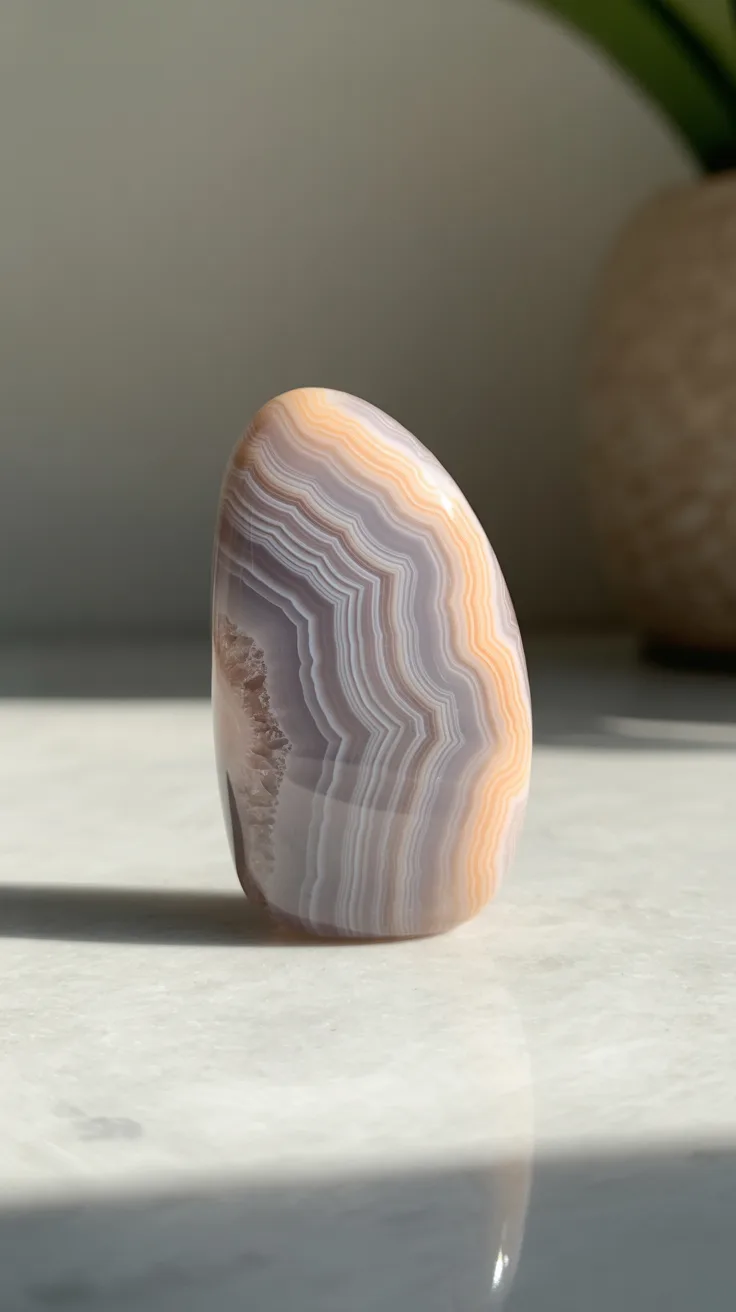
Botswana Agate is the sophisticated member of the agate family. Its fine, parallel banding in soft grays, pinks, and apricot tones gives it an elegant, understated beauty. As the name suggests, it is strongly associated with deposits in Botswana in southern Africa.
I consider this one of the most underrated types of agate for collectors. The banding is incredibly fine and precise, showing the slow, methodical process of its formation. It’s a stone that rewards close examination.
Pro Tip: Botswana Agate is sometimes dyed to enhance its colors. Natural specimens will have subtle color variations, while dyed pieces often appear too uniform or unnaturally vibrant.
7. Laguna Agate
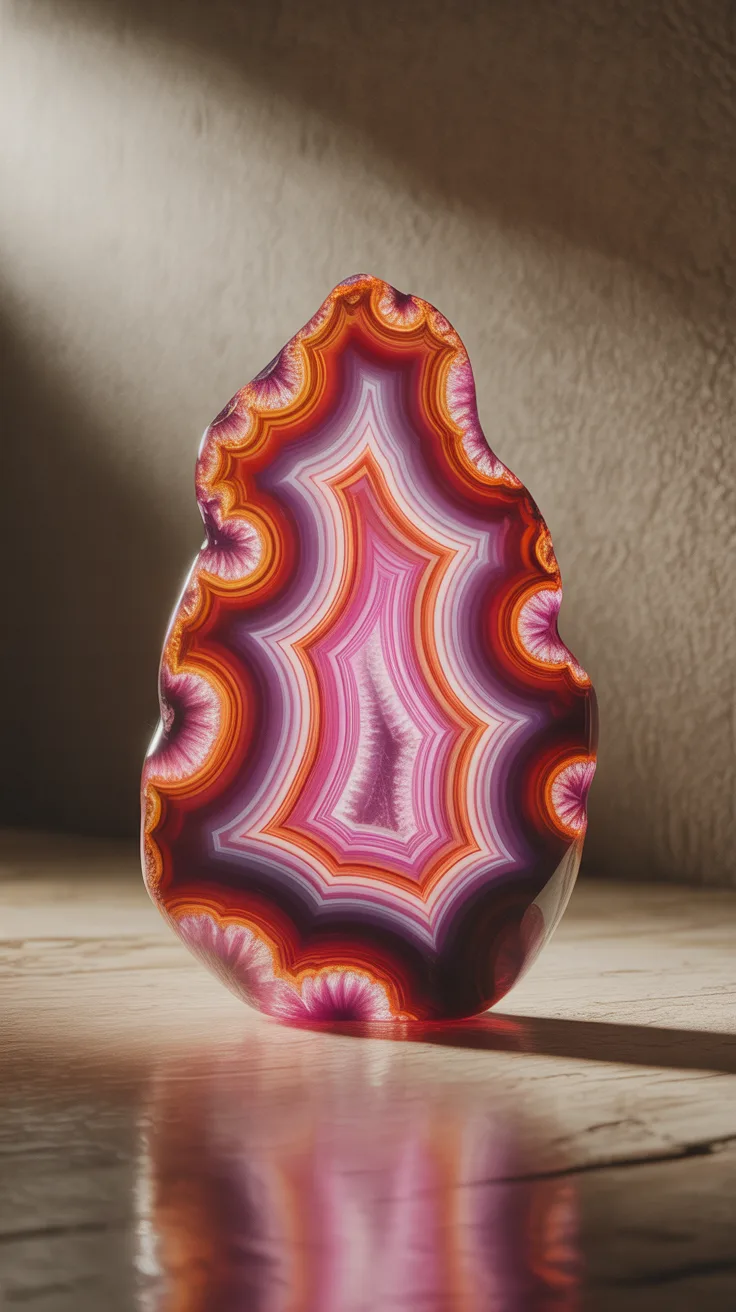
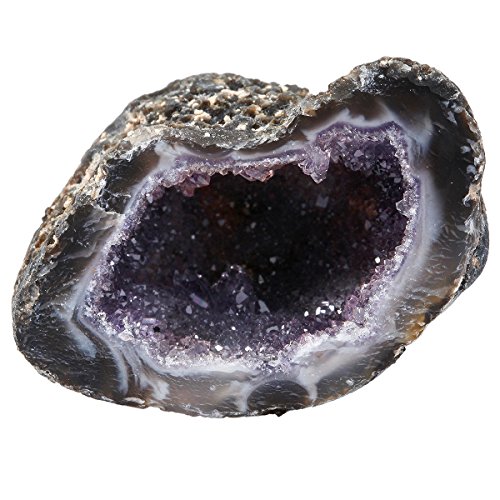
Many collectors consider Laguna Agate among the finest agate varieties due to its exceptionally tight banding, vivid colors, and outstanding clarity. Found in Chihuahua, Mexico, this agate can display striking shades of red, orange, pink, and purple.
High-quality Laguna Agate is highly sought after by collectors. Its combination of intricate banding and vibrant coloration has made it one of the most respected agates in the lapidary and mineral collecting communities.

View on AmazonAs an Amazon Associate, I earn from qualifying purchases.
View on AmazonAs an Amazon Associate, I earn from qualifying purchases.
8. Lake Superior Agate
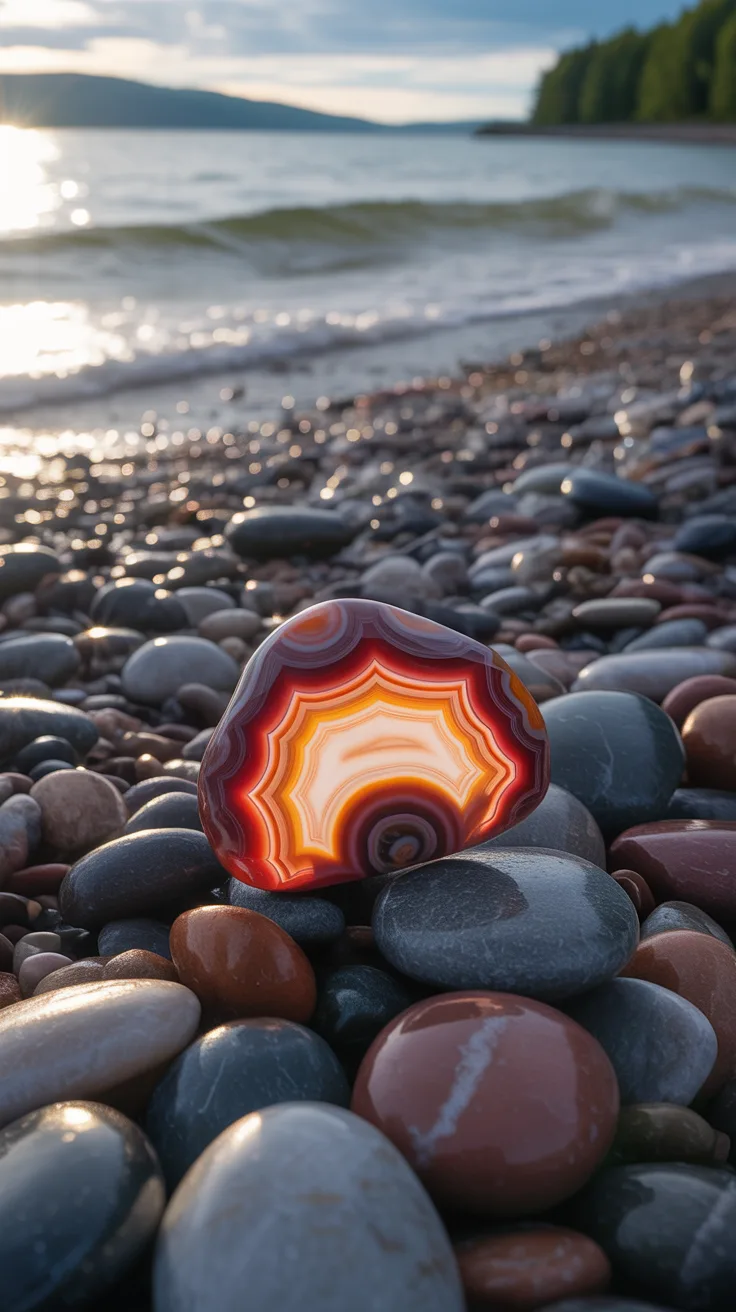
Lake Superior Agate is one of North America’s most famous agates. Found throughout the Great Lakes region, particularly in Minnesota, Wisconsin, and Michigan, it is known for its rich red, orange, and yellow banding created by iron staining.
Many collectors enjoy hunting for Lake Superior Agates along gravel roads, streams, and shorelines. Their distinctive colors and strong banding make them a favorite among both beginner and experienced rockhounds.
A good rockhounding field guide can help you identify local agates and understand where different varieties are commonly found.
9. Turritella Agate
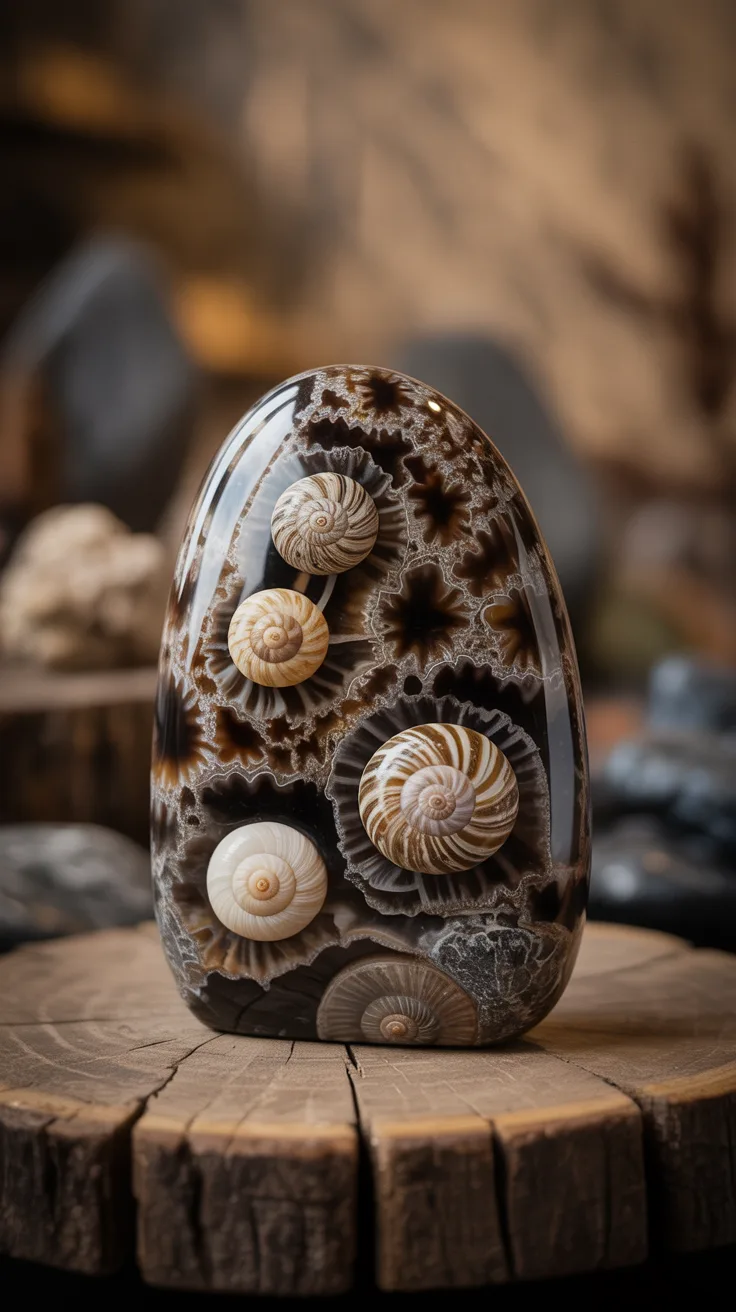
Turritella Agate is a fascinating oddity in the agate world. It contains fossilized freshwater snails, actually Elimia tenera rather than true Turritella, embedded in a dark brown or black chalcedony matrix. The old trade name stuck, even though the fossil identification has been corrected.
Found primarily in Wyoming, this material appeals to both mineral collectors and fossil enthusiasts. Because it does not always show classic agate-style banding, some collectors describe it more precisely as fossiliferous chalcedony rather than a textbook agate.
10. Banded Agate
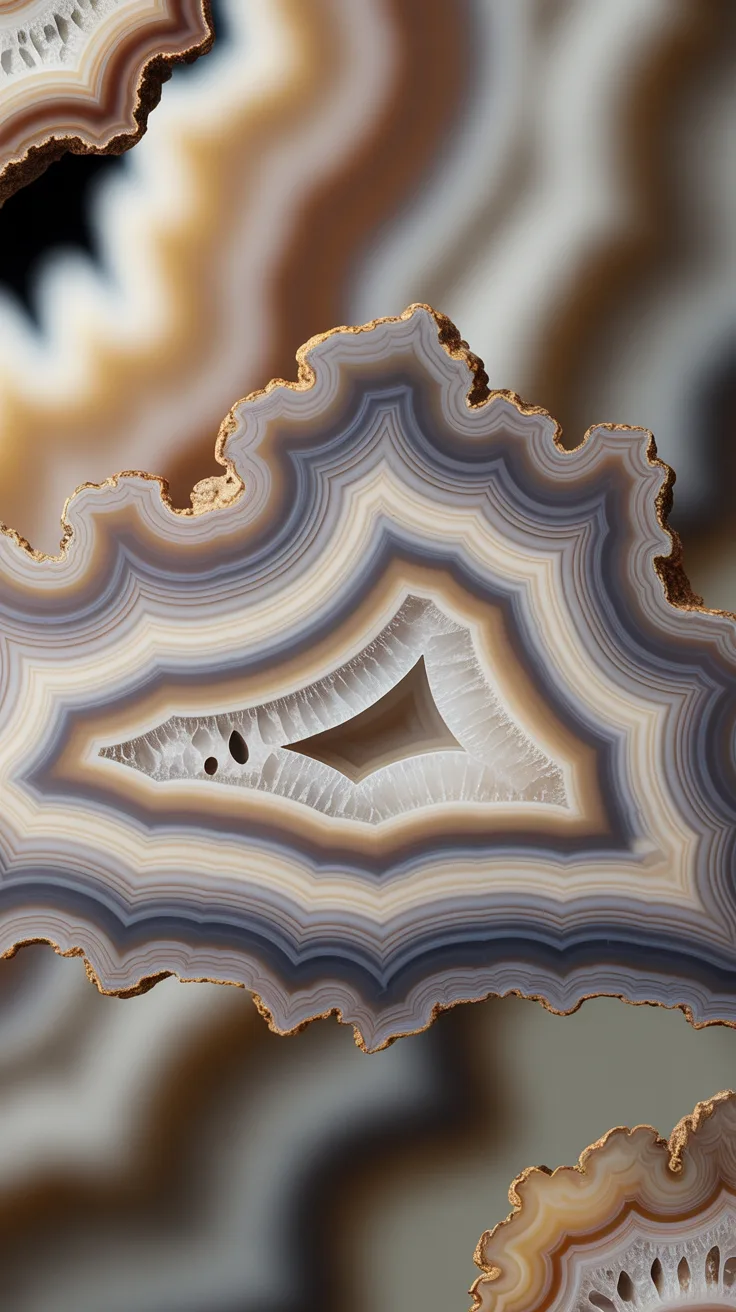
Banded Agate is the classic, quintessential agate that most people picture when they hear the word. Its distinct parallel layers of varying colors showcase the fundamental characteristic that defines the agate family.
Don’t let its “basic” status fool you—exceptional Banded Agate with vivid colors and perfect banding is genuinely rare and valuable. This is where many collectors start, and there’s nothing wrong with returning to the classics.
Pro Tip: Brazilian Banded Agate is often dyed bright, unnatural colors like hot pink or electric blue. While these can be attractive, they’re worth significantly less than naturally colored specimens.
Common Identification Mistakes
One of the most common mistakes new collectors make is confusing dyed agate with naturally colored specimens. Bright neon blues, pinks, greens, and purples are often the result of dye treatments rather than natural coloration.
Natural agates typically display subtle color transitions and variations. Learning to recognize enhancement treatments can help collectors make more informed purchasing decisions.
11. Tree Agate
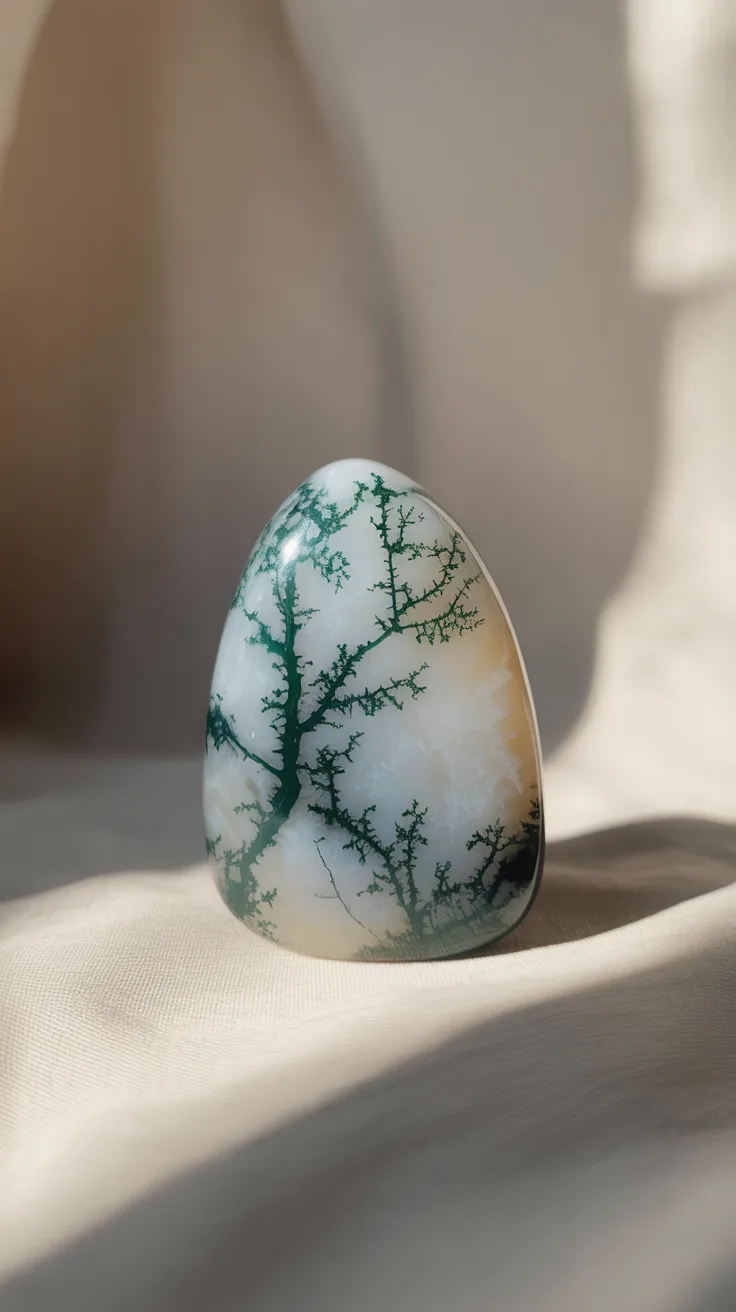
Tree Agate is closely related to Moss Agate but typically features a white or cream-colored base with green dendritic inclusions. The contrast creates a clean, fresh appearance that many collectors find appealing.
This variety is relatively affordable compared to some others on this list, making it an excellent choice for beginning collectors. The green inclusions against the white background really do resemble trees against a winter sky.
12. Enhydro Agate
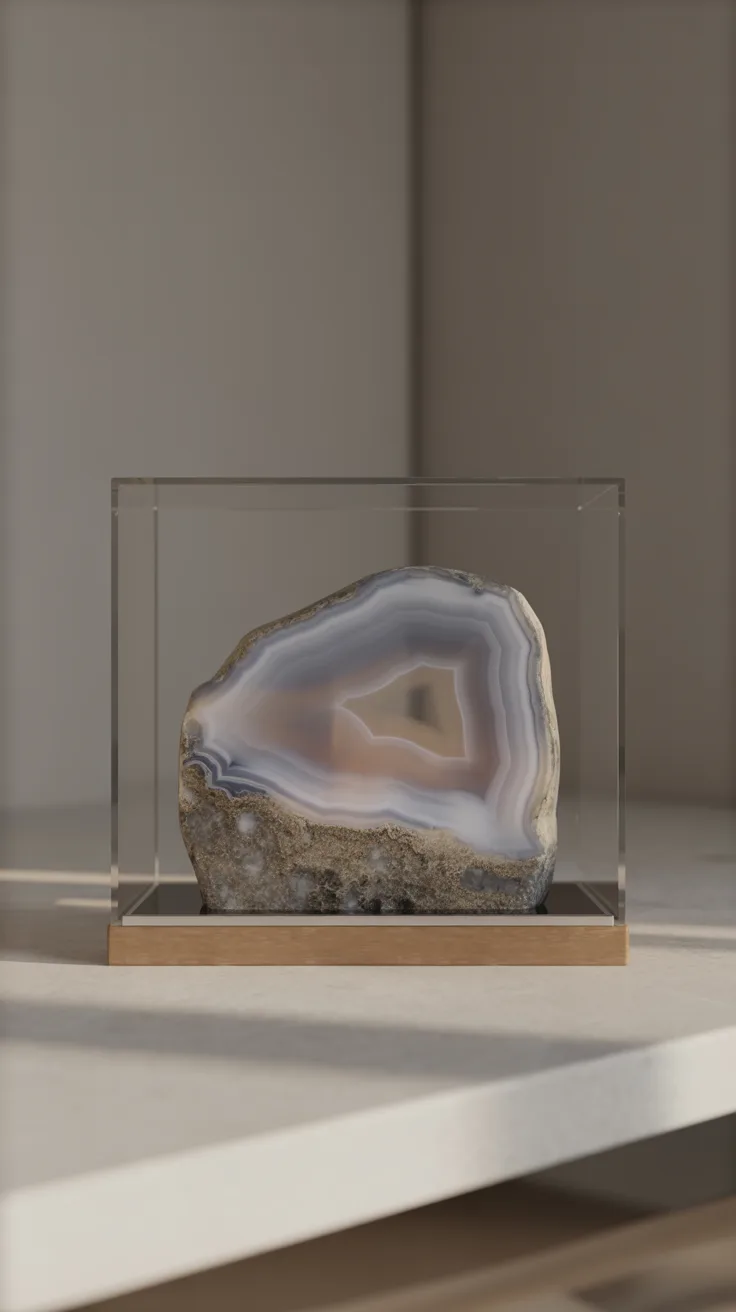
I’ve saved one of the most remarkable types of agate for last. Enhydro Agate contains pockets of water or other fluid trapped inside the stone. When you move certain specimens, you may be able to see or sometimes hear the fluid moving inside.
These are relatively rare and can be quite valuable, especially larger specimens with visible movement. Holding an Enhydro Agate and watching trapped fluid shift inside is an almost surreal experience that never gets old.
A mineral display case helps protect polished agates, fragile specimens, and labeled collector pieces from scratches and dust.
Conclusion
The world of agate collecting offers endless variety and discovery. From the fiery iridescence of Fire Agate to the trapped fluid in Enhydro specimens, each type brings something unique to a collection. I’ve been collecting for over fifteen years, and I’m still finding new varieties and exceptional specimens that surprise me.
My advice for new collectors? Start with what visually appeals to you, learn to identify quality specimens, and don’t be afraid to specialize. Some of the most impressive collections I’ve seen focus on just one or two types of agate, explored in incredible depth. Whatever path you choose, the journey of discovering these remarkable stones is endlessly rewarding.
Frequently Asked Questions
What is the most valuable type of agate?
Fire Agate and Laguna Agate are often among the most valuable varieties, especially when they show exceptional color, clarity, or patterning. However, rarity and quality matter more than the name alone—a remarkable specimen of almost any agate variety can command a premium price.
How can you tell if agate is real?
Genuine agate usually feels cool to the touch, has a glassy to waxy luster, and is heavier than plastic imitations. It should show natural variation rather than perfectly uniform color. Agate has a hardness of about 6.5 to 7 on the Mohs scale, so it should not scratch easily with a knife.
What are the healing properties of agate?
Various crystal traditions associate agate with qualities such as grounding, emotional balance, and protection. Different varieties are often linked to specific symbolic meanings. However, these beliefs are not supported by scientific evidence and should be viewed as cultural or spiritual traditions rather than proven health benefits.
Where can you find agate stones?
Agate is found worldwide, with notable deposits in Brazil, Mexico, Madagascar, India, Botswana, and the United States. Each location can produce agate with distinctive characteristics. For collectors, gem shows, reputable online dealers, specialty rock shops, and legal rockhounding sites are useful sources for quality specimens.
How do you care for agate stones?
Clean agate with lukewarm water and mild soap, using a soft brush for textured surfaces. Avoid harsh chemicals, ultrasonic cleaners, and prolonged sun exposure, which can fade some natural or treated colors. Store pieces separately or wrapped in soft cloth to prevent scratching.