
Introduction
I still remember the first time I held a piece of moss agate in my hand at a gem show in Tucson. The way those green tendrils seemed to float inside the stone like a tiny forest frozen in time—I was completely hooked. That was about eight years ago, and since then, I’ve built up quite a collection of these fascinating stones.
What draws me to moss agate isn’t just its beauty (though that’s certainly part of it). It’s the incredible variety you can find. Each piece tells its own story through its unique patterns and colors. If you’re new to collecting or just curious about what’s out there, I’m excited to share what I’ve learned about the different varieties worth adding to your collection.

What is Moss Agate?
Before we dive into the varieties, let’s clear up a common misconception. Despite its name, moss agate isn’t technically an agate at all—it’s a form of chalcedony. True agates have distinctive banding patterns, but moss agate gets its name from the moss-like or dendritic inclusions that create those gorgeous organic patterns we love.
These inclusions are typically made up of minerals like iron, manganese, and hornblende. They form when mineral-rich solutions seep into the chalcedony as it’s forming, creating those branch-like structures that look like tiny plants or trees. The result is a stone that seems to capture a piece of nature itself.
Pro Tip: When shopping for moss agate, hold the stone up to a light source. The best specimens will have inclusions that appear three-dimensional, almost like you’re looking into a miniature landscape.
Top 10 Moss Agate Varieties You Should Know
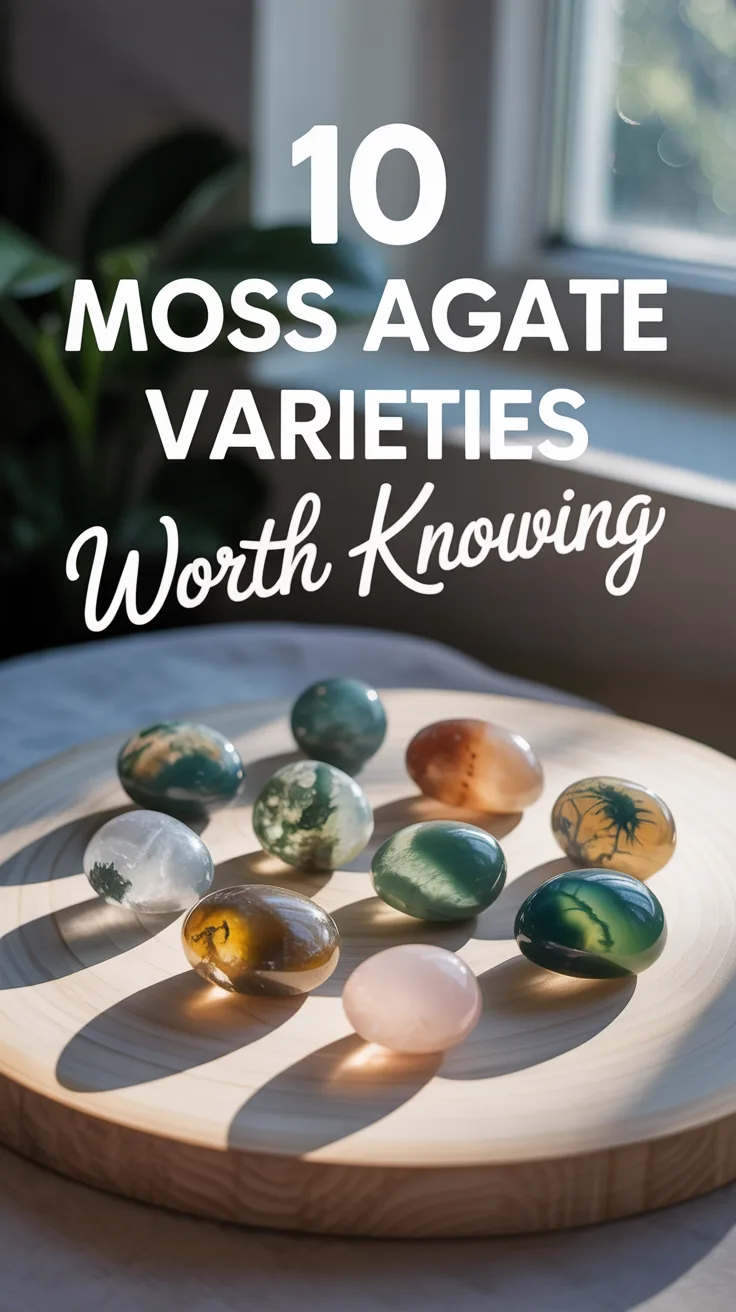
Over the years, I’ve encountered moss agate in colors I never knew existed when I first started collecting. Here’s my rundown of the ten varieties that have impressed me most:
1. Green Moss Agate
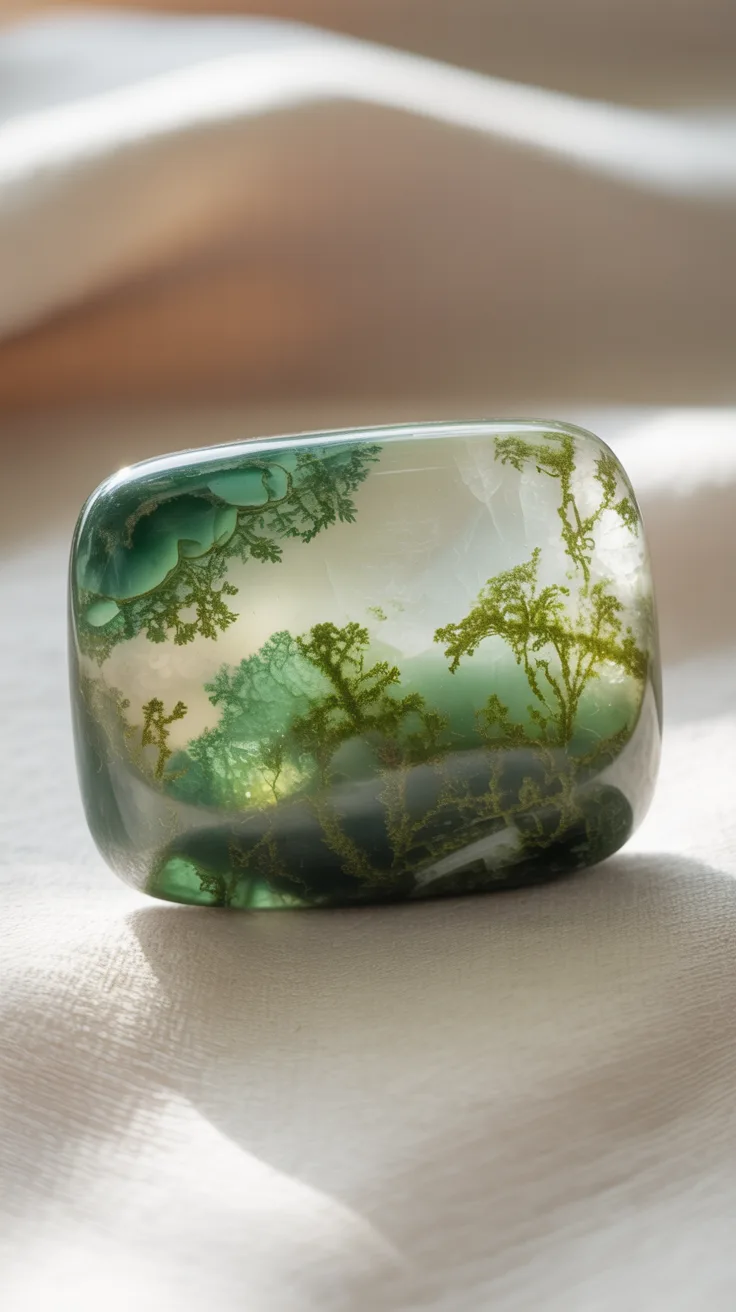
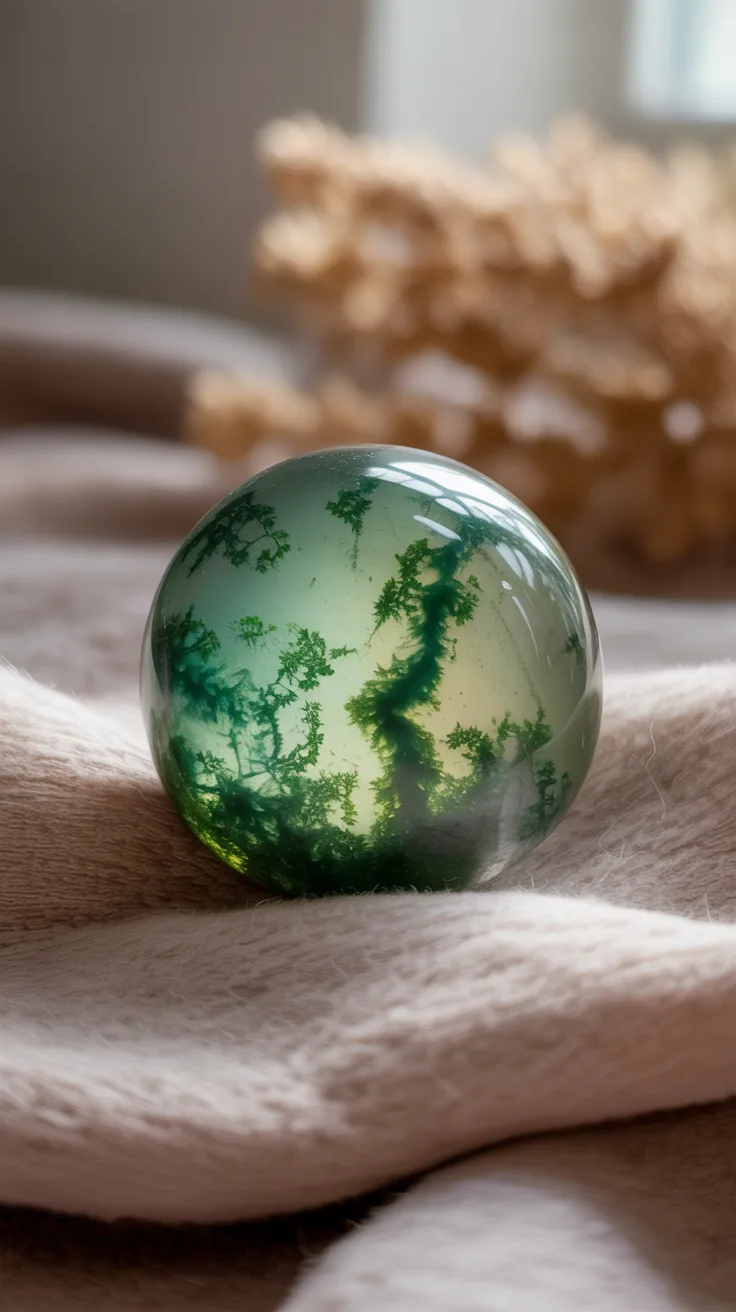
This is the classic variety that most people picture when they hear “moss agate.” The rich green inclusions against a milky or clear background genuinely look like moss growing on a forest floor. I have a cabochon from India that looks exactly like an aerial view of a rainforest—it’s one of my favorite pieces.
Green moss agate is widely available and relatively affordable, making it perfect for beginners. The green coloring comes from chlorite or hornblende inclusions, and the intensity can range from pale sage to deep forest green.

View on AmazonAs an Amazon Associate, I earn from qualifying purchases.

View on AmazonAs an Amazon Associate, I earn from qualifying purchases.
2. Blue Moss Agate
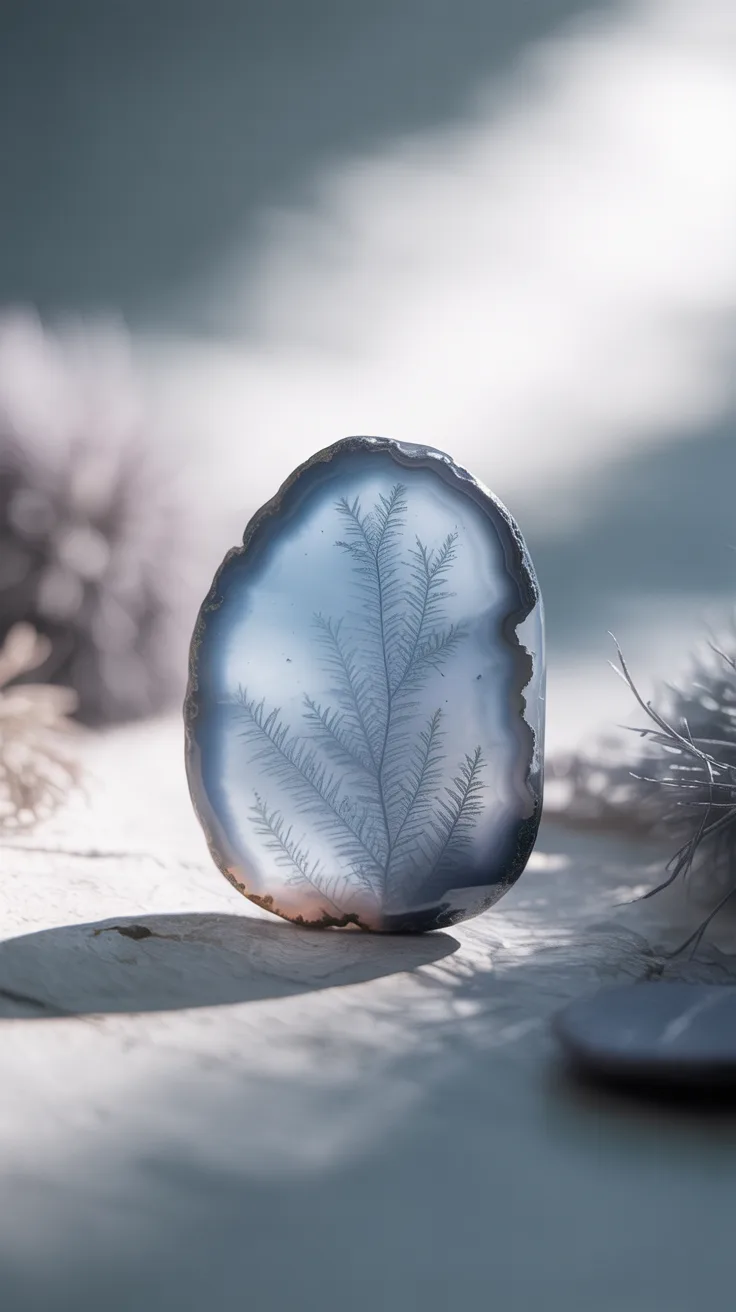
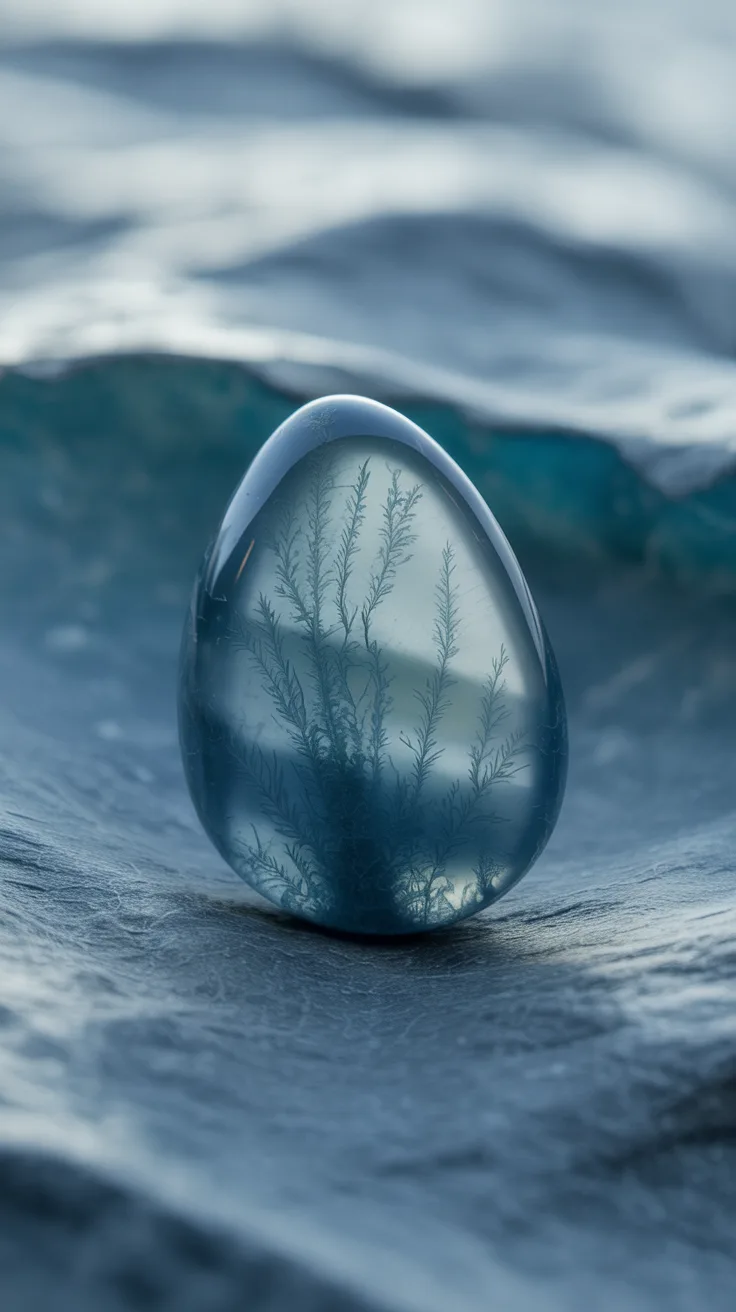
Blue moss agate is less common than its green cousin, and honestly, it took me years to find a quality specimen. The blue tones create an almost underwater effect, like looking at seaweed swaying in ocean currents. Many collectors use this variety for meditation because of its incredibly calming energy.
Fair warning: some “blue moss agate” on the market has been dyed. Natural blue specimens have a more subtle, grayish-blue tone rather than a vivid turquoise color.
3. Red Moss Agate
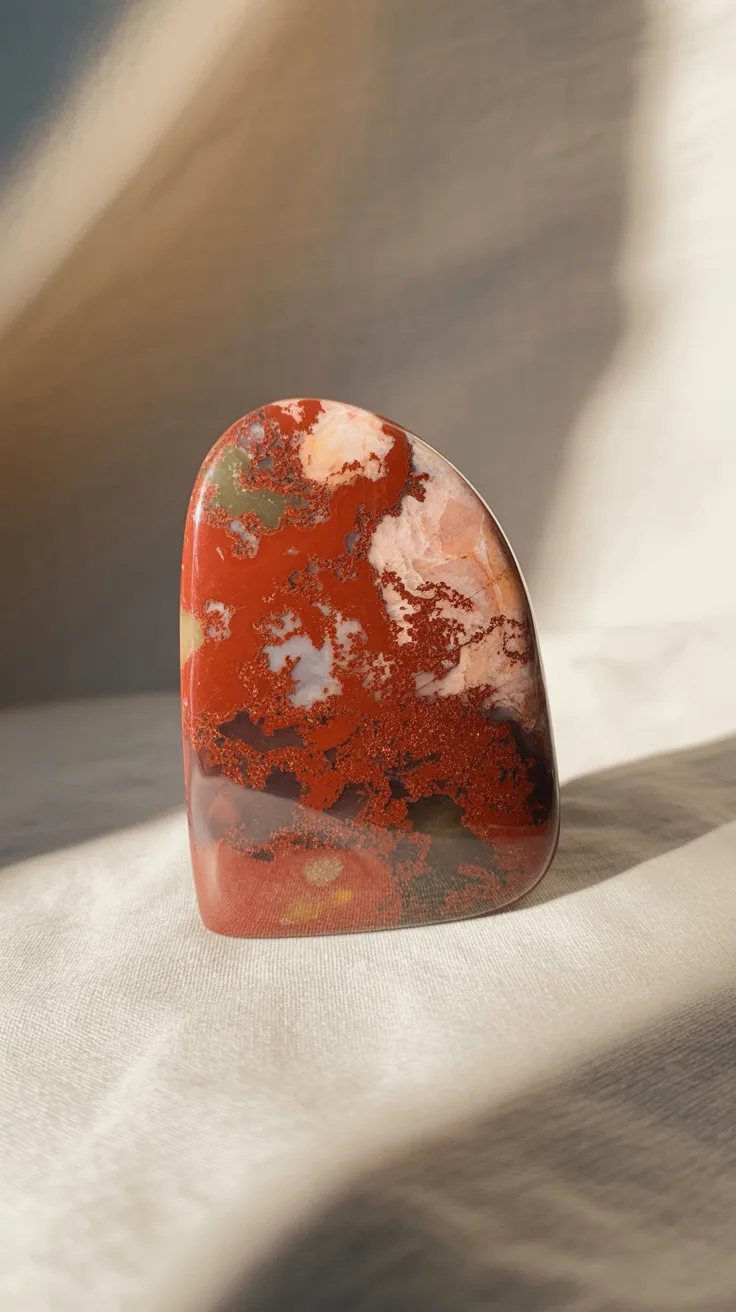
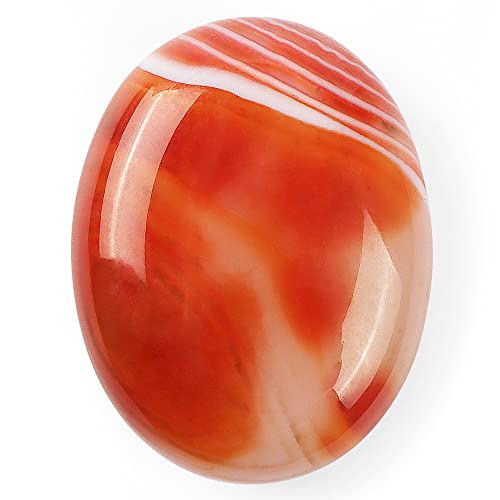
Red moss agate features iron oxide inclusions that create stunning rust-red to deep crimson patterns. I picked up my first piece thinking it was a different stone entirely—the color was that unexpected. These specimens often look like abstract paintings, with dramatic splashes of color throughout.
This variety is particularly popular among artists and creative types. There’s something about those bold red inclusions that seems to spark inspiration.
View on AmazonAs an Amazon Associate, I earn from qualifying purchases.

View on AmazonAs an Amazon Associate, I earn from qualifying purchases.
4. Pink Moss Agate
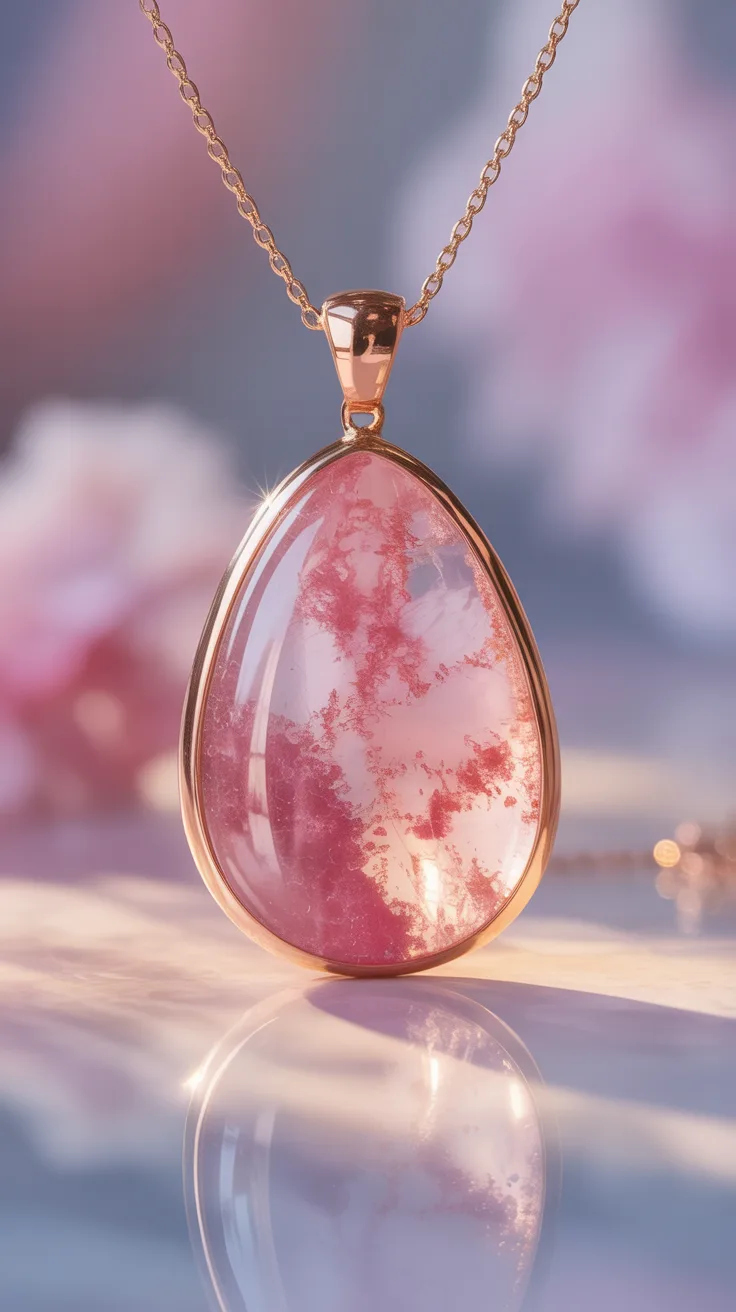
Soft and romantic, pink moss agate has become increasingly popular in jewelry, especially for engagement rings. The delicate pink inclusions can range from barely-there blush tones to deeper rose colors. I gave a pink moss agate pendant to my sister for her birthday, and she hasn’t taken it off since.
Pro Tip: Pink moss agate pairs beautifully with rose gold settings. If you’re considering a piece of jewelry, this combination creates a cohesive, elegant look.
5. White Moss Agate
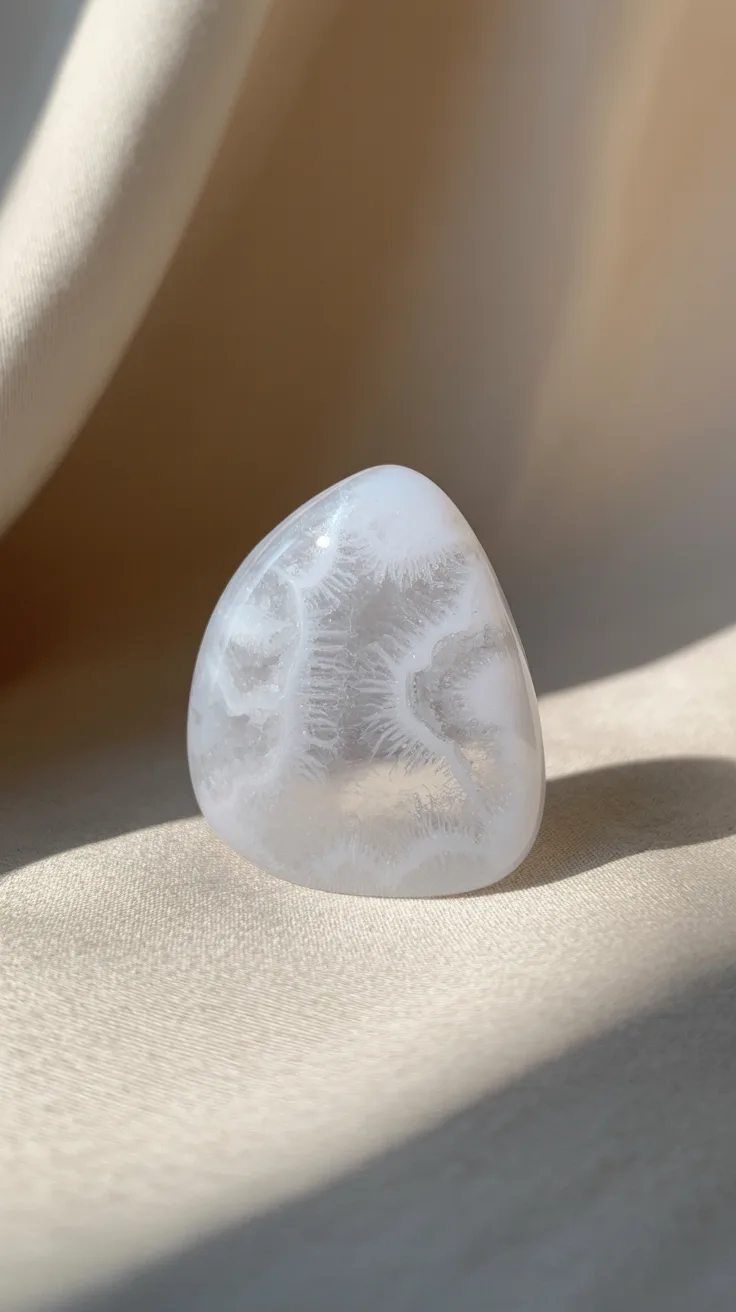
White moss agate features pale, almost ghostly inclusions against a translucent background. It reminds me of frost patterns on a window or snow-covered branches. This variety is subtle but incredibly elegant, and it’s become a favorite among minimalist jewelry designers.
I made the mistake of overlooking white moss agate early in my collecting journey because it seemed “boring” compared to more colorful varieties. Don’t make the same error—these pieces have a quiet sophistication that grows on you.

View on AmazonAs an Amazon Associate, I earn from qualifying purchases.

View on AmazonAs an Amazon Associate, I earn from qualifying purchases.
6. Black Moss Agate
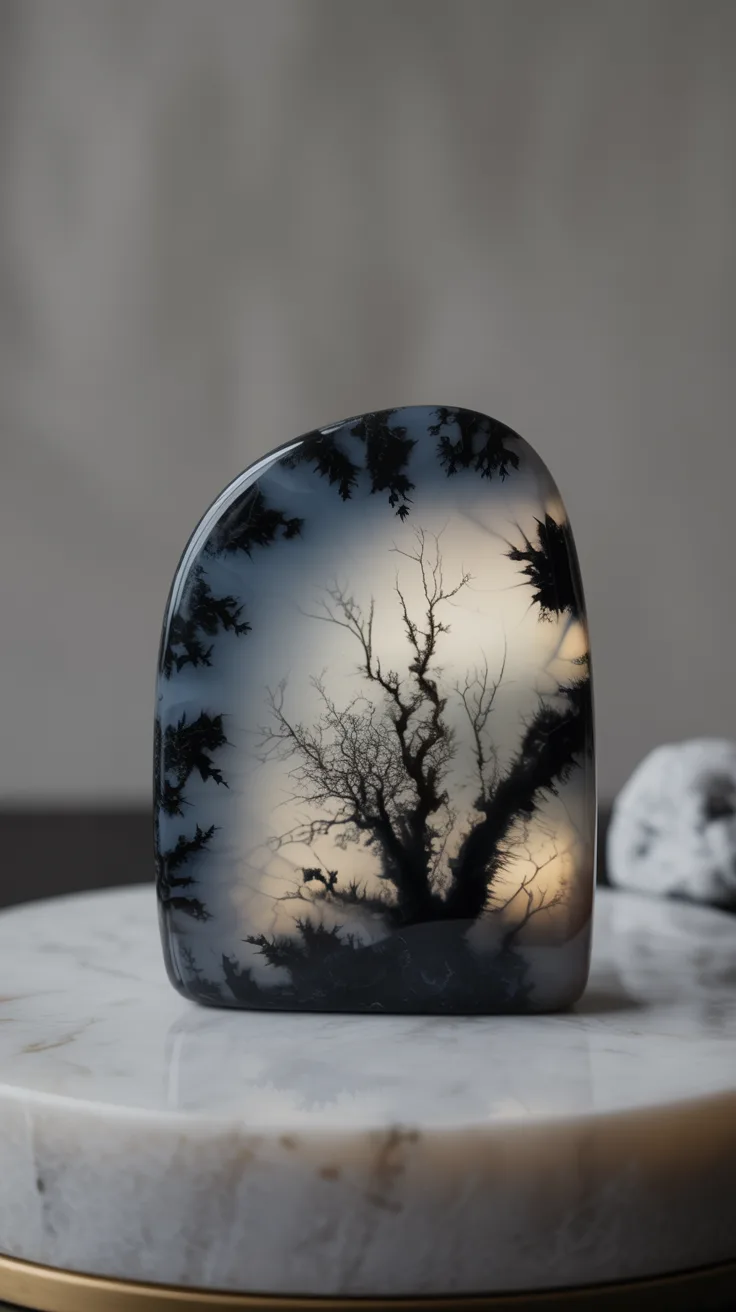
Black moss agate is dramatic and striking, with dark manganese inclusions creating bold patterns against lighter backgrounds. Some specimens look like ink dropped in water, while others resemble bare tree branches against a winter sky.
This variety is often used in spiritual practices for grounding and protection. Whether or not you believe in crystal healing, there’s no denying the powerful visual impact of a well-chosen black moss agate piece.
7. Brown Moss Agate
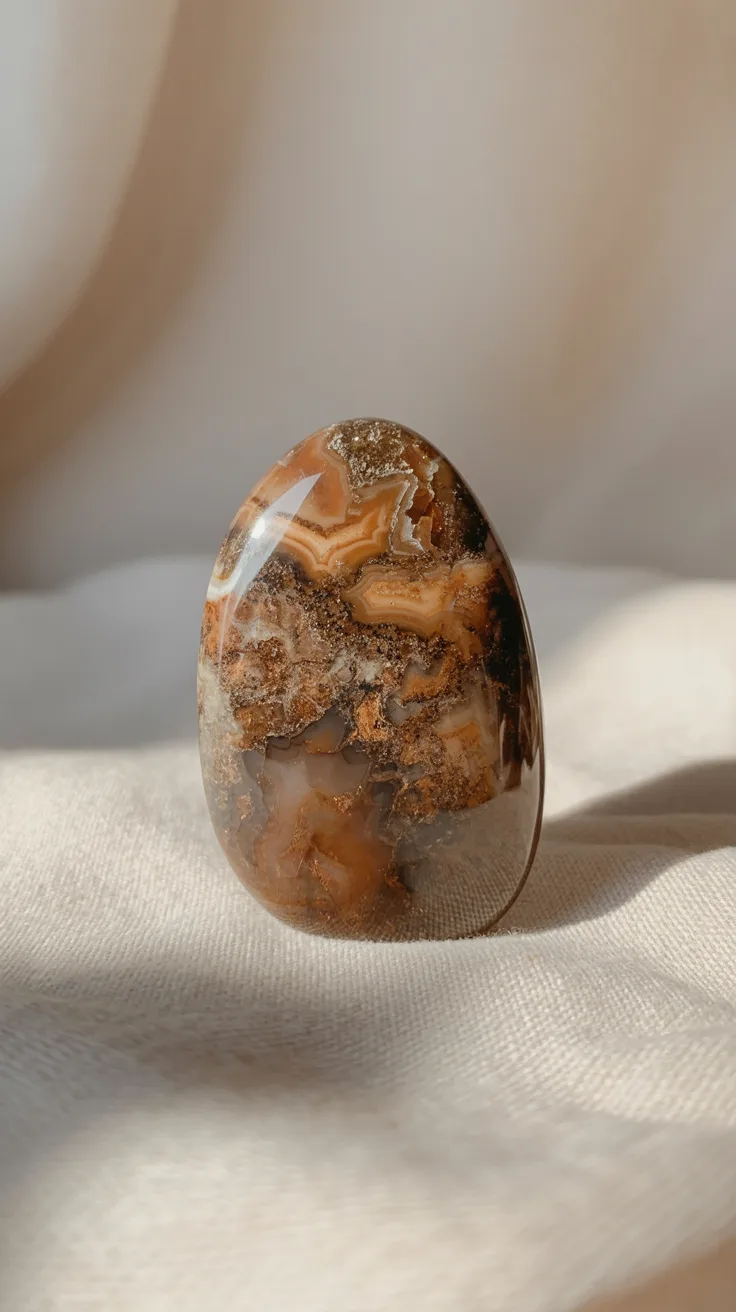
Brown moss agate has an earthy, grounding quality that I find incredibly appealing. The warm brown tones remind me of rich soil, autumn leaves, and tree bark. It’s not the flashiest variety, but it has a natural, organic beauty that feels very authentic.
I’ve found that brown moss agate specimens from Montana tend to have particularly interesting patterns, often with multiple shades of brown creating depth and dimension.
8. Yellow Moss Agate
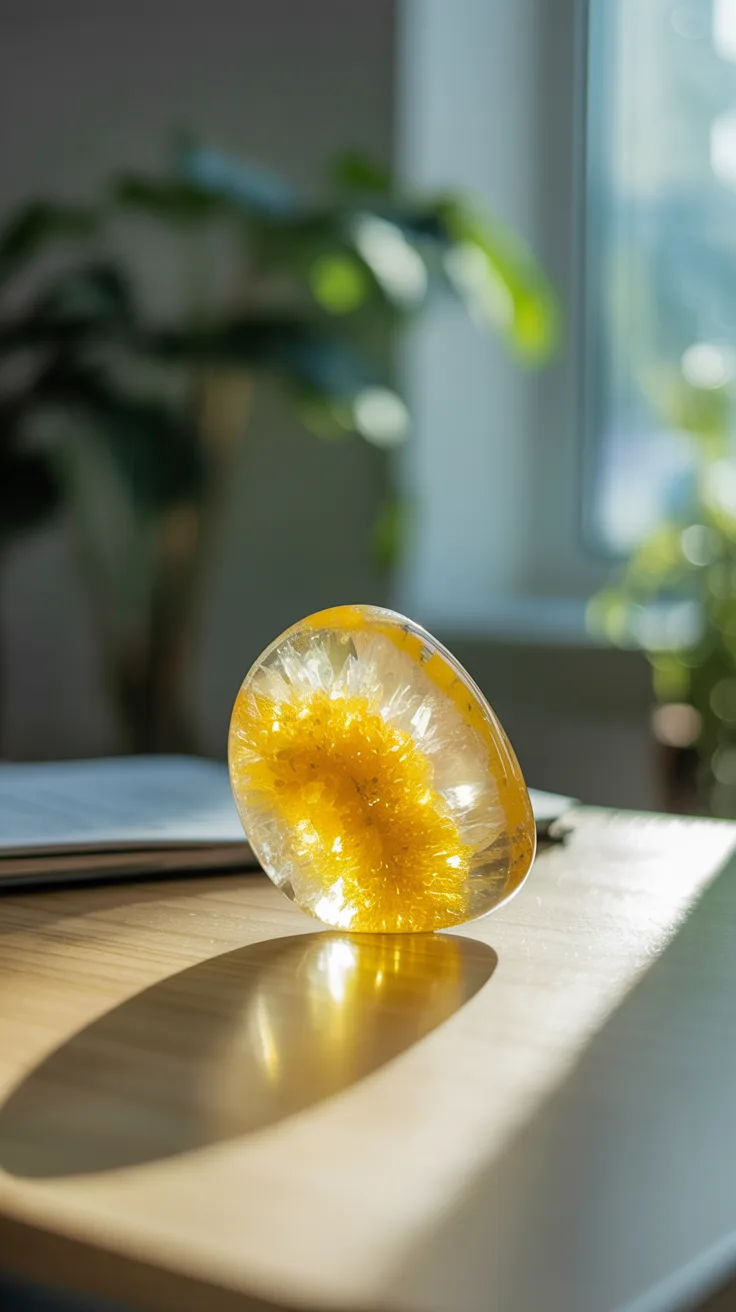
Yellow moss agate brings sunshine into any collection. The cheerful golden inclusions seem to glow from within, creating an uplifting effect. This variety isn’t as common as green or brown, so when you find a good piece, grab it.
I keep a small yellow moss agate on my desk—it’s like having a little burst of optimism right where I can see it while I work.
9. Purple Moss Agate
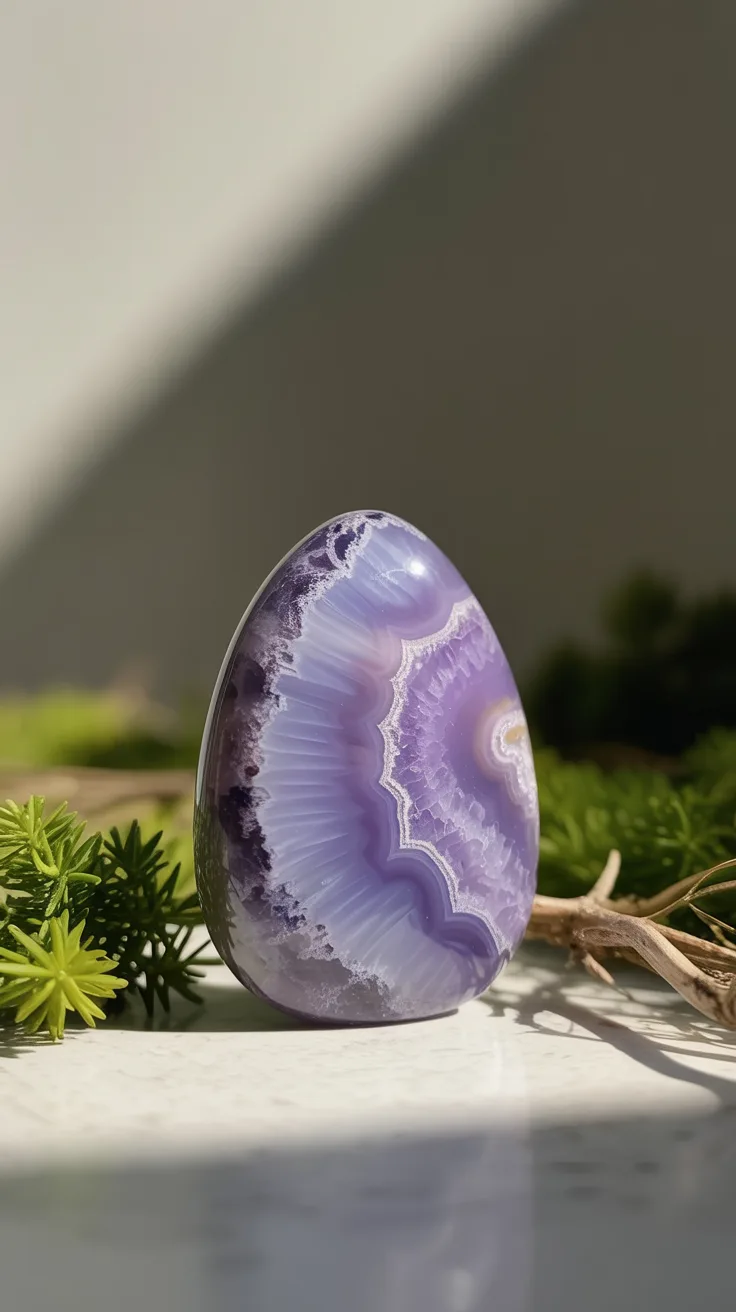
Purple moss agate is one of the rarer varieties, and finding a natural specimen can be challenging. The purple coloring typically comes from manganese, creating inclusions that range from soft lavender to deep violet. When you do find an authentic piece, it’s truly special.
Pro Tip: Be extra cautious when purchasing purple moss agate online. This color is frequently faked through dyeing. Always buy from reputable dealers and ask about the stone’s origin.
10. Gray Moss Agate
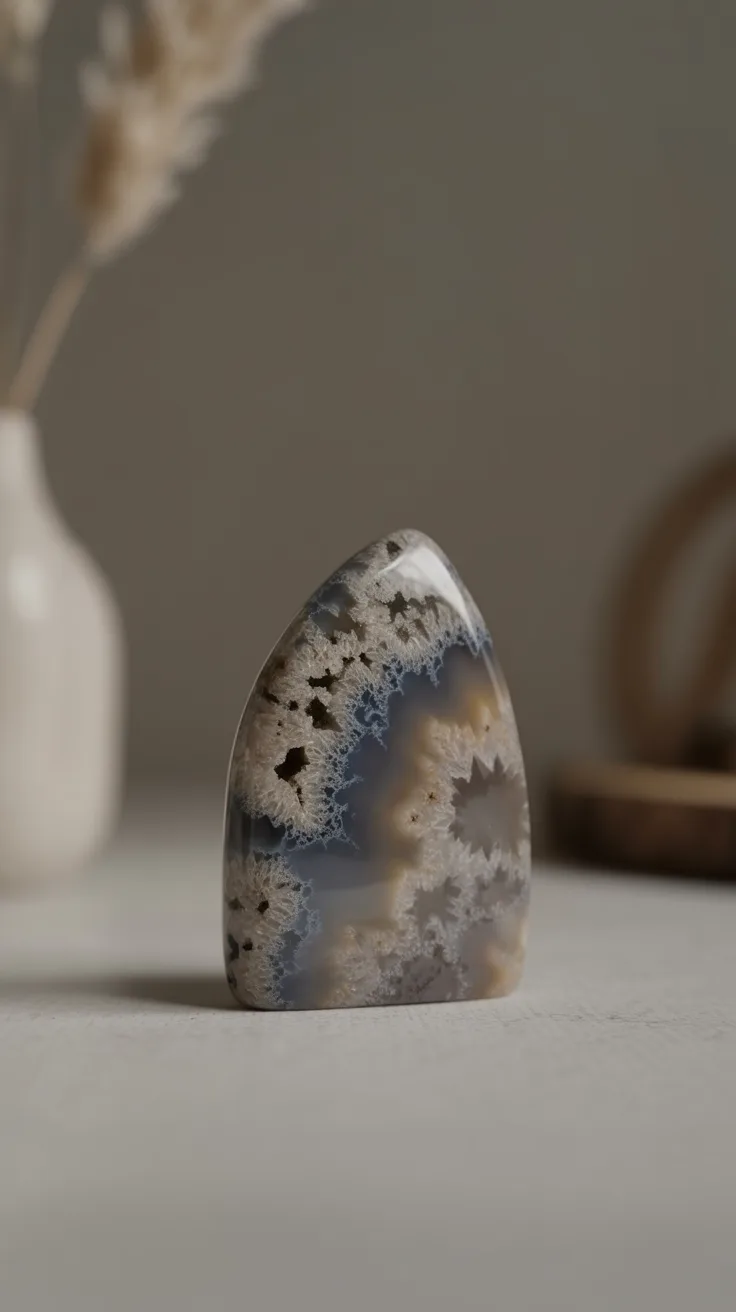
Gray moss agate might sound understated, but it’s actually one of my personal favorites. The sophisticated, neutral tones make it incredibly versatile, and the patterns can be surprisingly complex. Gray specimens often show excellent contrast between the inclusions and the background.
This variety works well for people who want something unique but not too bold—it’s the perfect “everyday” stone that goes with everything.
Caring for Your Moss Agate Collection
After investing time and money into finding beautiful moss agate specimens, you’ll want to keep them looking their best. Here’s what I’ve learned about proper care:
- Cleaning: Use lukewarm water with mild soap and a soft brush. I use an old toothbrush for detailed cleaning around inclusions.
- Storage: Keep pieces separate to prevent scratching. I wrap mine in soft cloth or store them in individual compartments.
- Avoid: Harsh chemicals, ultrasonic cleaners, and extreme temperature changes can damage your stones.
- Sunlight: Brief exposure to sunlight is fine, but prolonged exposure can fade some colors over time.
Pro Tip: Every few months, I gently polish my display pieces with a soft microfiber cloth. It removes dust and brings back that beautiful natural luster without any risk of damage.
Frequently Asked Questions
What is the best way to clean moss agate?
Stick with mild soap and lukewarm water—it’s simple but effective. Gently scrub with a soft brush, rinse thoroughly, and pat dry with a lint-free cloth. Avoid harsh chemicals or ultrasonic cleaners, which can damage the stone’s surface or affect the inclusions.
Can moss agate be used for meditation?
Absolutely! Many practitioners use moss agate during meditation for its grounding and calming properties. Blue and green varieties are particularly popular for this purpose. I sometimes hold a piece during breathing exercises, and I find it helps me focus.
Is moss agate considered a birthstone?
While moss agate isn’t an official birthstone, it’s often associated with the zodiac sign Virgo and is sometimes used as an alternative birthstone for those born in September. It’s also connected to the heart chakra in crystal healing traditions.
How can you tell if moss agate is real?
Authentic moss agate has natural, irregular inclusions—no two pieces are identical. Look for a waxy luster and slight translucency. If a stone looks too perfect, has uniform patterns, or has unusually vivid colors (especially blue or purple), it may be dyed or synthetic.
What are the healing properties of moss agate?
Believers in crystal healing associate moss agate with emotional balance, stress relief, and connection to nature. It’s said to promote abundance and new beginnings. While I can’t speak to metaphysical claims, I do find that working with these stones brings me a sense of calm and appreciation for natural beauty.