
Fire Agate vs Opal: 7 Key Differences Explained
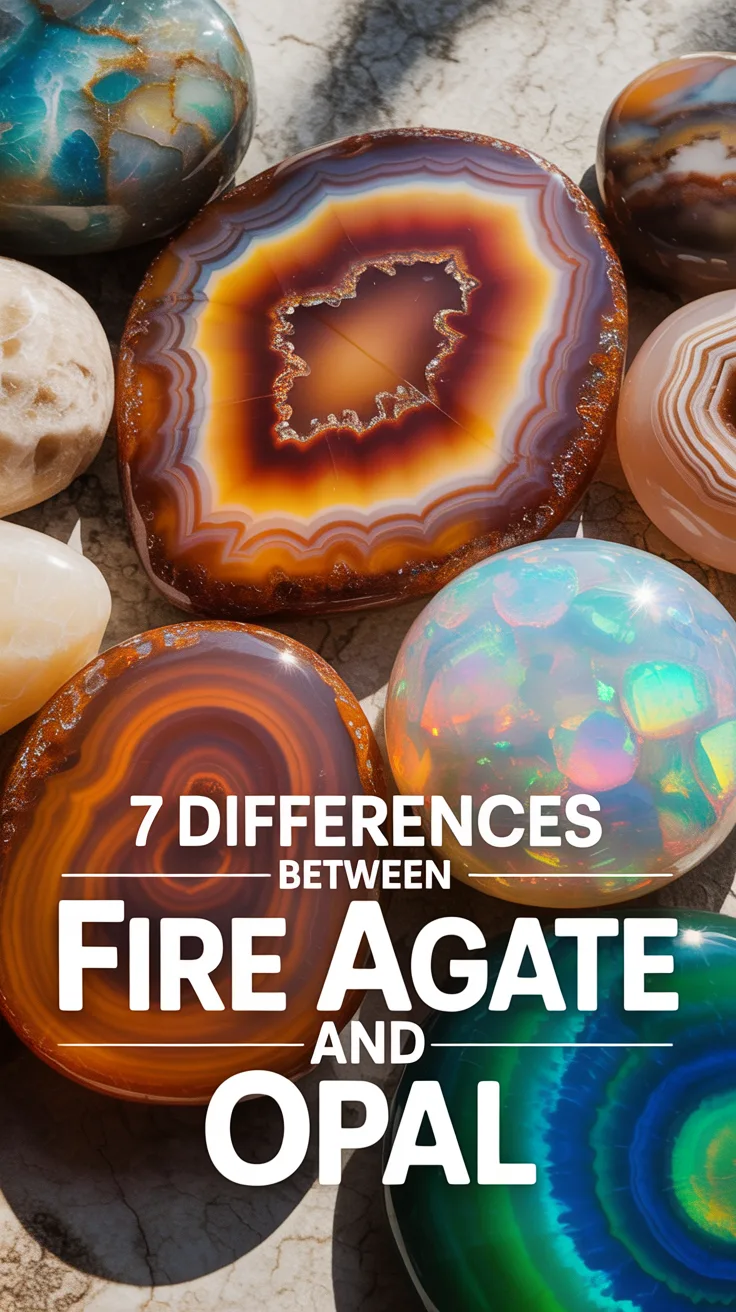
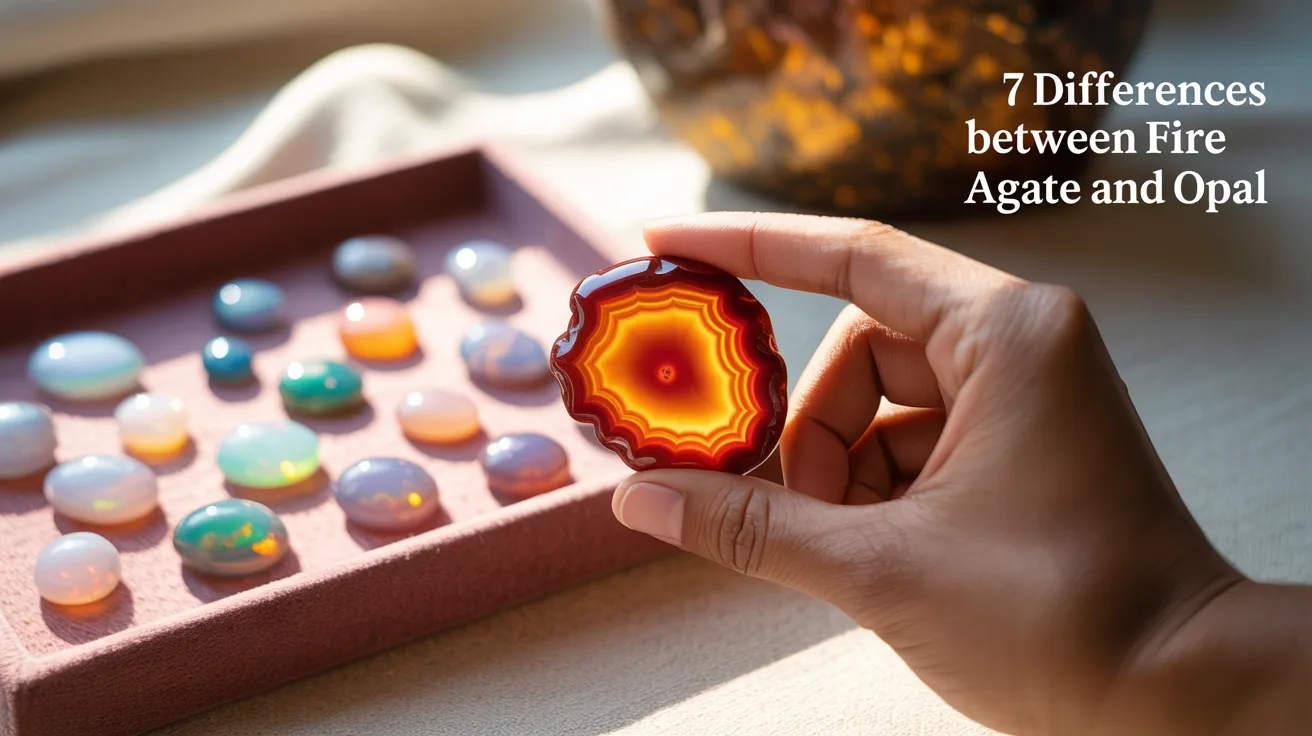
Fire agate and opal are two of the most fascinating gemstones because both display brilliant flashes of color that seem to change with the light. Although they may look similar at first glance, these gemstones differ in composition, durability, value, appearance, and everyday wearability.
Understanding these differences makes it easier to choose the right gemstone for jewelry, collecting, or investing. Whether comparing durability, rarity, or maintenance requirements, each stone offers unique qualities that appeal to different collectors.
This guide compares fire agate and opal across seven important categories to help buyers understand what makes each gemstone special.

1. Formation and Composition
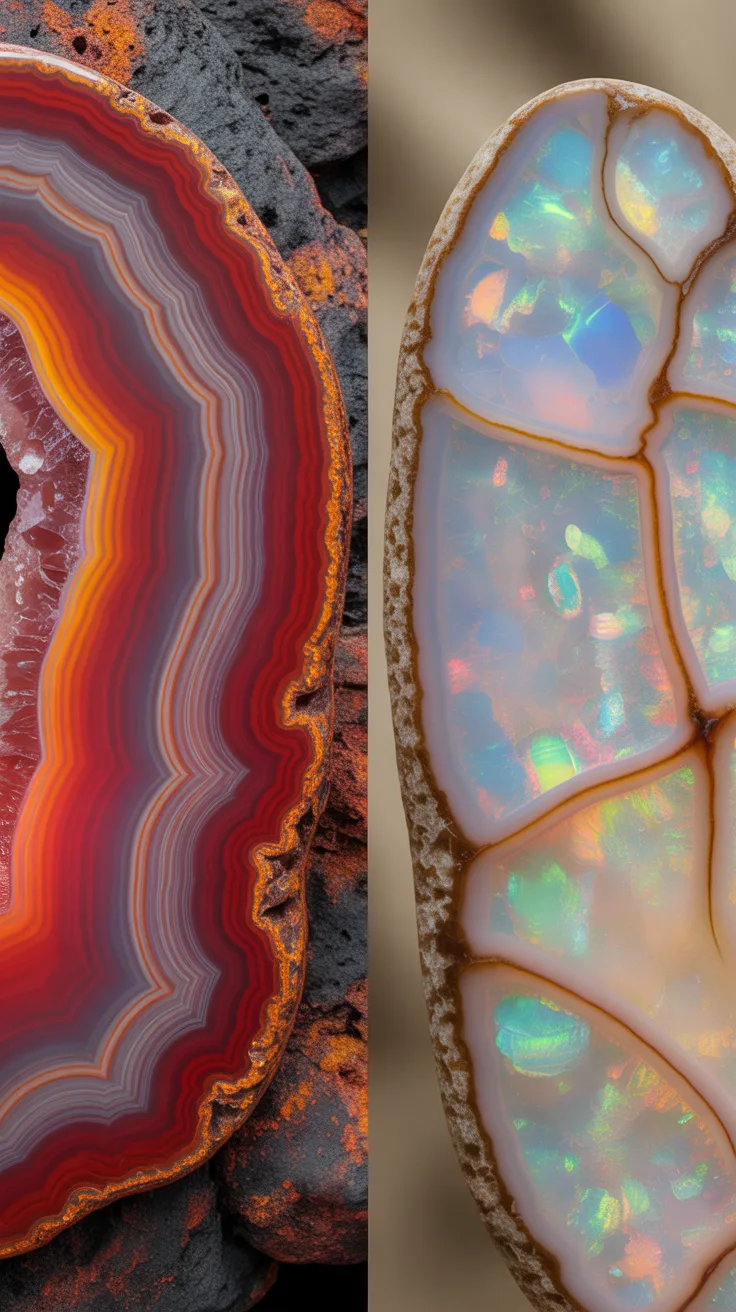
The biggest difference between fire agate and opal begins with how each gemstone forms in nature.
Fire agate is a variety of chalcedony quartz that develops inside volcanic rock. Over millions of years, layers of silica mixed with iron oxide build upon one another, creating the colorful iridescent effect that gives fire agate its distinctive appearance.
Opal forms very differently. Instead of crystalline quartz, opal consists of hydrated silica containing tiny microscopic silica spheres. As light passes through these spheres, it produces the famous play-of-color that makes opals so desirable.
- Fire Agate: Chalcedony quartz with iron oxide layers.
- Opal: Hydrated silica containing microscopic silica spheres.
- Fire Agate: Forms primarily in volcanic environments.
- Opal: Forms when silica-rich water fills cracks and cavities over time.

View on AmazonAs an Amazon Associate, I earn from qualifying purchases.

View on AmazonAs an Amazon Associate, I earn from qualifying purchases.
Because opal naturally contains water while fire agate does not, the two gemstones behave very differently when exposed to heat, dryness, and changing environmental conditions.
2. Color and Appearance
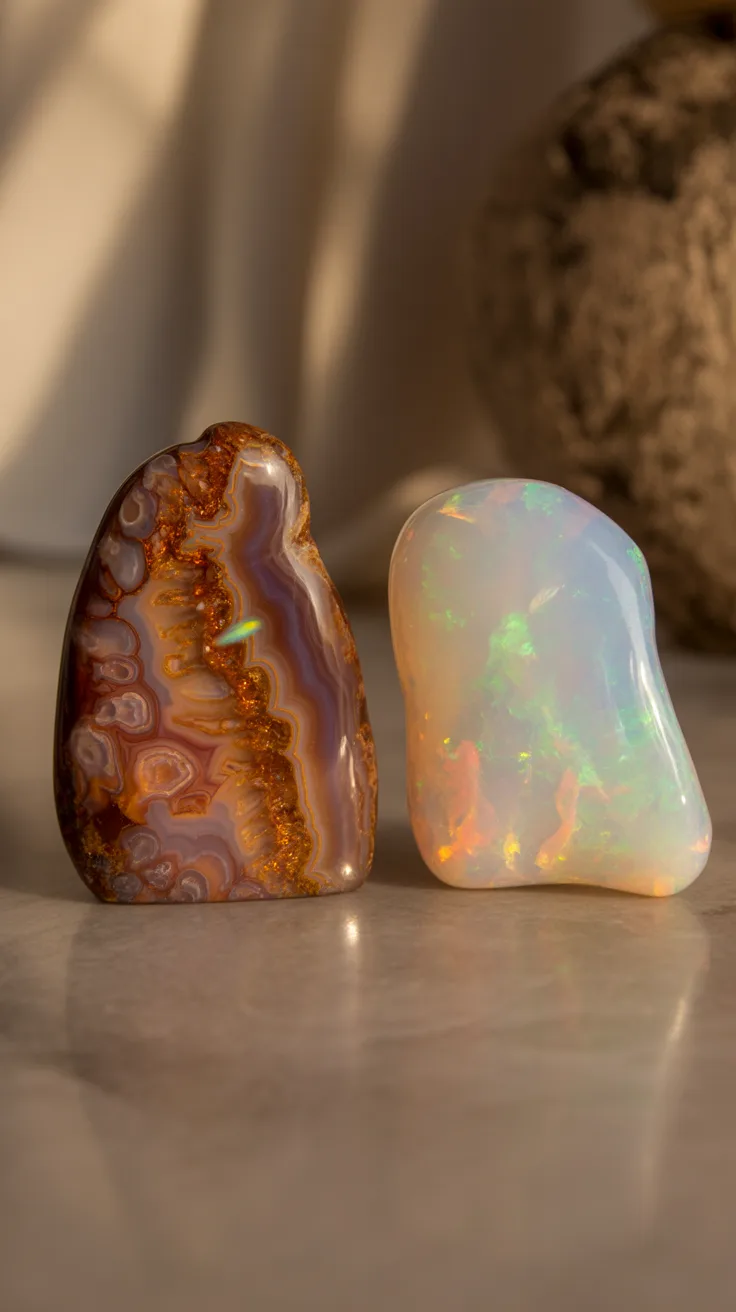
Although both gemstones display flashes of color, the way those colors appear is completely different.
Fire agate usually has a brown, reddish-brown, or orange body color with iridescent flashes of green, gold, red, and blue appearing beneath the surface. These colorful layers resemble flickering flames, which inspired the gemstone’s name.
Opal displays play-of-color across the surface as light interacts with its internal silica spheres. Depending on the variety, flashes of blue, green, orange, red, violet, and yellow may appear and change dramatically as the stone moves.
| Feature | Fire Agate | Opal |
|---|---|---|
| Base Color | Brown, orange, red | White, black, crystal, orange |
| Color Effect | Layered iridescence | Play-of-color |
| Surface | Often botryoidal | Usually smooth |

View on AmazonAs an Amazon Associate, I earn from qualifying purchases.

View on AmazonAs an Amazon Associate, I earn from qualifying purchases.
Fire agate’s colors remain relatively consistent, while opal’s colors appear to dance across the surface as lighting and viewing angles change.
3. Hardness and Durability
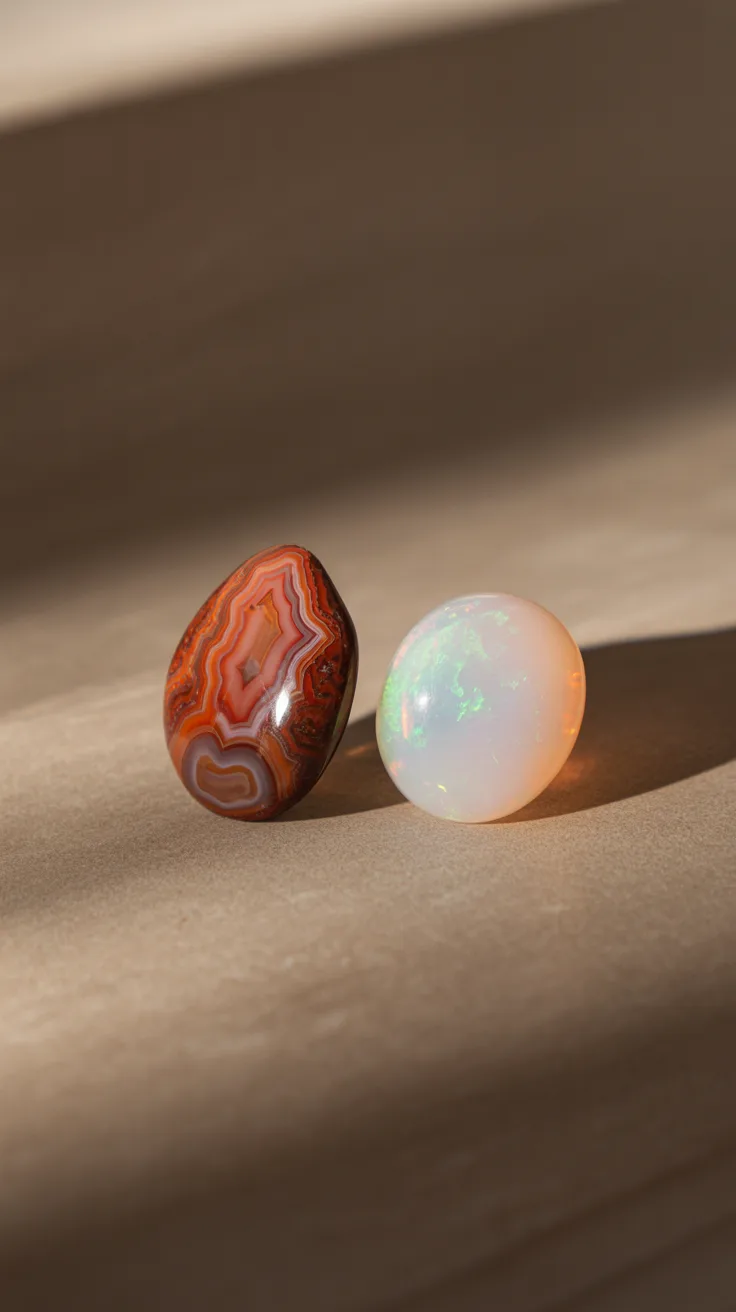
Durability is one of the biggest reasons collectors choose fire agate over opal for everyday jewelry.
Fire agate measures between 6.5 and 7 on the Mohs hardness scale, making it resistant to everyday scratches and suitable for rings, bracelets, pendants, and other frequently worn jewelry.
Opal measures between 5.5 and 6.5 on the Mohs scale and is considerably softer. Because it also contains water, it can crack if exposed to sudden temperature changes or prolonged dry conditions.
For anyone planning to wear gemstone jewelry every day, fire agate generally requires far less maintenance and offers greater durability.
A gemstone identification kit is helpful for comparing minerals and gemstones at home.
4. Value and Rarity
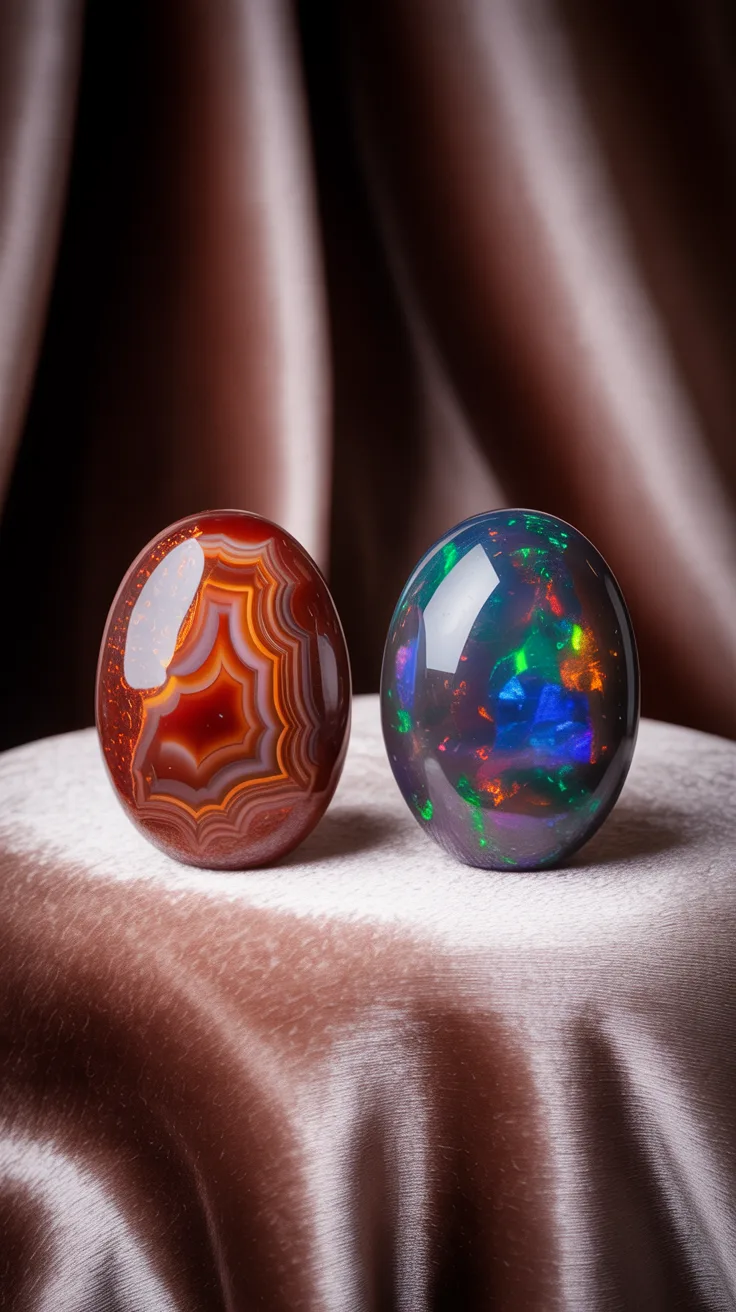
Both gemstones can be valuable, but the factors that determine their price are quite different.
Fire agate is generally more affordable than fine opal, although exceptional specimens with vivid iridescence and expert polishing can command premium prices. High-quality fire agates are relatively uncommon because much of the rough material lacks the colorful layers needed to produce attractive gemstones.
Opal has one of the widest price ranges in the gemstone market. Common opals may be inexpensive, while rare black opals from Australia can sell for thousands of dollars per carat. Brightness, color pattern, body tone, transparency, and origin all influence an opal’s value.
- Fire agate pricing is generally more consistent.
- Exceptional fire agates are prized by collectors.
- Fine black opals are among the world’s most valuable gemstones.
- Origin plays an important role in gemstone value.
5. Jewelry Uses
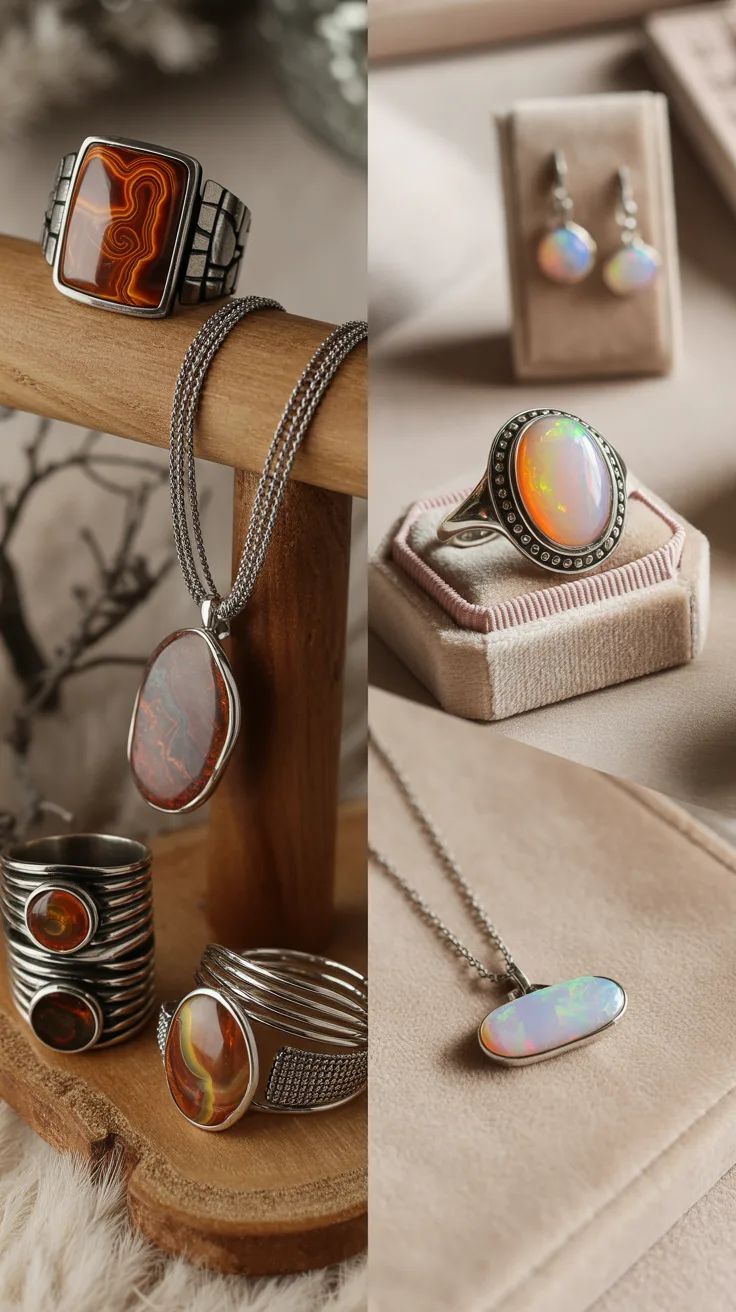
The durability of each gemstone largely determines the types of jewelry where it performs best.
Fire agate’s hardness makes it an excellent choice for rings, pendants, bracelets, belt buckles, bolo ties, and everyday jewelry. Its earthy appearance also complements Southwestern, rustic, and handcrafted jewelry designs.
Opal is commonly used in pendants, earrings, brooches, and dress rings that receive less impact. Protective bezel settings are often preferred because they help shield the edges of the stone from accidental damage.
| Best Jewelry | Fire Agate | Opal |
|---|---|---|
| Daily Rings | Excellent | Fair |
| Pendants | Excellent | Excellent |
| Earrings | Excellent | Excellent |
| Bracelets | Very Good | Use Carefully |
A gemstone jewelry display box keeps valuable pieces protected and organized.
6. Care and Maintenance
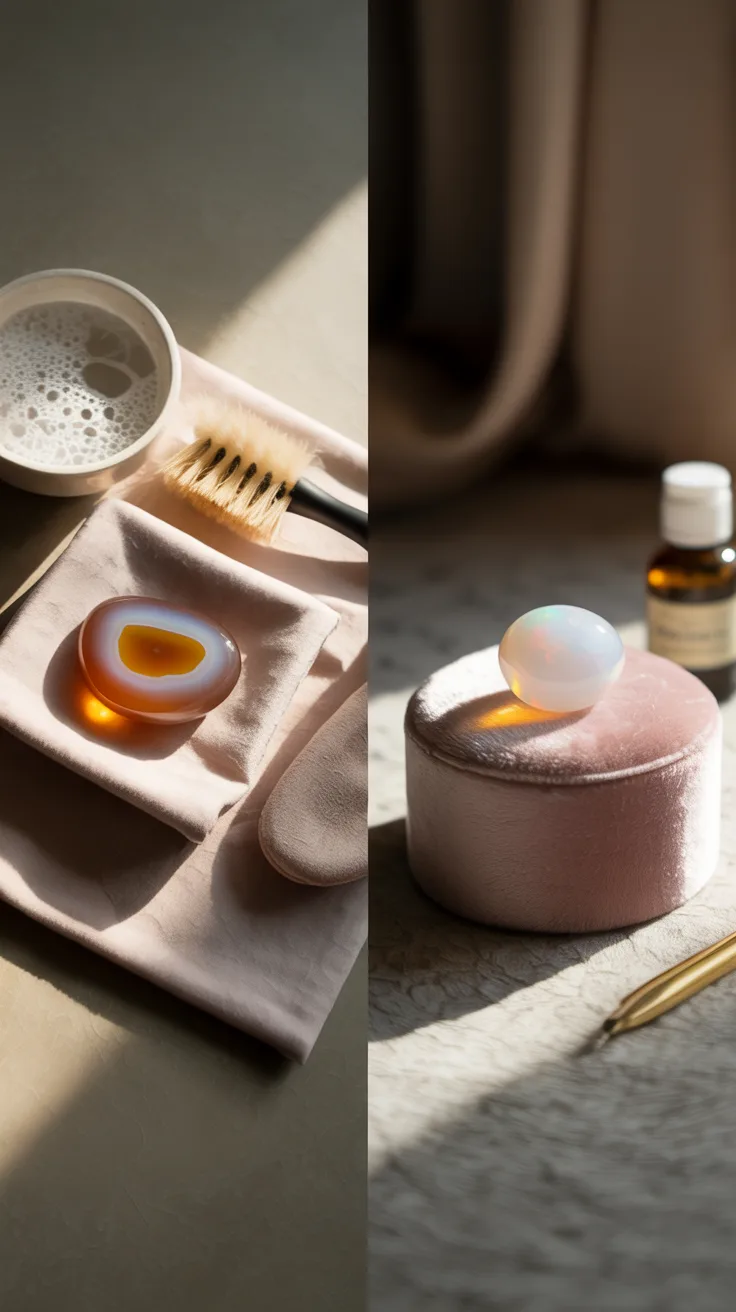
Proper care helps preserve both gemstones, although fire agate requires much less maintenance than opal.
Fire agate can usually be cleaned with warm water, mild soap, and a soft brush. Because it is a durable variety of quartz, it tolerates everyday wear extremely well.
Opals require considerably more attention. Avoid ultrasonic cleaners, steam cleaning, prolonged exposure to direct sunlight, sudden temperature changes, and harsh chemicals. Since opal naturally contains water, extremely dry environments may eventually cause cracking or crazing.
- Clean both gemstones using mild soap and water.
- Avoid harsh household cleaners.
- Store each piece separately to reduce scratches.
- Protect opals from extreme heat and dryness.
7. Best Choice for Collectors and Beginners
Choosing between fire agate and opal depends largely on personal preferences, lifestyle, and budget.
Collectors who appreciate durability, natural patterns, and unique volcanic gemstones often favor fire agate. It offers beautiful iridescence without requiring extensive care, making it ideal for everyday jewelry and beginner collections.
Opal appeals to collectors who value spectacular play-of-color and are willing to provide the additional care these gemstones require. Rare varieties such as black opal, boulder opal, and crystal opal remain among the most sought-after gemstones in the world.
A gemstone display case is an excellent way to protect and showcase a growing mineral collection.
Frequently Asked Questions
Which gemstone is more durable, fire agate or opal?
Fire agate is considerably more durable because it is a variety of quartz with a Mohs hardness of 6.5 to 7. Opal is softer and contains water, making it more susceptible to scratches, cracking, and environmental damage.
Why do fire agate and opal display different colors?
Fire agate’s colorful flashes come from thin layers of iron oxide within the stone that create iridescence. Opal produces its famous play-of-color because microscopic silica spheres diffract light into brilliant rainbow colors.
Can fire agate and opal be worn every day?
Fire agate is well suited for everyday jewelry because of its durability. Opal is better reserved for jewelry that receives less impact, such as pendants or earrings, unless it is protected by a sturdy setting.
Which gemstone is more valuable?
Exceptional specimens of both gemstones can be valuable, but fine black opals generally command much higher prices than fire agates. Value depends on color, rarity, quality, craftsmanship, and overall appearance.
How can beginners tell the difference between fire agate and opal?
Fire agate usually has a brown or reddish base color with colorful flashes beneath the surface, while opal often has a lighter body color with shifting rainbow colors that move dramatically as the stone is rotated.
Conclusion
Although fire agate and opal both display stunning flashes of color, they are very different gemstones. Fire agate offers exceptional durability, earthy beauty, and relatively easy maintenance, making it an excellent choice for everyday jewelry and beginning collectors. Opal delivers unmatched play-of-color and extraordinary visual appeal but requires more careful handling to preserve its beauty.
Choosing between them ultimately depends on personal preferences, budget, and intended use. Those seeking a durable gemstone for regular wear often appreciate fire agate, while collectors looking for vibrant color displays may be drawn to the unique beauty of opal.
Understanding how these gemstones differ helps buyers make informed decisions and better appreciate the remarkable geological processes that created each one.