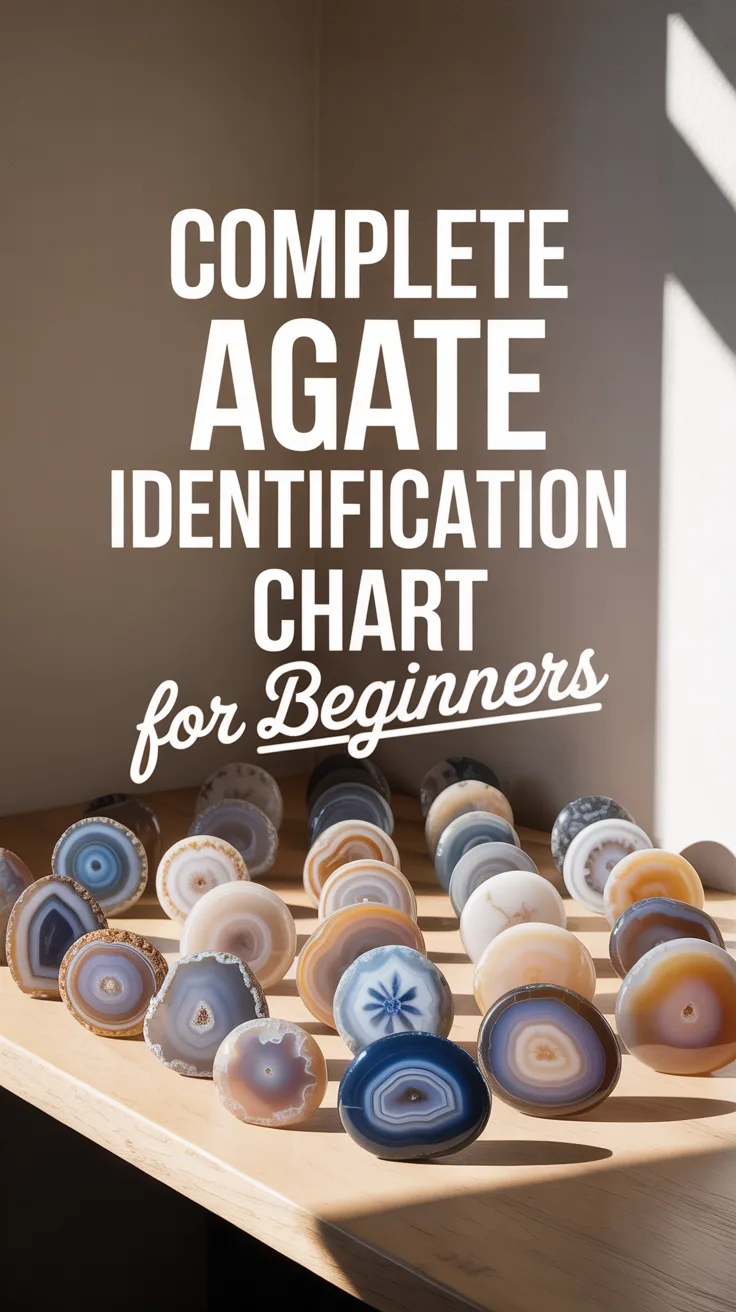

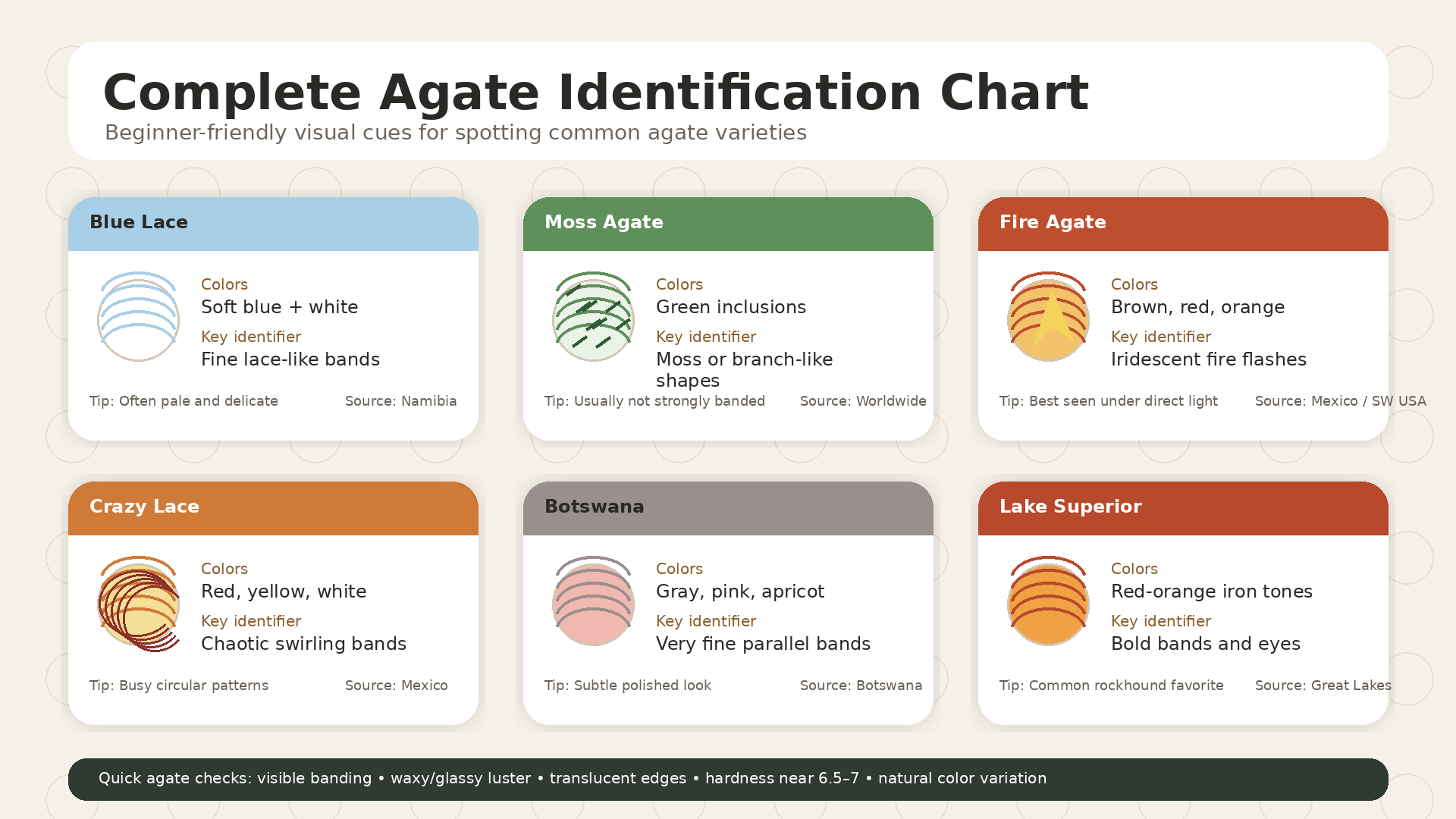
Complete Agate Identification Chart for Beginners
Agate is one of the most popular stones for beginner rockhounds because it is durable, colorful, and found in many parts of the world. The challenge is that rough agate can look plain on the outside, especially when it has been weathered, tumbled by water, or covered with a dull outer rind.
This beginner agate identification chart explains the most useful features to look for, including banding, translucency, hardness, surface texture, fracture, and common colors. It also compares agate with similar rocks that are often mistaken for agate in the field.
Agate is a variety of chalcedony, which is a microcrystalline form of quartz. It commonly forms when silica-rich fluids fill cavities, cracks, or openings in volcanic rocks and gradually deposit layers over time.
A reliable agate identification guide can help beginners compare field finds with known agate types.
Quick Agate Identification Chart
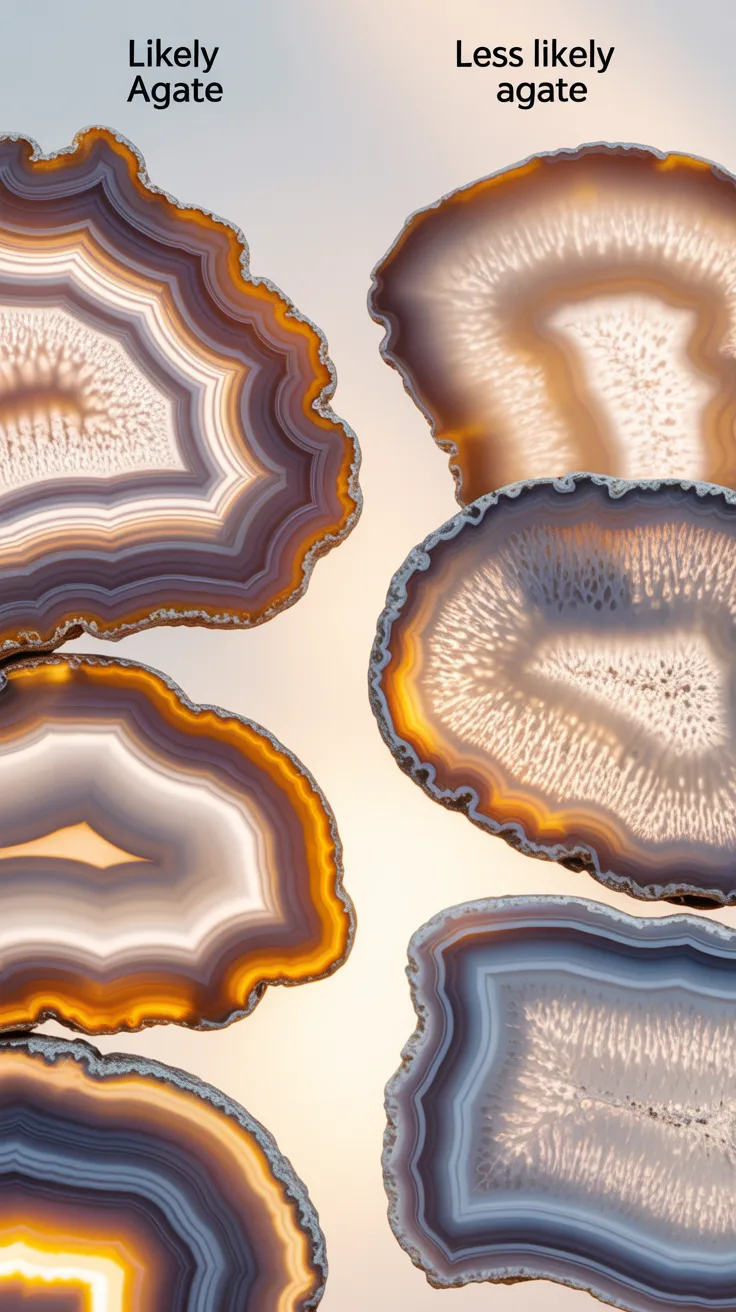
| Feature | Likely Agate | Less Likely Agate |
|---|---|---|
| Banding | Curved, parallel, fortification, or irregular bands may be visible | No banding, layers, or internal pattern |
| Translucency | Edges may glow when held to a strong light | Completely opaque with no light passing through thin edges |
| Hardness | Hard enough to scratch glass and resist a steel knife | Scratches easily with a knife or metal point |
| Luster | Waxy, glassy, or slightly glossy on broken surfaces | Dull, chalky, sandy, or crumbly |
| Texture | Smooth, dense, and compact | Grainy, porous, or visibly made of sand-sized particles |
| Fracture | May show curved, shell-like conchoidal fracture | Breaks into crumbly, flat, or powdery pieces |
| Weight | Feels dense for its size | Feels unusually light, porous, or glassy like slag |
Beginner Agate Identification Checklist
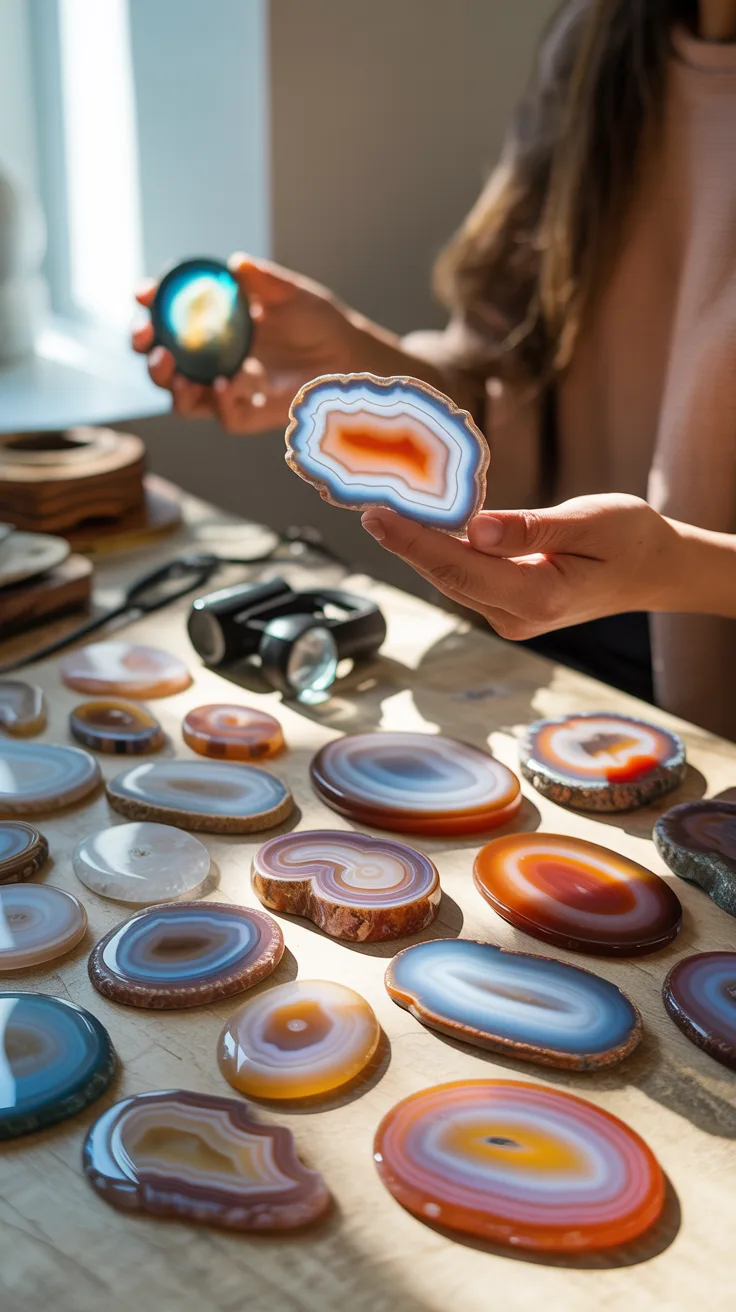
The easiest way to identify agate is to look for several clues at the same time rather than relying on one feature. A stone does not need to show every trait clearly, but the more agate-like features it has, the better the odds.
- Look for curved, layered, or concentric banding.
- Hold the stone to a bright light and check whether thin edges appear translucent.
- Examine broken or chipped areas for a waxy to glassy surface.
- Check whether the stone feels dense and hard rather than grainy or crumbly.
- Look for a dull outer rind that may hide a more colorful interior.
- Compare the stone with common local agates from the same region.
A jeweler’s loupe for rocks and minerals makes it easier to inspect banding, fractures, inclusions, and surface texture.
What Does Rough Agate Look Like?
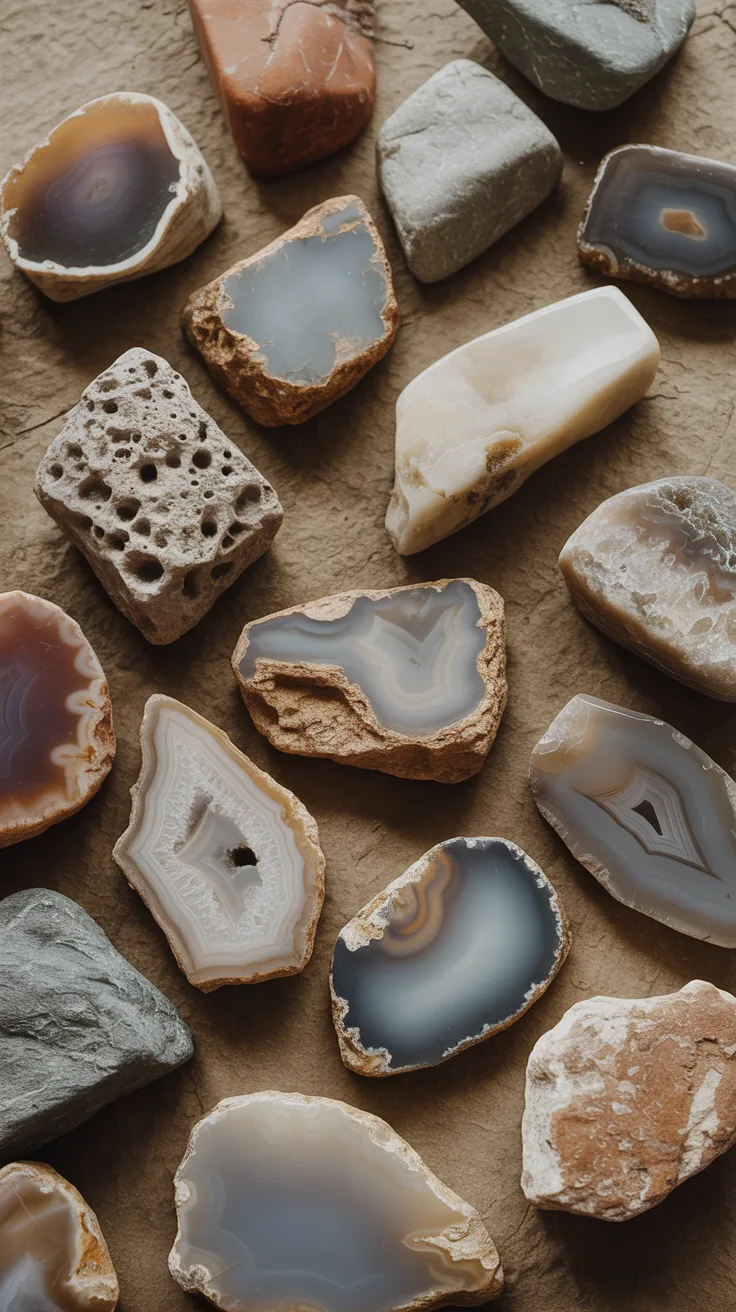
Rough agate often looks less colorful than polished agate. Many pieces have a gray, brown, tan, white, or reddish outer surface that can hide the bands inside.
Some rough agates have a bumpy or pitted outer rind because they formed inside cavities. Others are smooth from water movement in rivers, beaches, or gravel deposits.
The most useful field clue is translucency. Even when banding is not obvious, a rough agate may allow light to pass through thin edges or chipped corners.
Common Agate Types Identification Chart
| Agate Type | Common Colors | Key Identifier | Beginner Note |
|---|---|---|---|
| Banded Agate | White, gray, brown, red, orange, yellow | Visible parallel or curved bands | The classic agate pattern most beginners learn first |
| Lake Superior Agate | Red, orange, yellow, brown, white | Iron-rich banding and warm colors | Commonly associated with the Great Lakes region |
| Moss Agate | White, clear, gray, green | Moss-like green mineral inclusions | Often lacks classic banding but is still grouped with agate |
| Tree Agate | White, cream, green | Green branching patterns in a pale base | Similar to moss agate but usually more opaque |
| Blue Lace Agate | Pale blue, white, gray | Fine soft blue and white banding | Commercially known material is strongly associated with Namibia |
| Crazy Lace Agate | Red, yellow, orange, brown, white, gray | Swirling chaotic lace-like bands | Best known from Mexico |
| Fire Agate | Brown, orange, red, green flashes | Iridescent play of color caused by thin internal layers | Often requires direct light to show its best color |
| Dendritic Agate | White, clear, gray, black, brown | Tree-like or fern-like dendrite inclusions | The dendrites are mineral growths rather than fossil plants |
How to Test Agate at Home
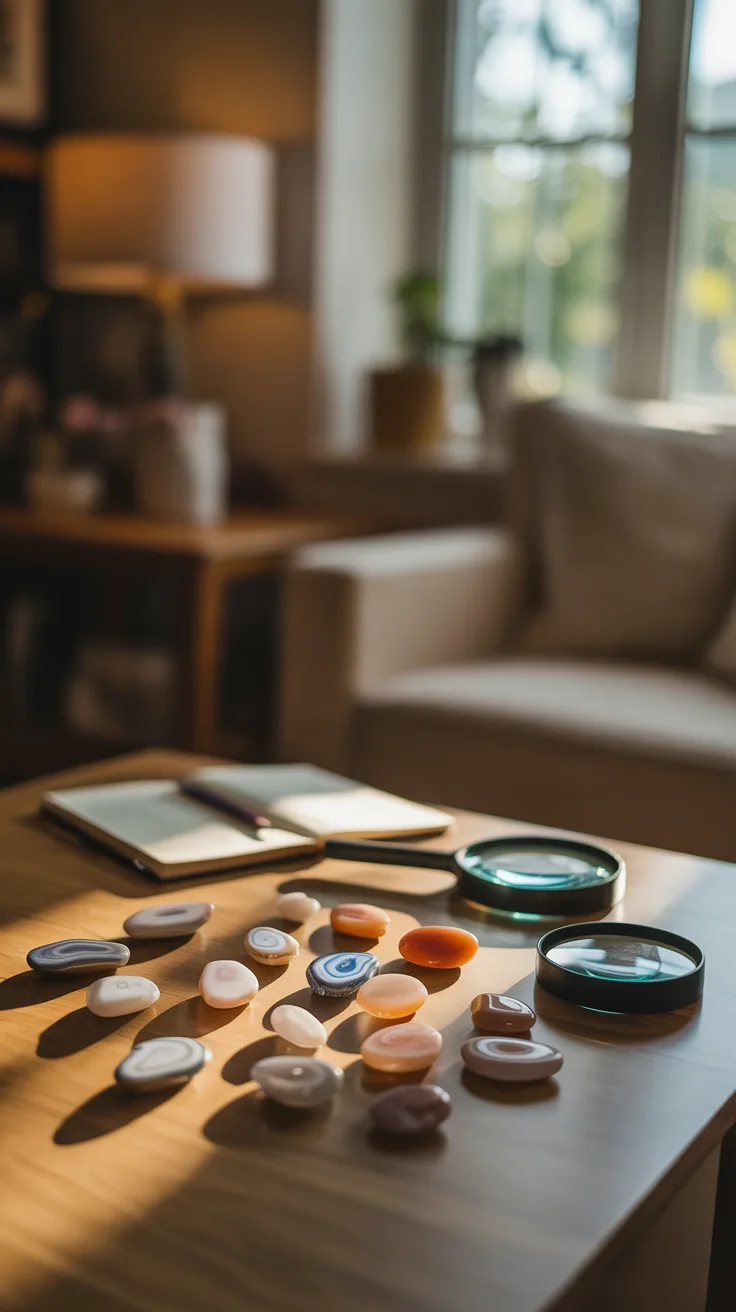
Beginner tests should be simple, non-destructive, and safe. Avoid damaging a promising specimen unless it is common material and the test is necessary.
Light Test
Hold the stone against a bright flashlight. Agate often becomes translucent along thin edges, cracks, or chipped areas.
Hardness Check
Agate has a hardness of about 6.5 to 7 on the Mohs scale, which means it is harder than a steel knife and can scratch glass. This test should be used carefully because it can damage both the stone and the glass surface.
Surface Inspection
Look for a waxy or glassy surface rather than a sandy or powdery texture. Agate is compact and dense, not loose-grained.
Banding Check
Use a loupe or magnifier to search for subtle curved bands. Some bands are obvious, while others are faint until the stone is cut, wet, or polished.
A bright rockhounding flashlight can help reveal translucency in rough agates during field checks.
Common Rocks Mistaken for Agate
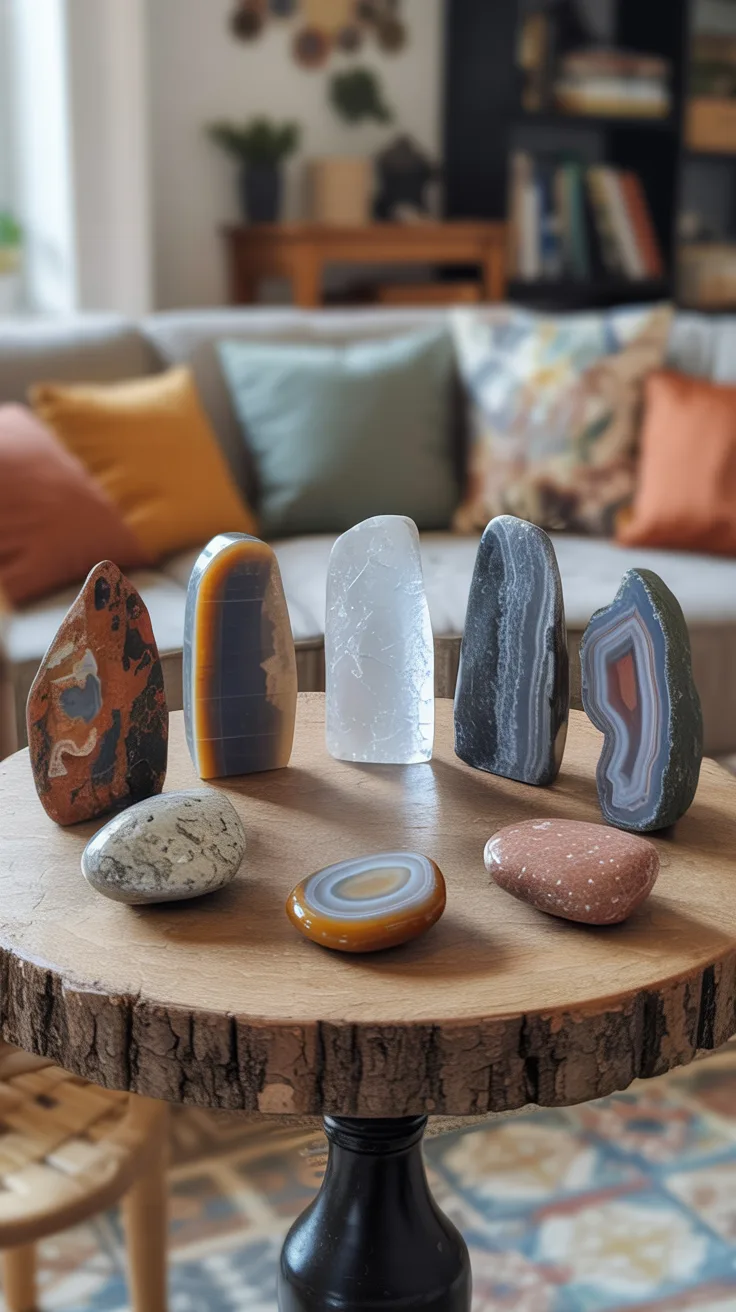
Many beginner rockhounds pick up stones that look like agate at first glance. Some are related forms of silica, while others are completely different materials.
| Material | Why It Looks Similar | How to Tell the Difference |
|---|---|---|
| Jasper | Hard, colorful, and quartz-rich | Usually opaque and lacks the translucency common in agate |
| Chert | Dense, hard, and smooth | Often duller and usually lacks strong decorative banding |
| Quartz | Hard and translucent | May show visible crystal structure instead of agate banding |
| Slag Glass | Can be colorful and glassy | May contain bubbles and unnatural colors from industrial origins |
| River Rock | Smooth rounded surface | May be opaque, grainy, or lack any internal structure |
How to Spot Dyed Agate
Dyed agate is common in gift shops, craft stores, and online listings. It can be attractive, but it should not be confused with naturally colored agate.
Bright neon blue, hot pink, intense purple, and vivid green are often signs of dye treatment. Natural agate colors are usually more varied, earthy, layered, or softly blended.
Dye may also collect in cracks, pits, or porous areas. If the color looks unusually even or artificial, the stone may have been treated.
Where Beginners Can Find Agates
Agates are commonly found in areas with volcanic history, river gravels, beaches, desert washes, old gravel pits, and glacial deposits. The best locations depend heavily on local geology and collecting laws.
Popular agate-hunting areas include parts of the Great Lakes region, the Pacific Northwest, the Southwest, and many river or beach environments where durable stones naturally concentrate.
Always check land ownership and local rules before collecting. Some parks, protected lands, private properties, and mine sites prohibit rock collecting.
A practical rockhounding bag keeps field finds separated, labeled, and protected while collecting outdoors.
How to Clean and Store Agate
Most agates can be cleaned with lukewarm water, mild soap, and a soft brush. Avoid harsh chemicals because they may affect treated stones, labels, coatings, or attached matrix material.
Polished agates should be stored separately from softer minerals to prevent scratches. Rough agates can be kept in labeled trays, bags, or boxes so the location and date of collection are not lost.
Good labeling matters for collectors. A simple note with the location, date, and field conditions can make a specimen more meaningful later.
A mineral display case helps protect polished agates and labeled specimens from scratches, dust, and handling damage.
Beginner Mistakes to Avoid
The most common mistake is expecting rough agate to look like polished agate. Many rough pieces look plain until they are wet, cut, or tumbled.
Another mistake is assuming every colorful stone is agate. Jasper, chert, quartz, and slag glass can all fool beginners.
It is also important not to rely only on color. Banding, translucency, hardness, texture, and local geology provide a more reliable identification picture.
Conclusion
Agate identification becomes easier when beginners use a checklist instead of guessing from color alone. Banding, translucency, hardness, waxy luster, and a dense texture are some of the strongest clues.
A good agate identification chart should also explain what agate is not. Comparing agate with jasper, chert, quartz, slag glass, and ordinary river rock helps new collectors avoid common mistakes.
With practice, a flashlight, a loupe, and local field knowledge, beginners can become much more confident when identifying rough agate in the field or evaluating specimens for a collection.
Frequently Asked Questions
What is the easiest way to identify agate?
The easiest way to identify agate is to look for banding, translucency along thin edges, a waxy to glassy surface, and a dense hard texture.
Does all agate have bands?
Classic agate has banding, but some varieties grouped with agate, such as moss agate and dendritic agate, are better known for inclusions than visible bands.
Can agate scratch glass?
Agate is hard enough to scratch glass because it is a form of chalcedony quartz with a Mohs hardness around 6.5 to 7.
What does rough agate look like outside?
Rough agate may look gray, brown, tan, white, reddish, waxy, rounded, or covered with a dull rind before it is cut or polished.
How can you tell agate from jasper?
Agate is usually more translucent and may show banding, while jasper is usually opaque and often has a more solid color or mottled appearance.
Are brightly colored agates natural?
Some agates have vivid natural colors, but neon blue, hot pink, bright purple, and intense green agates are often dyed.
What tools help identify agate?
A flashlight, 10x loupe, local field guide, hardness reference, and labeled collection bags are helpful tools for beginner agate identification.