
Introduction
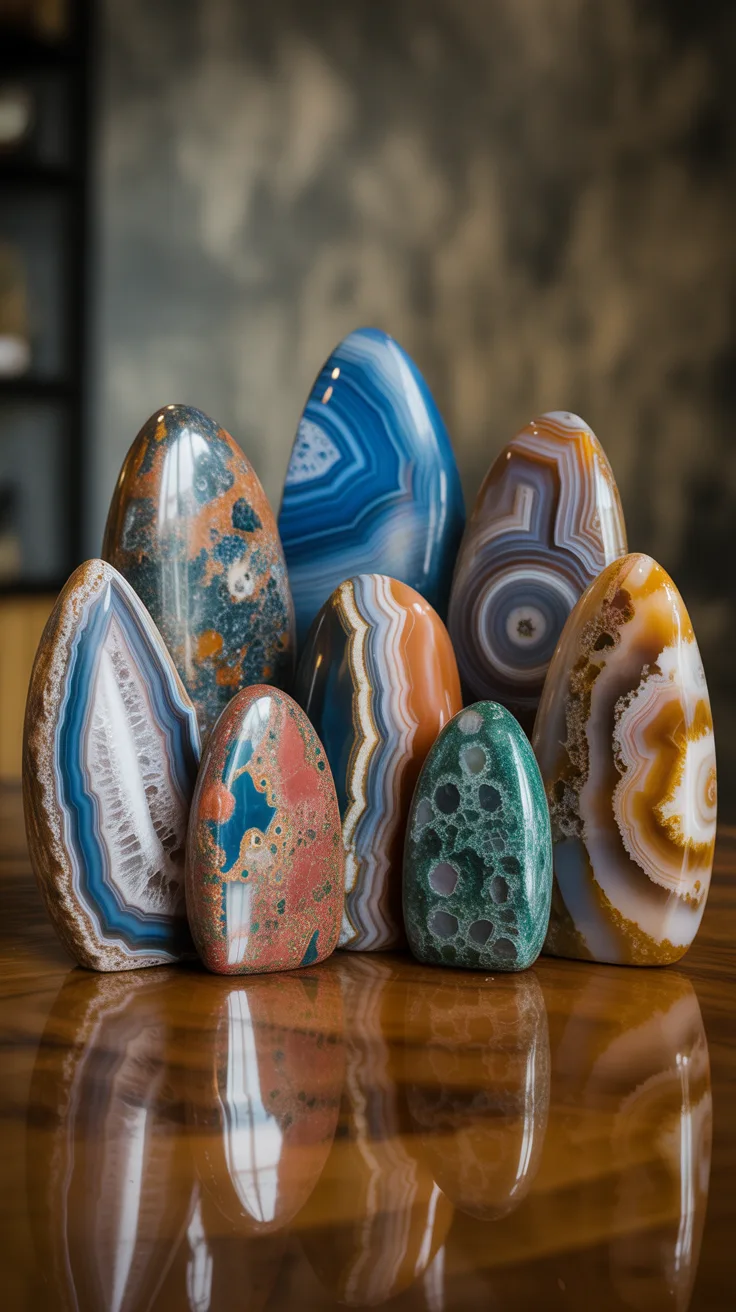
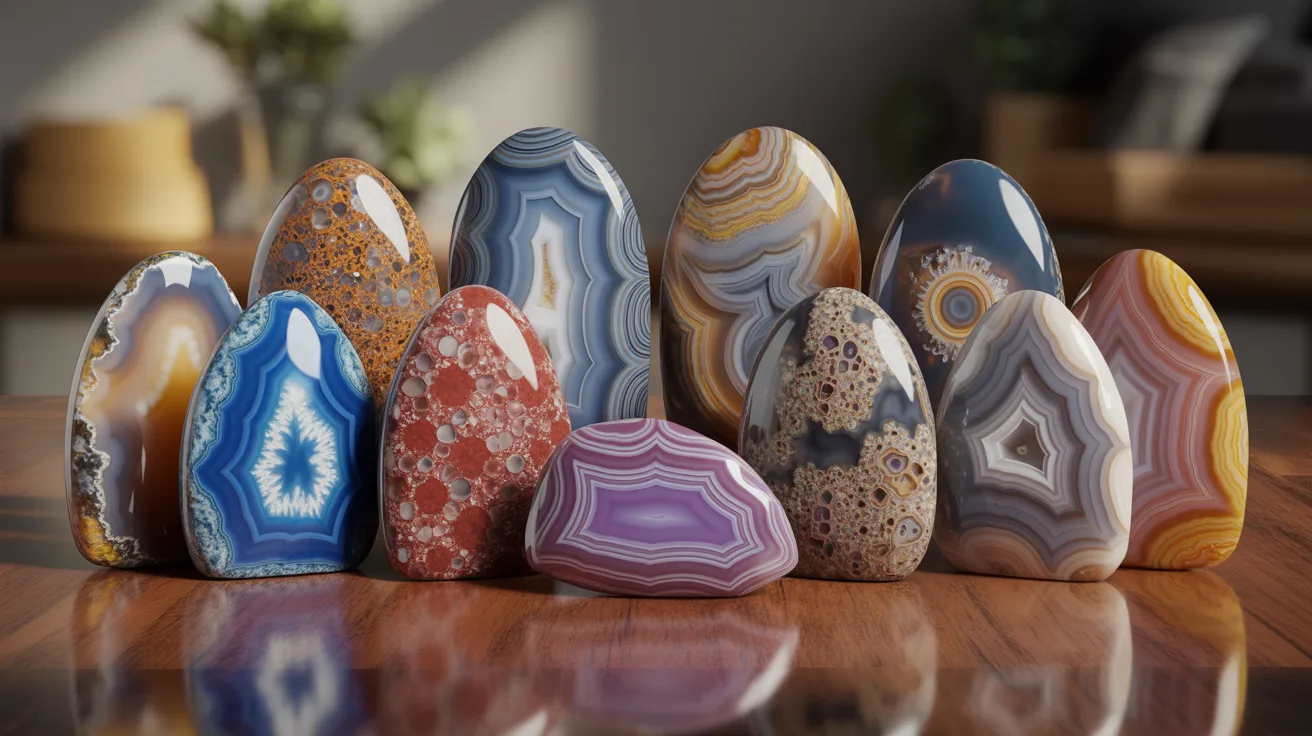
Lace agate stands among the most visually captivating varieties of chalcedony, distinguished by its delicate, intricate banding patterns that resemble fine lacework. These stunning formations occur when silica-rich solutions slowly deposit layer upon layer within volcanic rock cavities, creating mesmerizing designs that have fascinated collectors and lapidary artists for centuries. From the rolling hills of Mexico to the rugged landscapes of Africa, lace agate specimens showcase nature’s remarkable ability to create complex geometric beauty through patient geological processes.
The following exploration highlights eight exceptional varieties of lace agate celebrated worldwide for their extraordinary banding, vibrant colorations, and collectible appeal. Each variety possesses unique characteristics that make it highly sought after in the gem and mineral community.

1. Crazy Lace Agate from Mexico
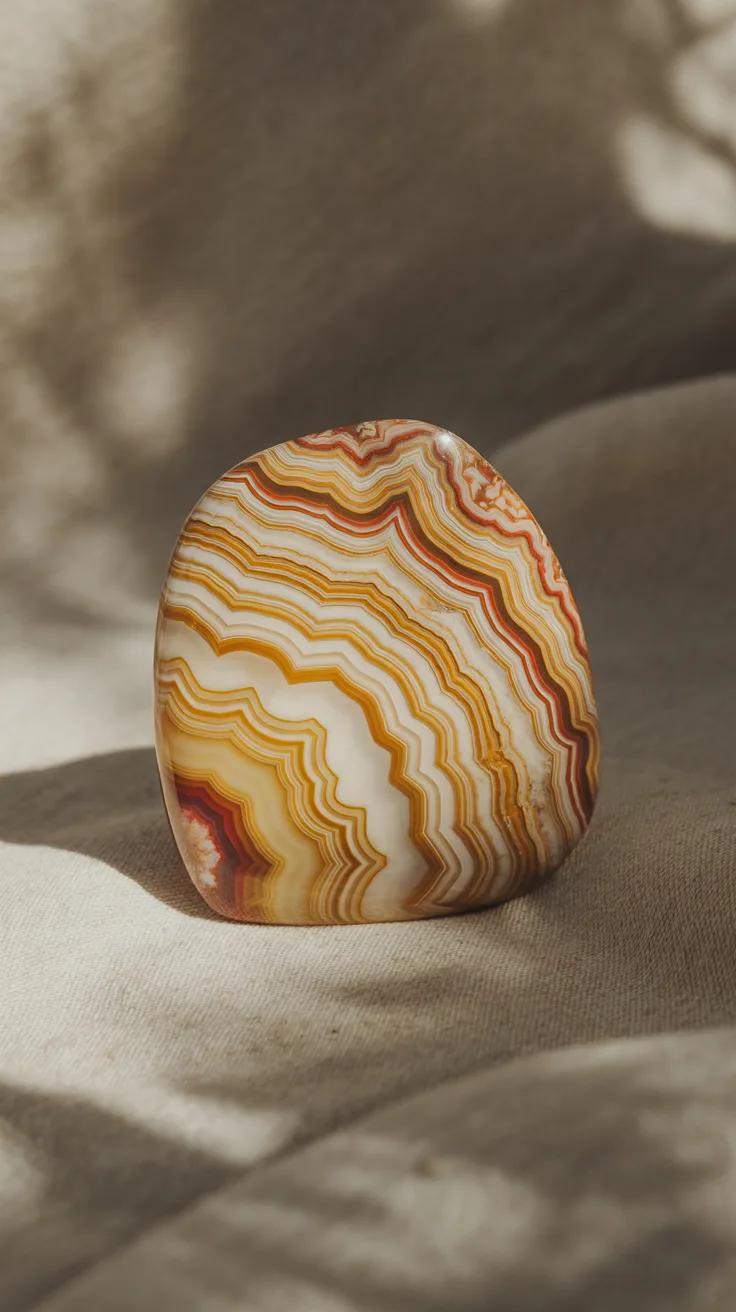
Often called the “Laughter Stone” or “Happy Lace,” Crazy Lace Agate originates primarily from the state of Chihuahua in northern Mexico. This variety displays an explosion of swirling, twisting bands in warm earth tones including cream, gold, red, and brown. The chaotic yet harmonious patterns create an almost psychedelic appearance that sets it apart from more orderly banded agates.
Formed approximately 65-90 million years ago during the Cretaceous period, Crazy Lace Agate developed in volcanic rock cavities where mineral-rich waters deposited silica in complex, folded layers. The iron and aluminum inclusions contribute to its characteristic warm color palette.

View on AmazonAs an Amazon Associate, I earn from qualifying purchases.

View on AmazonAs an Amazon Associate, I earn from qualifying purchases.
Pro Tip: When selecting Crazy Lace Agate specimens, look for pieces with sharp contrast between bands and minimal fracturing. The most valuable specimens display multiple colors with clearly defined, intricate patterns throughout the entire stone.
2. Blue Lace Agate from Namibia
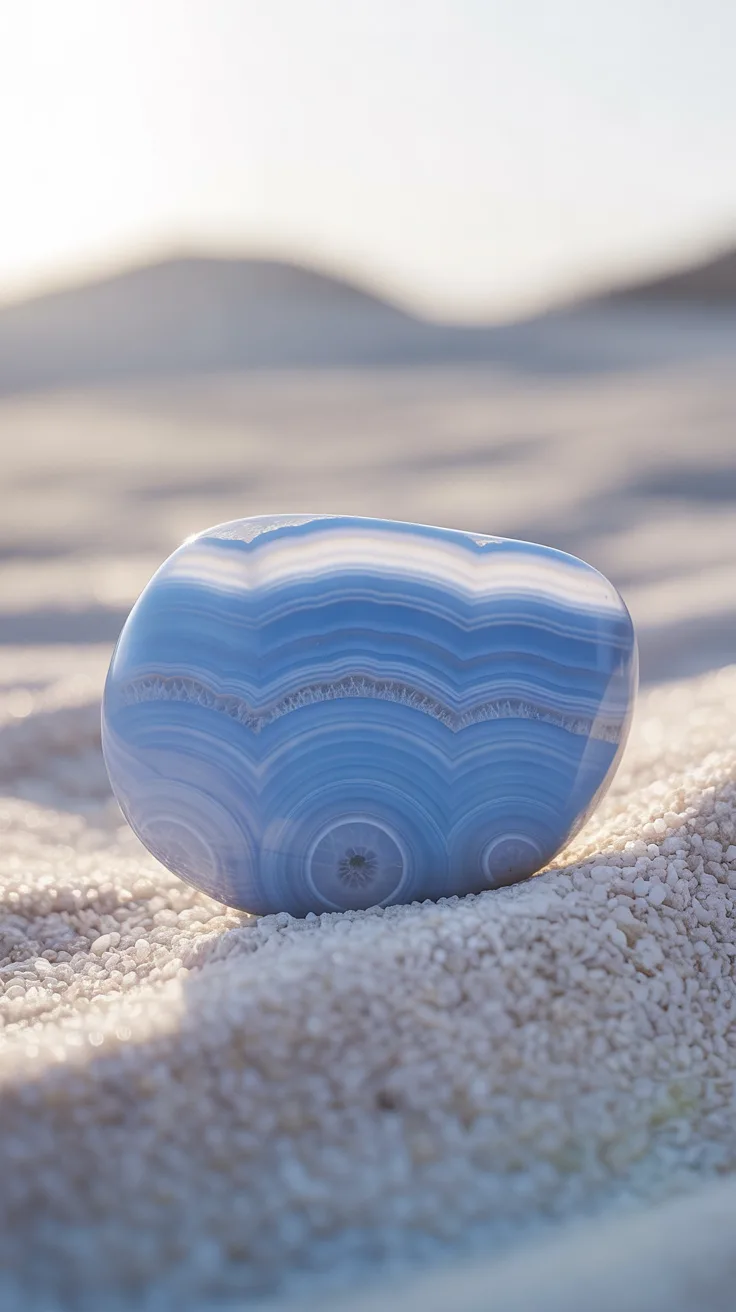
Blue Lace Agate represents one of the most delicate and sought-after varieties in the lace agate family. Discovered in Namibia’s arid regions, this variety features soft, powder-blue bands alternating with white or lighter blue layers. The gentle, wave-like patterns evoke images of clouds or flowing water, creating a serene aesthetic highly prized in jewelry design.
The blue coloration results from the scattering of light through microscopic mineral inclusions, similar to the phenomenon that makes the sky appear blue. Quality Blue Lace Agate deposits remain relatively rare, contributing to its premium market value.
- Primary source: Ysterputs Farm, Namibia
- Color range: Pale blue to periwinkle with white banding
- Hardness: 6.5-7 on the Mohs scale
- Best uses: Cabochons, beads, and decorative carvings

View on AmazonAs an Amazon Associate, I earn from qualifying purchases.

View on AmazonAs an Amazon Associate, I earn from qualifying purchases.
3. Laguna Lace Agate from Mexico
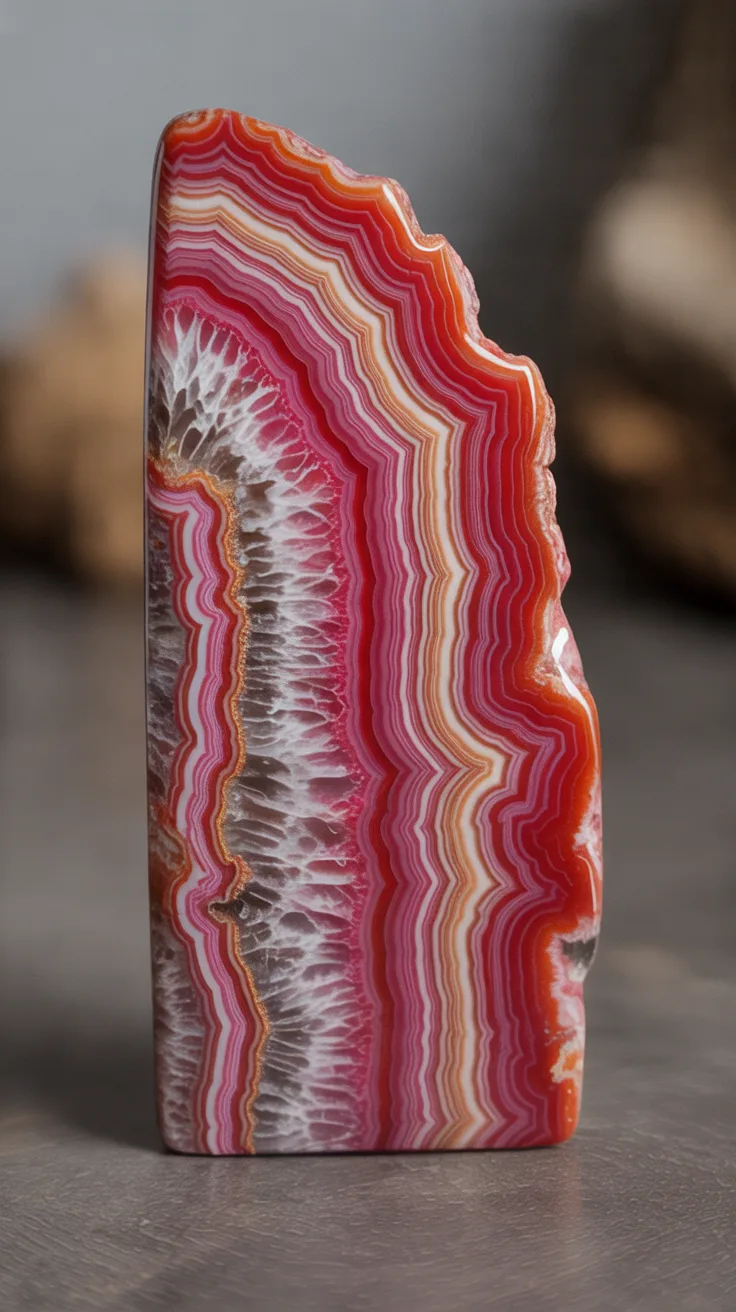
Laguna Lace Agate, sourced from the Ojo Laguna region of Chihuahua, Mexico, commands respect as one of the most highly banded agates in existence. Collectors prize this variety for its exceptionally tight, fine banding that can display dozens of distinct layers within a single centimeter. The color combinations range from vivid reds and pinks to subtle grays and whites.
The precision of Laguna Lace banding results from remarkably stable depositional conditions over extended periods. Each microscopic layer represents a distinct episode of mineral precipitation, creating a geological record of ancient hydrothermal activity.

View on AmazonAs an Amazon Associate, I earn from qualifying purchases.

View on AmazonAs an Amazon Associate, I earn from qualifying purchases.
Pro Tip: Authentic Laguna Lace Agate should display naturally tight banding without artificial enhancement. Examine specimens under magnification to verify the organic irregularities that distinguish genuine material from synthetic alternatives.
4. Botswana Agate from Africa
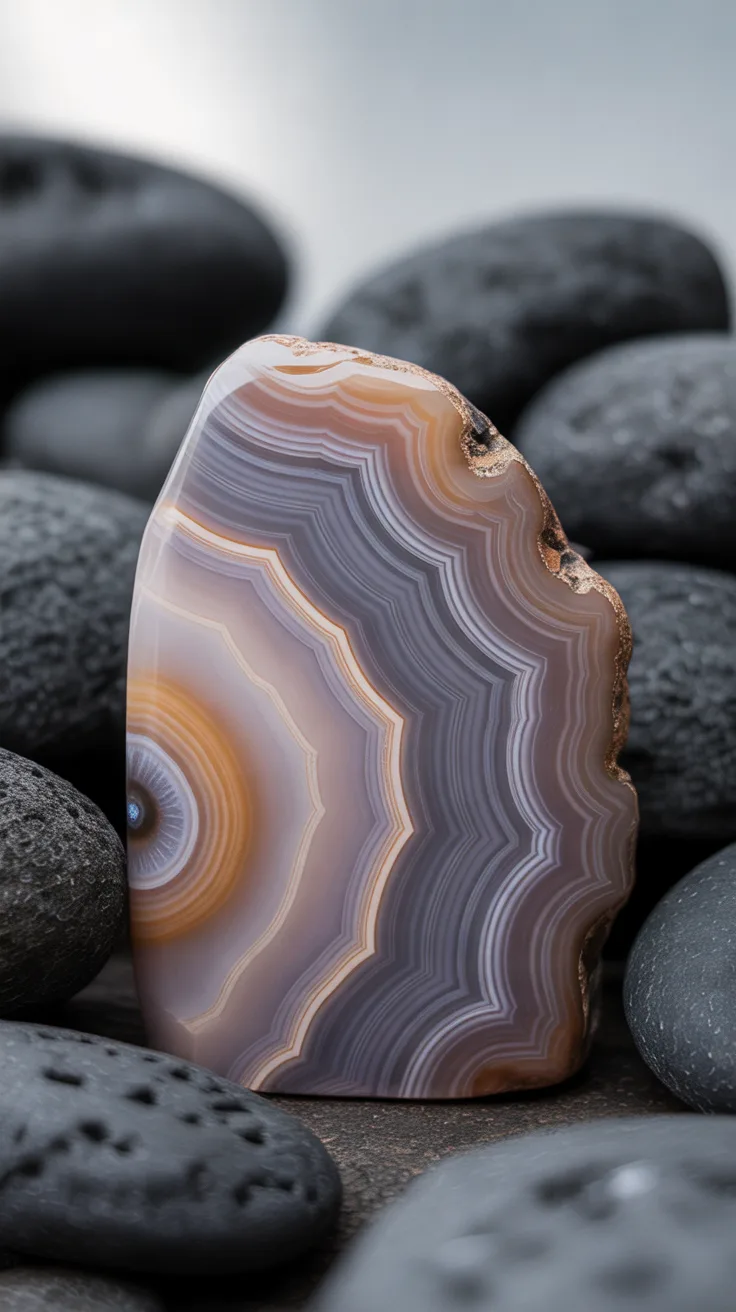
Botswana Agate emerges from the ancient volcanic rocks of the African nation bearing its name. This variety showcases sophisticated banding in muted tones of gray, pink, apricot, and brown. The parallel, fine-line patterns create an elegant appearance that has made Botswana Agate a favorite among jewelry designers seeking understated sophistication.
Formed nearly 187 million years ago during intense volcanic activity, Botswana Agate developed in lava flows that covered the region. The slow cooling process and subsequent silica infiltration produced the characteristic fine banding that defines this variety.
- Notable characteristics: Parallel banding with occasional eye formations
- Popular applications: High-end jewelry, meditation stones, collector specimens
- Distinguishing feature: Subtle color gradations within individual bands
5. Fairburn Agate from South Dakota
America’s Most Valuable Agate
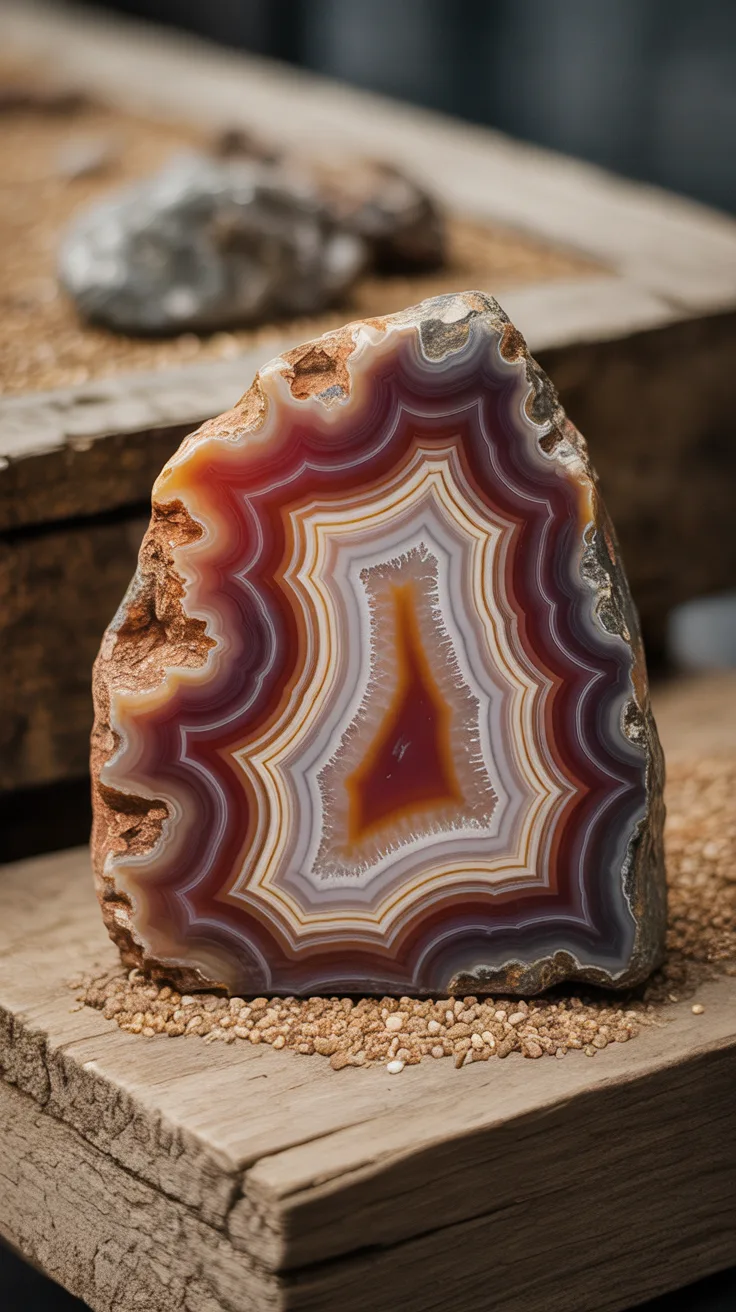
Fairburn Agate holds the distinction of being the official state gemstone of South Dakota and arguably the most valuable agate variety found in North America. These specimens display fortification-style banding with sharp, angular patterns in vibrant reds, oranges, and yellows against contrasting backgrounds. The complex, holly-leaf patterns make each Fairburn Agate uniquely identifiable.
Unlike many agates found in their original volcanic host rock, Fairburn Agates occur as weathered nodules scattered across the prairies and badlands of southwestern South Dakota. This dispersal resulted from millions of years of erosion breaking down the original limestone formations.
A rockhounding field guide for agates can be useful when learning how to recognize specimens in the field.
Pro Tip: Fairburn Agates with complete, unbroken banding patterns and vivid red coloration command the highest prices. Specimens exceeding two inches in diameter with exceptional patterning can sell for thousands of dollars.
6. Plume Lace Agate Varieties
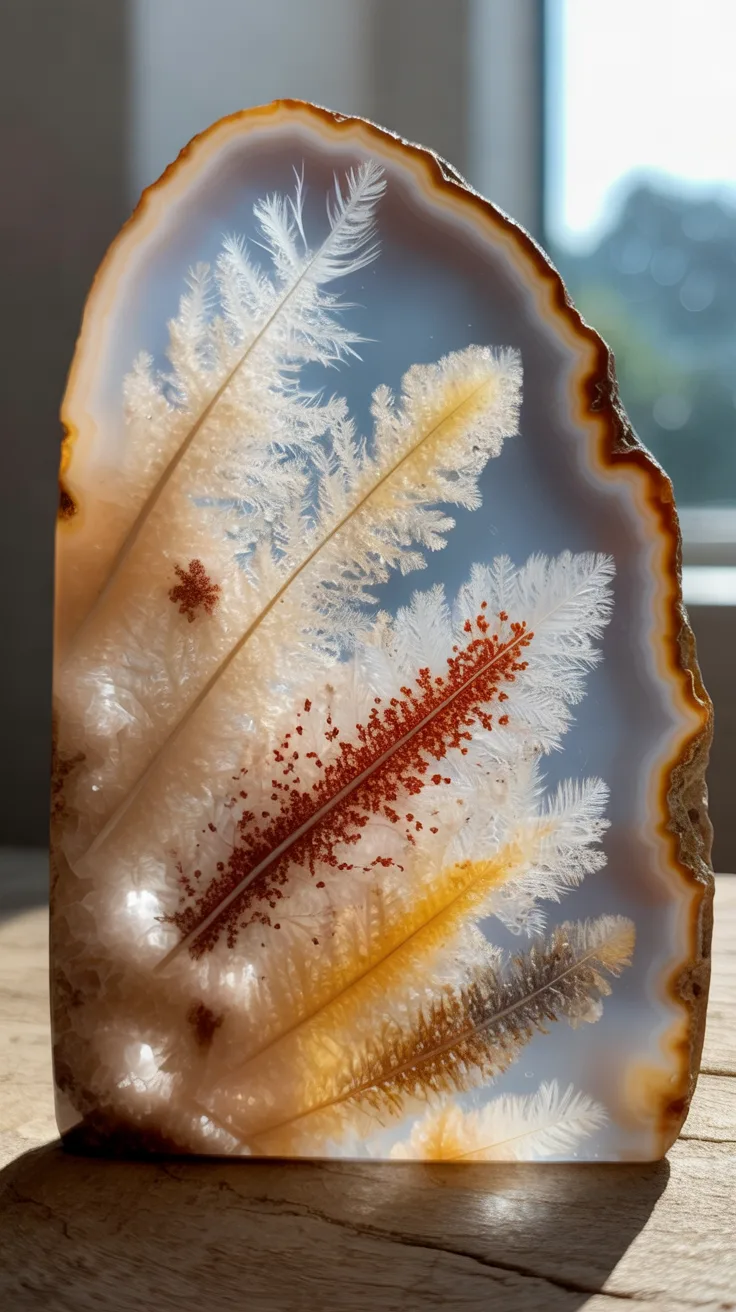
Plume agates combine traditional lace banding with feathery, plume-like inclusions that appear to float within the stone. These formations occur when manganese or iron oxides create dendritic patterns during the agate’s formation. Notable sources include Oregon, Texas, and various Mexican localities.
The interplay between structured banding and organic plume formations creates specimens of exceptional visual interest. Lapidary artists particularly value plume lace agates for their ability to produce one-of-a-kind cabochons where no two pieces appear identical.
Key Plume Lace Varieties
- Graveyard Point Plume Agate: Oregon/Idaho border region
- Priday Plume Agate: Central Oregon
- Woodward Ranch Plume Agate: Alpine, Texas
7. Coyamito Agate from Mexico
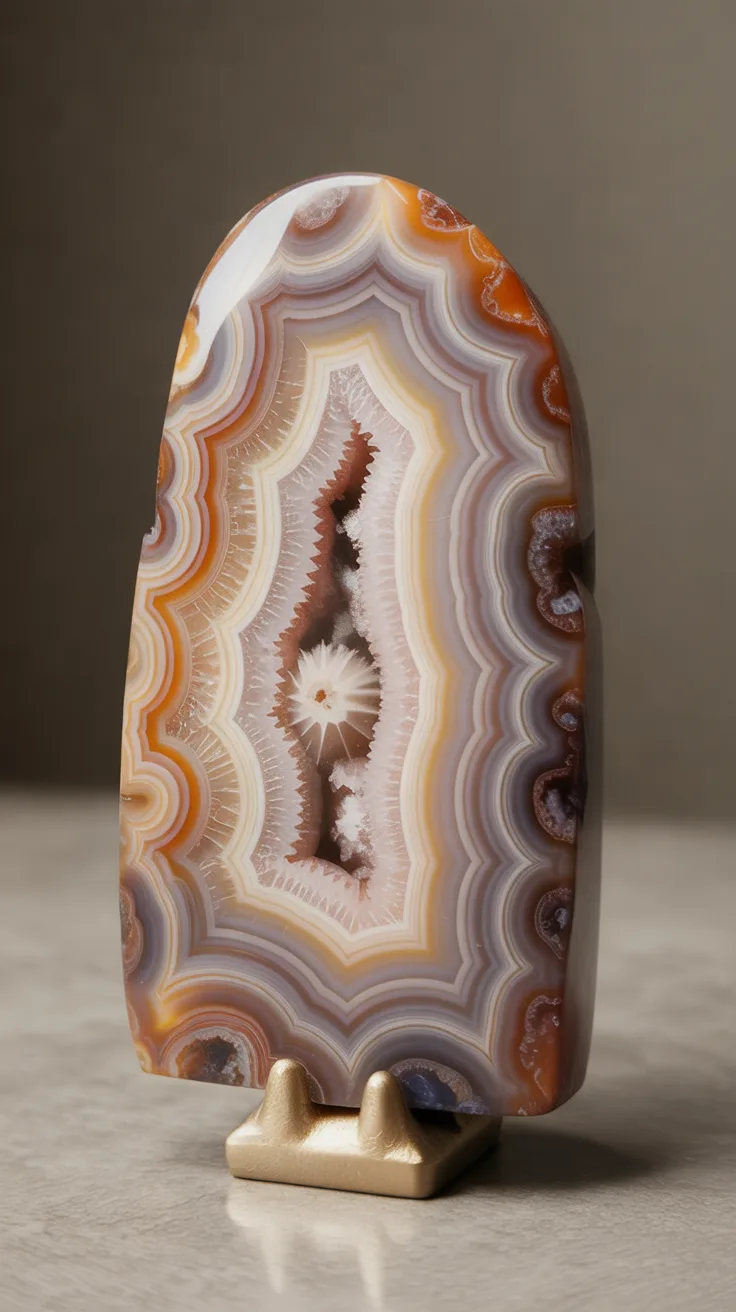
Coyamito Agate, named after the Rancho Coyamito in Chihuahua, Mexico, represents a relatively recent discovery that has quickly gained prominence among serious collectors. This variety features pseudomorphic banding where the agate replaced pre-existing aragonite crystals, creating unusual geometric patterns unlike typical concentric banding.
The resulting specimens often display sagenitic inclusions—needle-like crystal formations—combined with traditional lace patterns. Colors range from clear and white to orange, red, and occasional purple hues.
Pro Tip: Coyamito Agates with intact pseudomorph structures and visible sagenitic needles represent the most collectible specimens. These features indicate minimal weathering and optimal preservation conditions.
8. Turkish Stick Agate
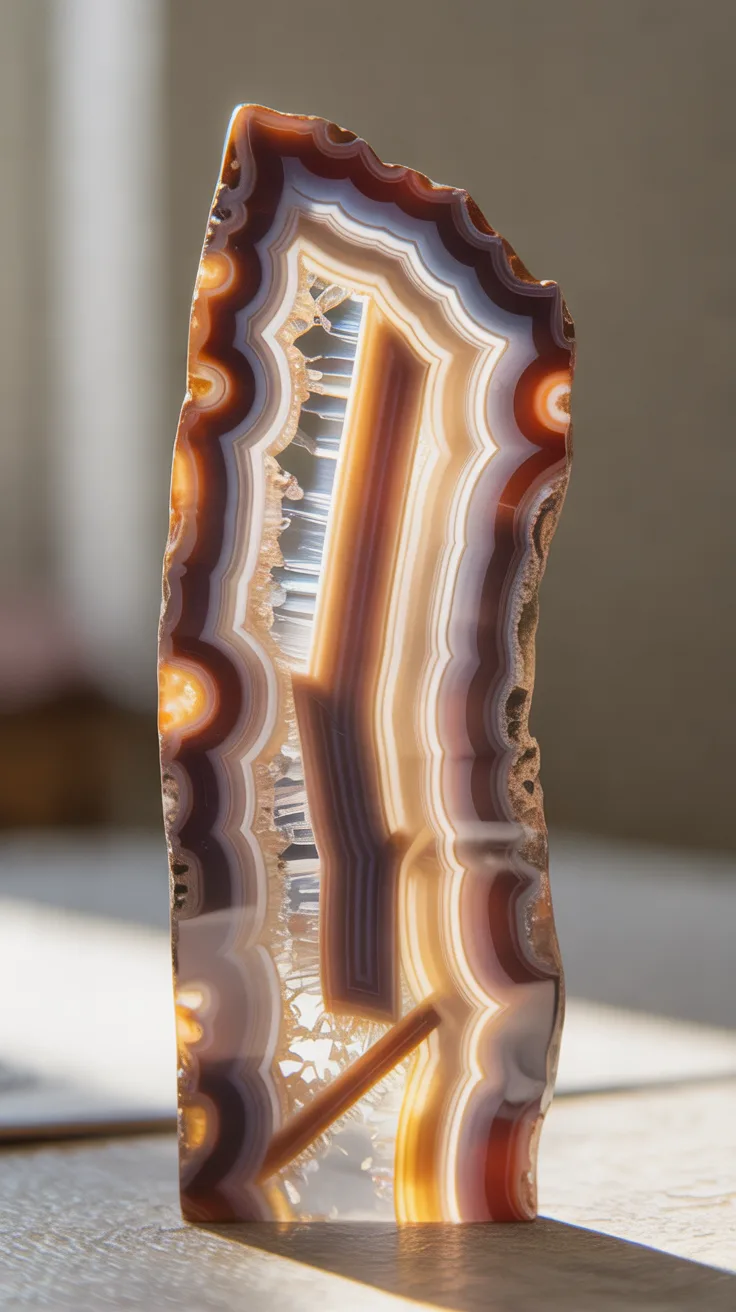
Turkish Stick Agate, also known as Ankara Stone, originates from central Turkey and displays a distinctive pattern of parallel, stick-like formations within its banding structure. This unusual appearance results from the replacement of fibrous mineral formations, creating linear elements that intersect with traditional curved banding.
The contrast between geometric stick patterns and flowing lace agate bands produces specimens of remarkable visual complexity. Colors typically include earth tones of brown, cream, and occasional red highlights.
Caring for Lace Agate Collections
Proper care ensures lace agate specimens maintain their beauty for generations. These guidelines apply to all varieties discussed:
- Clean with lukewarm water and mild soap; avoid ultrasonic cleaners
- Store specimens separately to prevent scratching
- Avoid prolonged exposure to direct sunlight, which may fade some colors
- Keep away from harsh chemicals and extreme temperature changes
- Display in cases with stable humidity levels when possible
Small specimens can be protected and organized in gemstone display and storage boxes.
Frequently Asked Questions
What causes the banding patterns in lace agate?
Banding forms through rhythmic precipitation of silica from mineral-rich solutions within rock cavities. Changes in solution chemistry, temperature, and pressure create distinct layers over thousands to millions of years, resulting in the characteristic striped appearance.
How can collectors identify authentic lace agate versus dyed specimens?
Authentic lace agate displays natural color gradations and slight irregularities within bands. Dyed specimens often show unnaturally uniform colors, color concentration along fracture lines, and may leave color residue when rubbed with acetone on an inconspicuous area.
Which lace agate variety holds the highest value?
Fairburn Agate typically commands the highest prices among lace agate varieties, with exceptional specimens selling for several thousand dollars. Blue Lace Agate and fine Laguna Lace Agate also maintain premium market positions due to their rarity and aesthetic appeal.
Can lace agate be used in everyday jewelry?
Yes, with a hardness of 6.5-7 on the Mohs scale, lace agate possesses sufficient durability for rings, pendants, and earrings. However, protective settings are recommended for rings to minimize impact damage to the polished surface.
Where can collectors find lace agate specimens?
Collectors can acquire lace agate through gem and mineral shows, reputable online dealers, rock shops, and direct field collecting in permitted areas. Major sources include Mexico, Namibia, Botswana, and various locations throughout the United States.