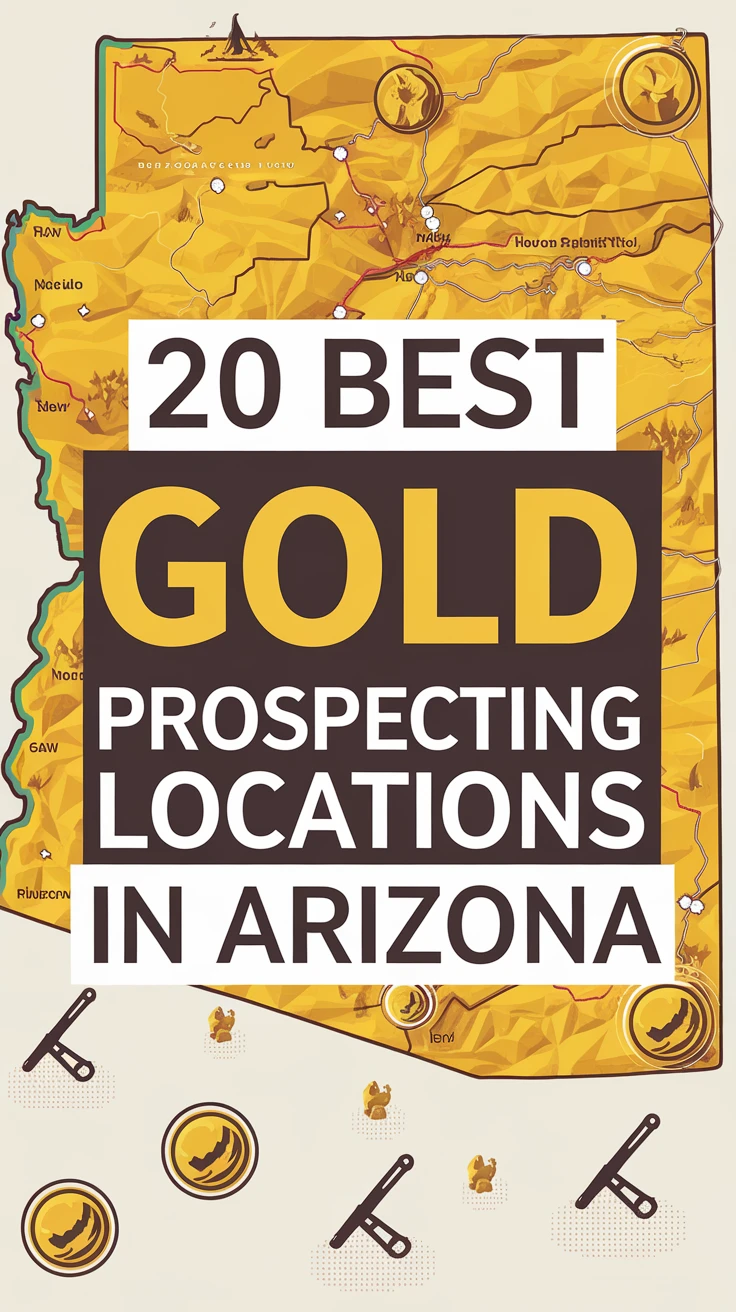
Introduction to Gold Prospecting in Arizona
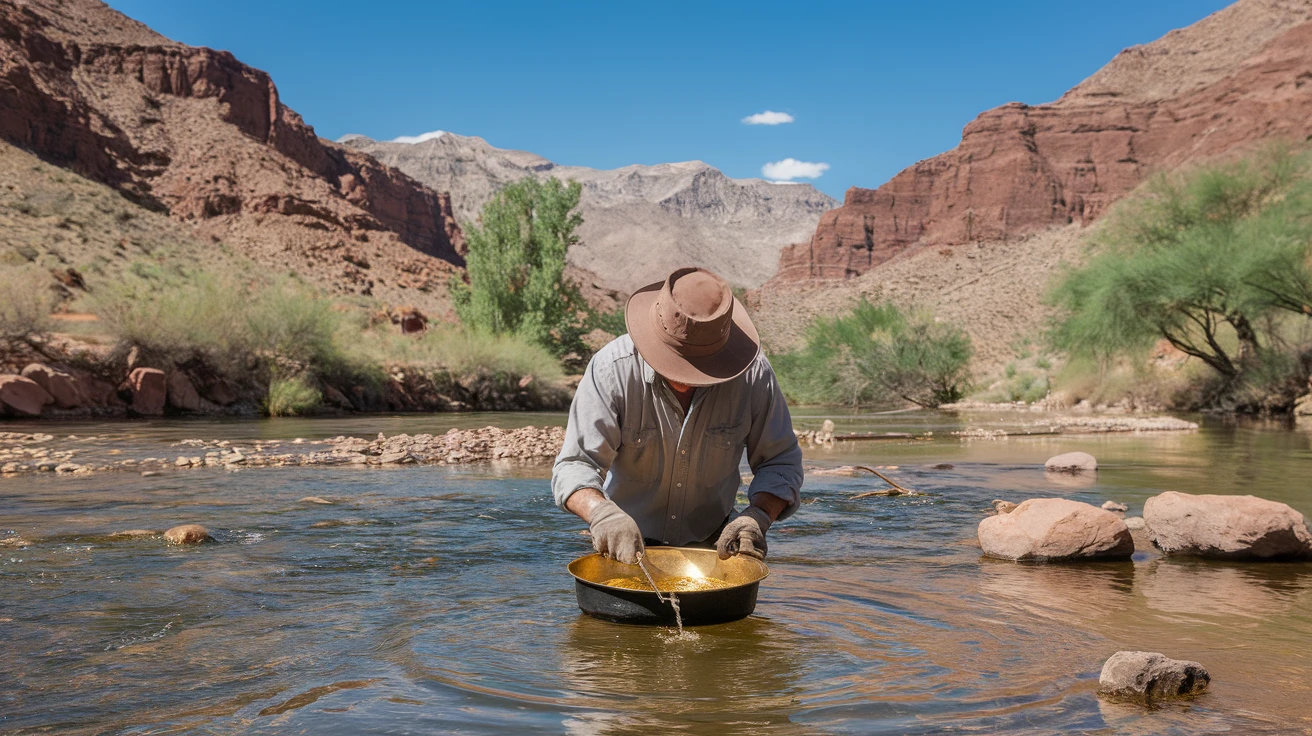
There’s something magical about the glint of gold in your pan after a day of prospecting under the Arizona sun. I’ve spent countless weekends exploring the mineral-rich landscapes of the Grand Canyon State, and I’m here to tell you—Arizona is a gold prospector’s playground that’s often overlooked in favor of California or Alaska. With its rich mining history dating back to the 1860s, Arizona has produced over 16 million ounces of gold, and there’s still plenty waiting to be discovered by folks like you and me.
Whether you’re a seasoned prospector with calloused hands or a curious newbie itching for your first nugget, gold prospecting in Arizona offers opportunities for everyone. The state’s diverse terrain—from scorching desert washes to pine-covered mountains—creates unique gold-trapping environments you won’t find anywhere else. If you’re just getting started, it’s worth picking up a simple beginner gold panning kit so you can practice at home before you hit the creeks. Ready to grab your gear and start your treasure hunt? Let’s dive into the 20 best spots where you might just strike it rich.
1. Lynx Creek, Prescott
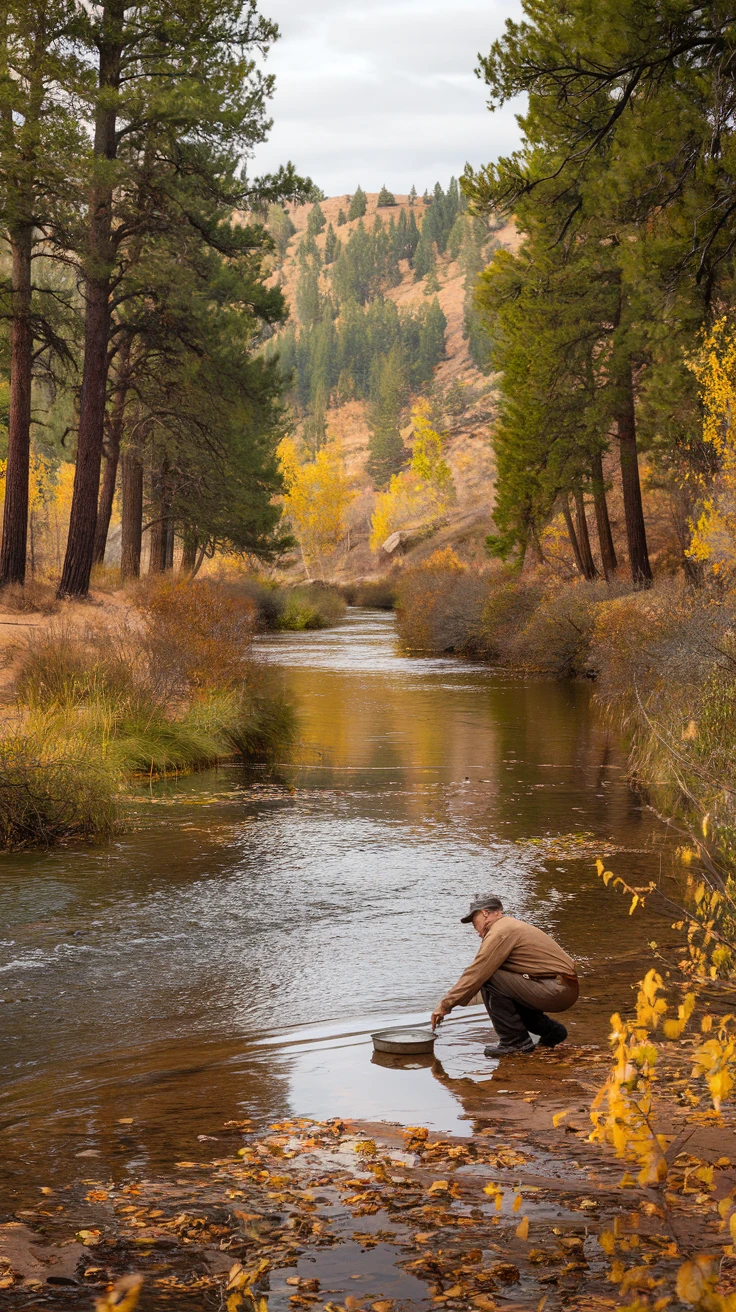
Lynx Creek has been my go-to spot for years, and it never disappoints. Located in the Prescott National Forest, this creek has yielded thousands of ounces since gold was first discovered here in 1863. The Forest Service has even designated a 4.5-mile stretch specifically for recreational gold panning, which makes it perfect for beginners and families.
- Accessibility: Easy access via Walker Road with multiple parking areas
- Type of gold: Fine placer gold with occasional small nuggets
- Best season: Spring after the snow melts or fall when water levels are manageable

View on Amazon
As an Amazon Associate, I earn from qualifying purchases.

View on Amazon
As an Amazon Associate, I earn from qualifying purchases.
Pro Tip: Lynx Creek is an ideal place to practice panning technique before you branch out to harder spots. If you want to get comfortable at home first, grab a bag of salted paydirt like the ones above and run it through your pan a few times.
2. Rich Hill and Weaver Creek, Wickenburg
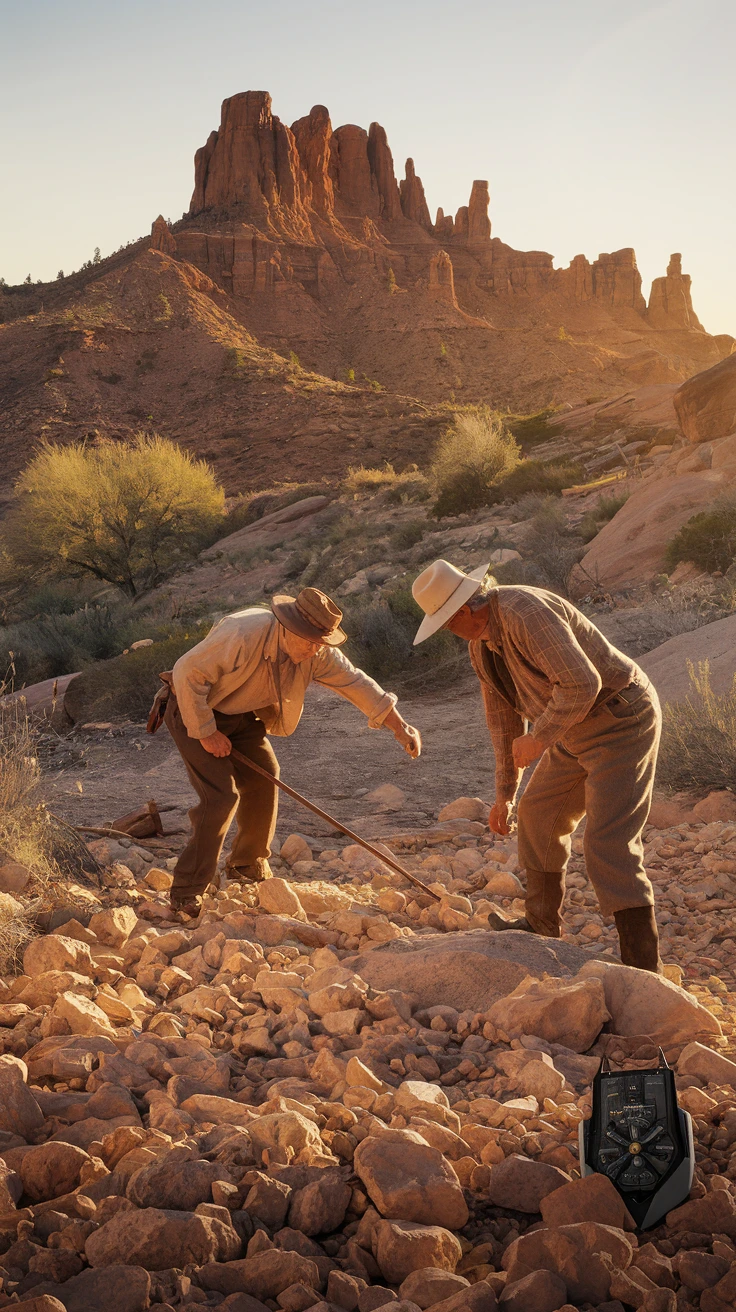
Ever heard of the “Legend of Antelope Hill”? This is it. In 1863, prospectors discovered gold nuggets literally lying on the ground here, giving the area its nickname “Potato Patch” because the nuggets were as big as potatoes. While you probably won’t find spud-sized gold nowadays, Rich Hill and nearby Weaver Creek still produce decent placer gold and occasional chunky nuggets for those willing to work for them.
- Accessibility: Moderate, requires high-clearance vehicle for some areas
- Type of gold: Coarse placer gold and occasional nuggets
- Best season: Winter and early spring (avoid summer’s brutal heat)

View on Amazon
As an Amazon Associate, I earn from qualifying purchases.

View on Amazon
As an Amazon Associate, I earn from qualifying purchases.
Pro Tip: Bring a metal detector alongside your traditional equipment—many nuggets hide just beneath the surface in the decomposed granite. A simple rock hammer and chisel kit like the ones above also makes it easier to break open caliche and check cracks where heavies get trapped.
3. Bradshaw Mountains, Prescott
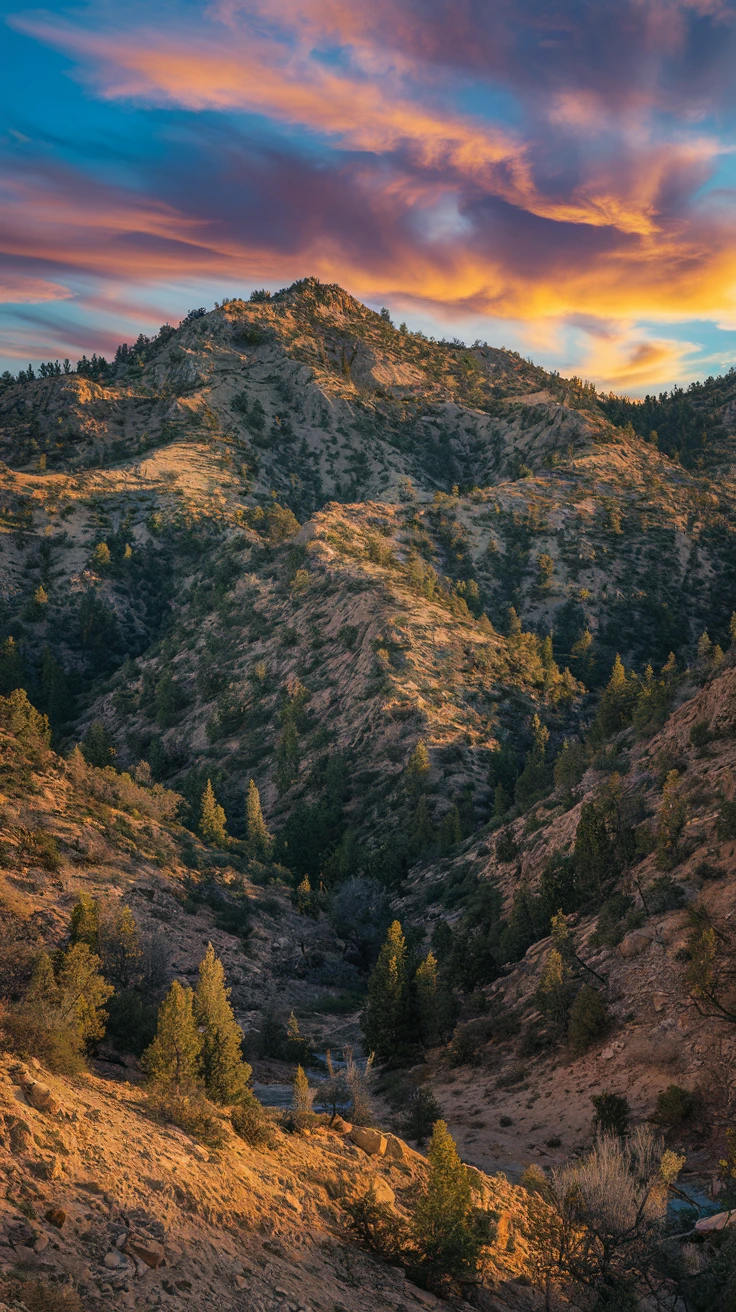
The Bradshaw Mountains are home to over 40 old mining districts, making this area a gold prospector’s dream. The range has produced more gold than any other set of mountains in Arizona. While much of the land is claimed, there are still public areas and club claims where you can try your luck with pans, sluices, and detectors.
- Accessibility: Varies from easy to difficult depending on specific location
- Type of gold: Both placer and lode deposits
- Best season: Spring and fall (summers are hot, winters can bring snow at higher elevations)

View on Amazon
As an Amazon Associate, I earn from qualifying purchases.

View on Amazon
As an Amazon Associate, I earn from qualifying purchases.
Pro Tip: Many Bradshaw creeks are perfect for running a small folding sluice. A portable sluice box like the kits above lets you process far more material than panning alone—just be sure to follow Forest Service regulations for the specific drainage you’re working.
4. Hassayampa River, Wickenburg
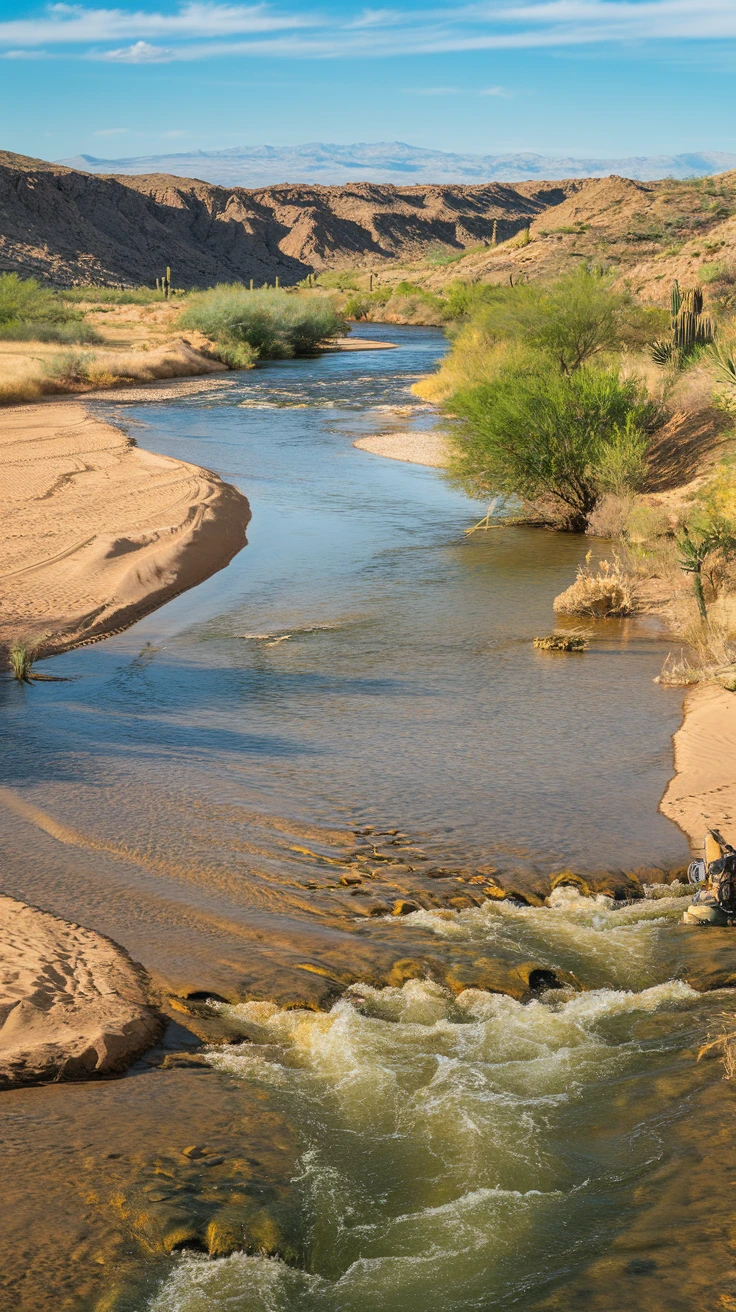
The Hassayampa River (which aptly means “upside-down river” in Apache because it flows underground for much of its course) has been producing gold since the 1860s. The river bed is wide and sandy, perfect for sluicing operations when water is flowing and for dry-washing when it’s not.
- Accessibility: Good, with multiple public access points
- Type of gold: Fine flour gold with occasional larger flakes
- Best season: Early spring when snowmelt increases water flow
Pro Tip: Don’t overlook the dry washes that feed into the Hassayampa—they can be gold-rich after monsoon rains. In drier stretches, a compact portable dry washer can outperform panning when there’s no water to work with.
5. Gila River, Yuma
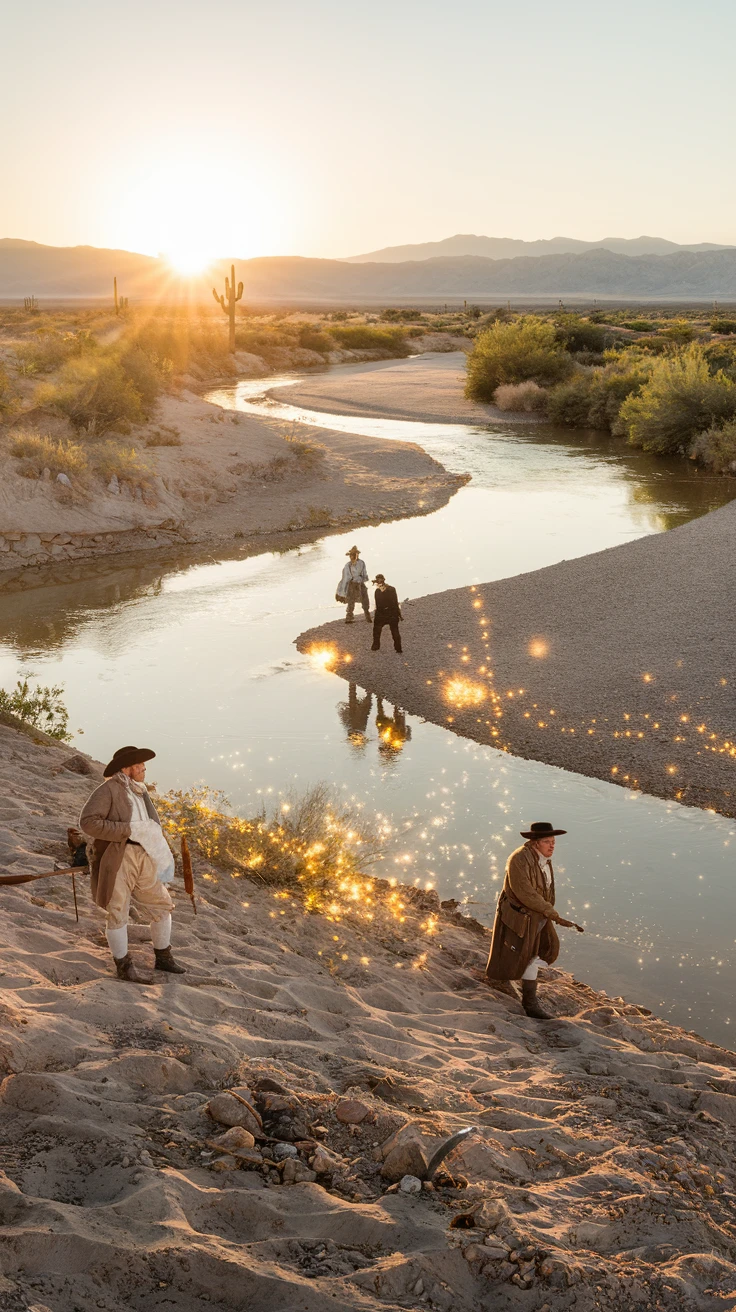
The Gila River near Yuma has a fascinating gold history—Spanish explorers first reported gold here in the 1700s. Today, the river continues to produce fine gold, especially after flood events that rework and concentrate the gravels along the inside bends and bars.
- Accessibility: Good in many areas, some require permission to cross private land
- Type of gold: Very fine placer gold
- Best season: Winter (temperatures are mild compared to the brutal summer heat)
Pro Tip: Use a fine gold recovery system like a Blue Bowl or Gold Cube—the gold here is often so fine it will float right out of a conventional pan. A small pump-fed system like a Blue Bowl concentrator can make a huge difference with Gila River material.
6. Quartzsite, La Paz County
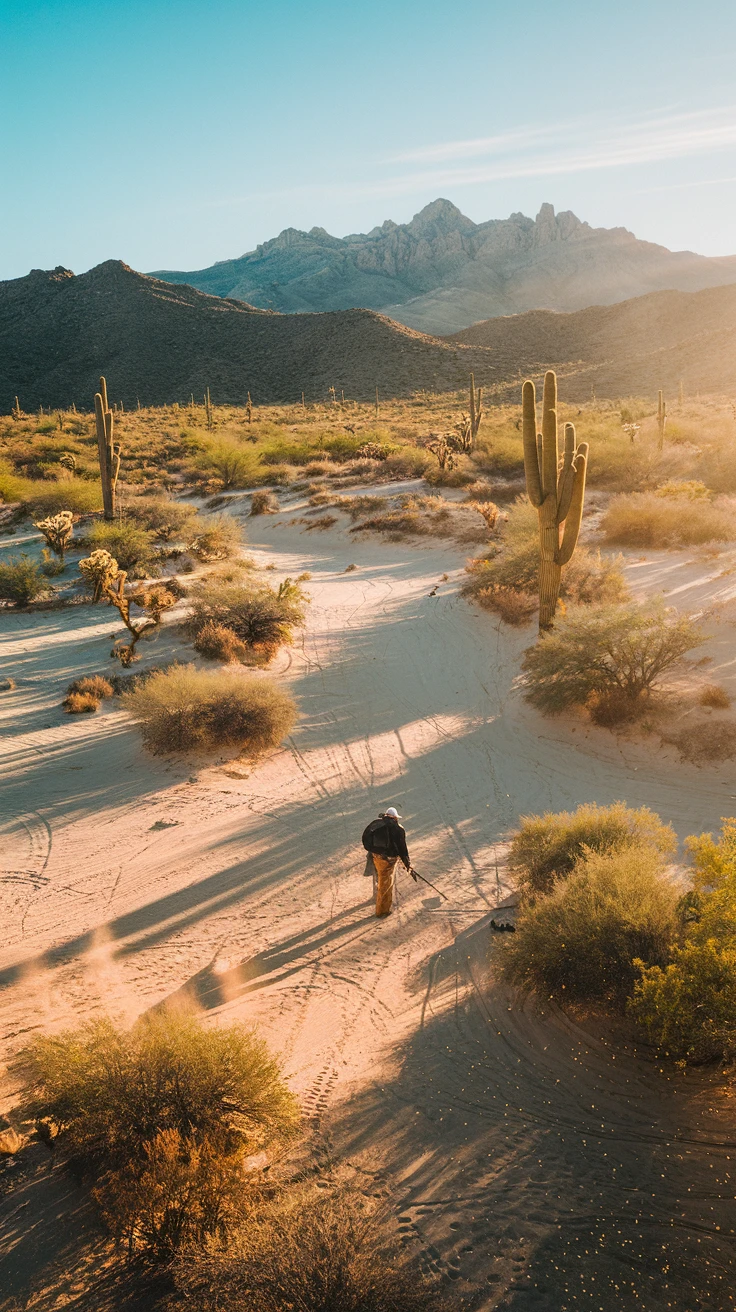
Quartzsite isn’t just for snowbirds and rock hounds. The surrounding desert is riddled with gold opportunities, particularly in the washes coming down from the nearby mountains. This area is especially popular for metal detecting enthusiasts during the winter RV season.
- Accessibility: Excellent, with numerous BLM lands open to prospecting
- Type of gold: Mostly small nuggets and flakes
- Best season: Winter (November to March)
Pro Tip: Join one of the many group digs organized during the winter months—you’ll learn from experienced prospectors and might access private claims temporarily opened to the public. A lightweight VLF detector built for small gold, like those you’ll find when you browse gold metal detectors, is ideal for this type of country.
7. Greaterville, Pima County
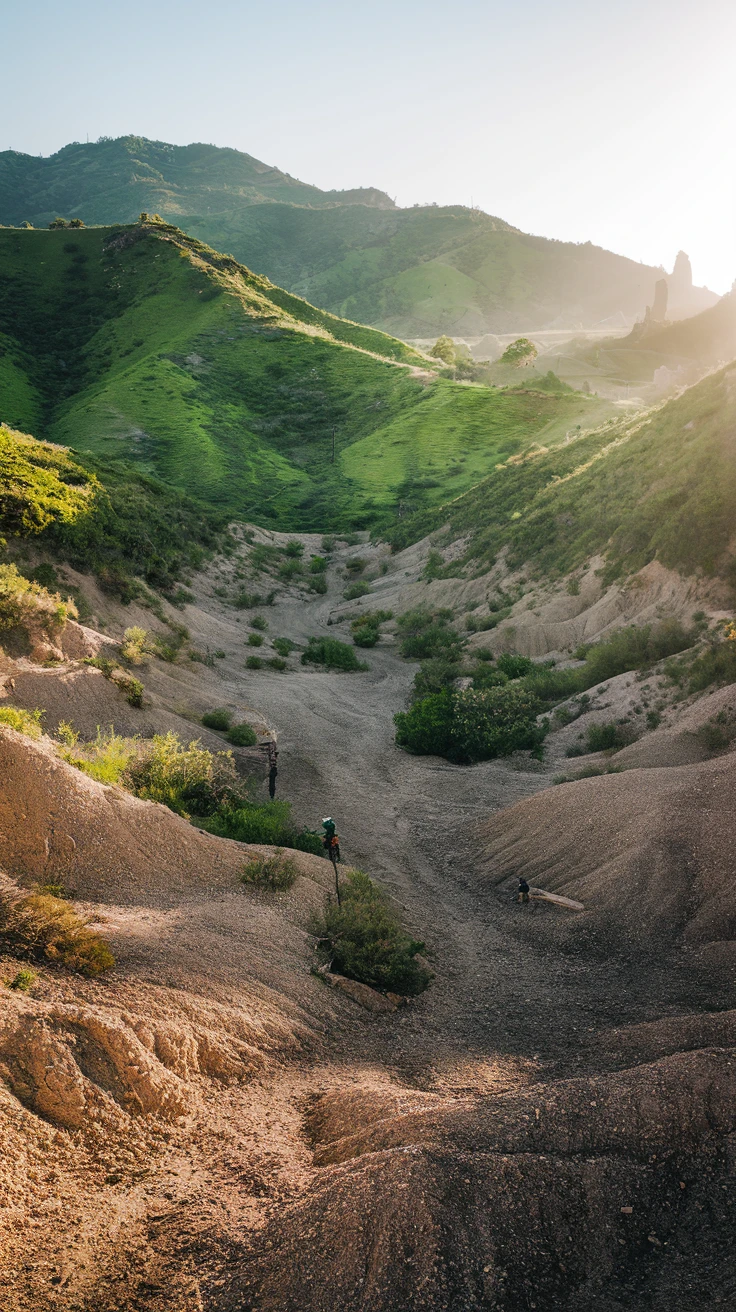
Located in the eastern foothills of the Santa Rita Mountains, Greaterville was once a booming placer camp that produced over 100,000 ounces of gold. While the richest deposits have been worked, there’s still gold to be found in the washes and benches, especially after heavy rains rework the gravels.
- Accessibility: Moderate, requires some hiking in certain areas
- Type of gold: Coarse placer gold
- Best season: After summer monsoon season when dry washes have been freshly reworked
Pro Tip: Look for areas with exposed bedrock in the washes—gold loves to hide in cracks and crevices that act as natural riffles. A small crevicing tool set or even a sturdy screwdriver and brush (you can find plenty under gold crevicing tools) will help you get down into those tight spots.
8. Stanton and Rich Hill District
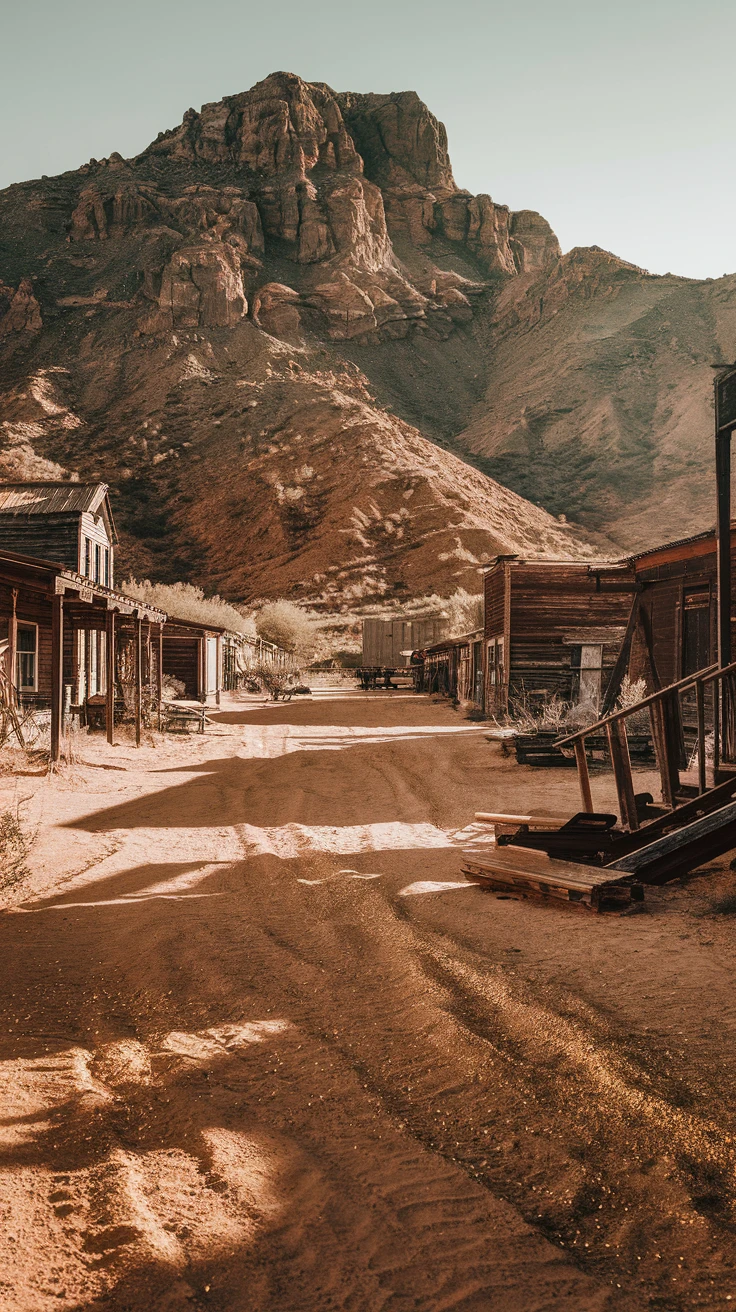
The historic town of Stanton (now a ghost town) sits at the base of Rich Hill, where some of Arizona’s most spectacular gold discoveries occurred. Today, the Stanton area offers both public prospecting opportunities and private claims available through prospecting clubs, making it a great spot for serious nugget hunters.
- Accessibility: Good road access, some areas restricted to claim holders
- Type of gold: Coarse gold and nuggets
- Best season: Winter and early spring
Pro Tip: Consider joining a prospecting club like LDMA or GPAA for access to well-maintained claims and campgrounds in this area. Pair that with a dedicated nugget detector from the pulse induction gold detector category if you want to target deeper nuggets around old workings.
9. Yavapai County Creeks
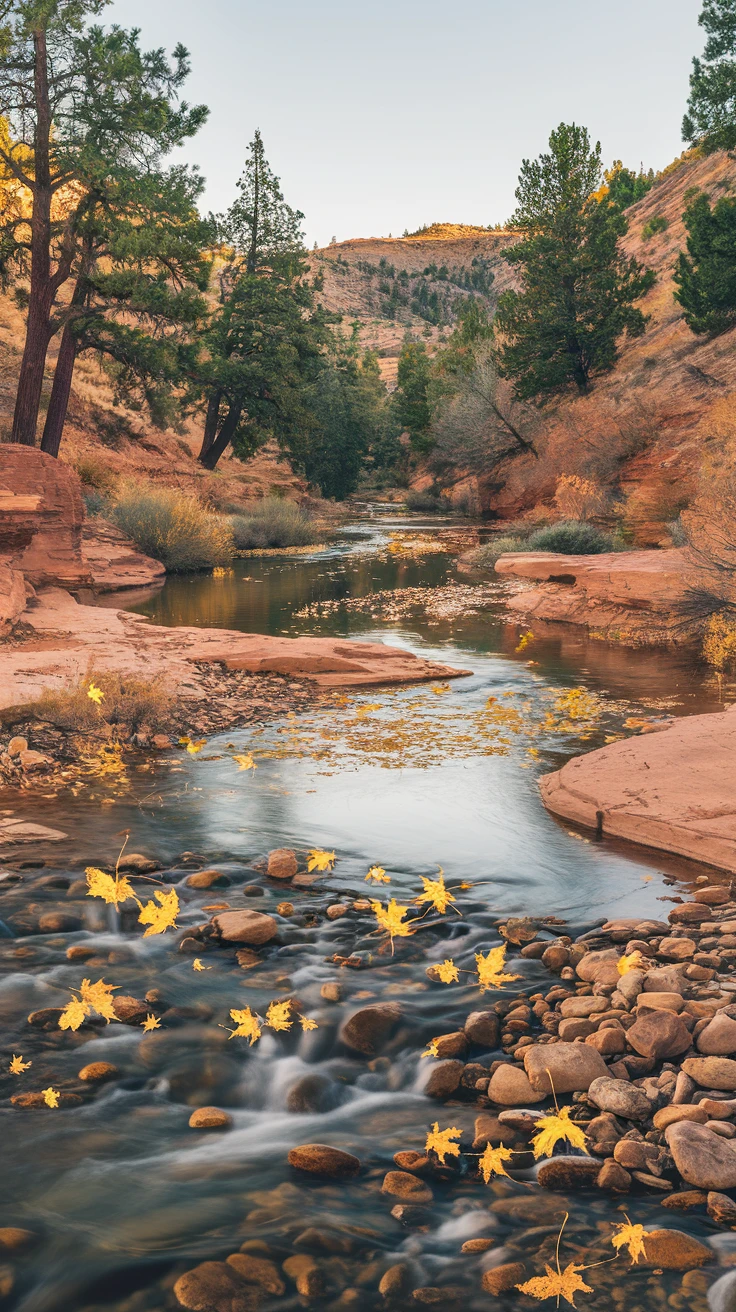
Beyond the well-known Lynx Creek, Yavapai County has numerous gold-bearing creeks including Big Bug Creek, Poland Creek, and the Agua Fria River. These waterways drain gold-rich mountains and can be surprisingly productive if you’re willing to hike a bit away from the road.
- Accessibility: Varies from easy to challenging
- Type of gold: Mostly fine placer with occasional nuggets
- Best season: Spring and fall
Pro Tip: The confluence points where smaller streams meet larger ones are often gold traps—I’ve found some of my best color at these natural collection points. A compact backpack sluice or classifier sieve set helps you move material efficiently in these tighter creek systems.
10. Kofa Mountains, La Paz County
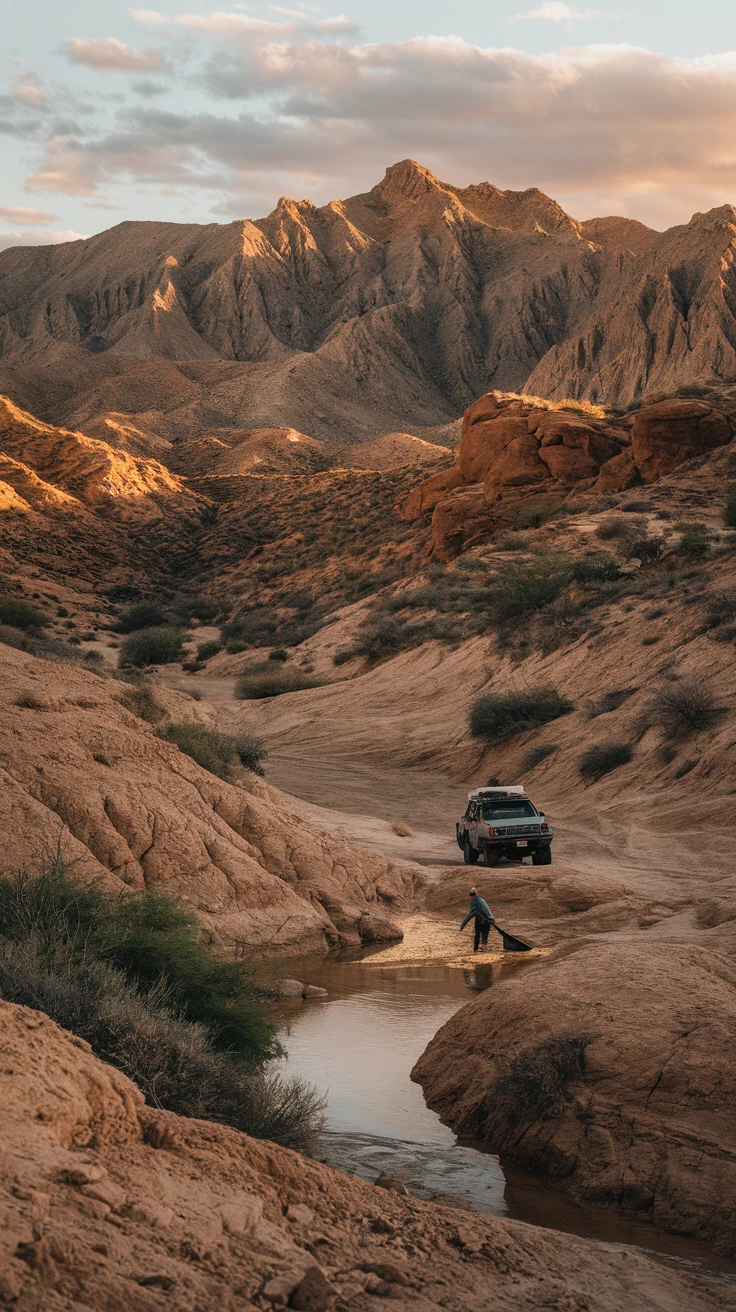
The Kofa Mountains (King of Arizona) are named after one of the state’s richest gold mines. While the main mines are no longer active, the surrounding desert washes continue to yield gold to persistent prospectors, especially those comfortable with remote, rugged country.
- Accessibility: Challenging, high-clearance 4WD recommended
- Type of gold: Both fine gold and occasional nuggets
- Best season: Winter only (deadly summer temperatures)
Pro Tip: This is rattlesnake country—always watch your step and check your equipment before reaching in. A good GPS or offline navigation app and plenty of water are just as important here as your favorite gold pan.
11. Vulture Mine Area, Maricopa County
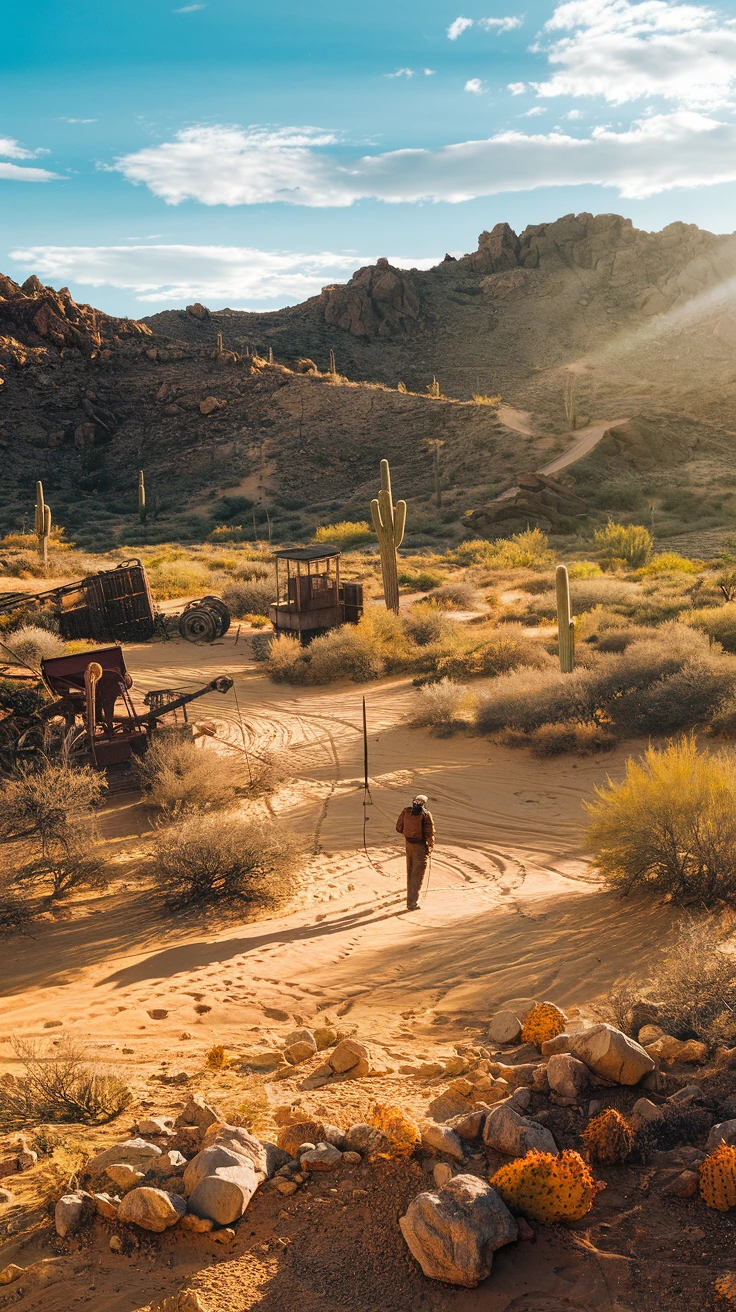
The Vulture Mine was Arizona’s most productive gold mine, yielding over $200 million in gold at today’s prices. While the mine itself is private property, the surrounding desert washes on BLM land can be prospected and still produce fine gold and the occasional picker.
- Accessibility: Good road access to general area
- Type of gold: Fine placer gold
- Best season: Winter months
Pro Tip: The desert pavement (dark, rocky surface) in this area can be gold-bearing—try metal detecting these flats after a good rain has washed away lighter material. A small scoop and gold storage vials help keep your finer finds organized once you get home.
12. Goldfield/Superstition Mountains
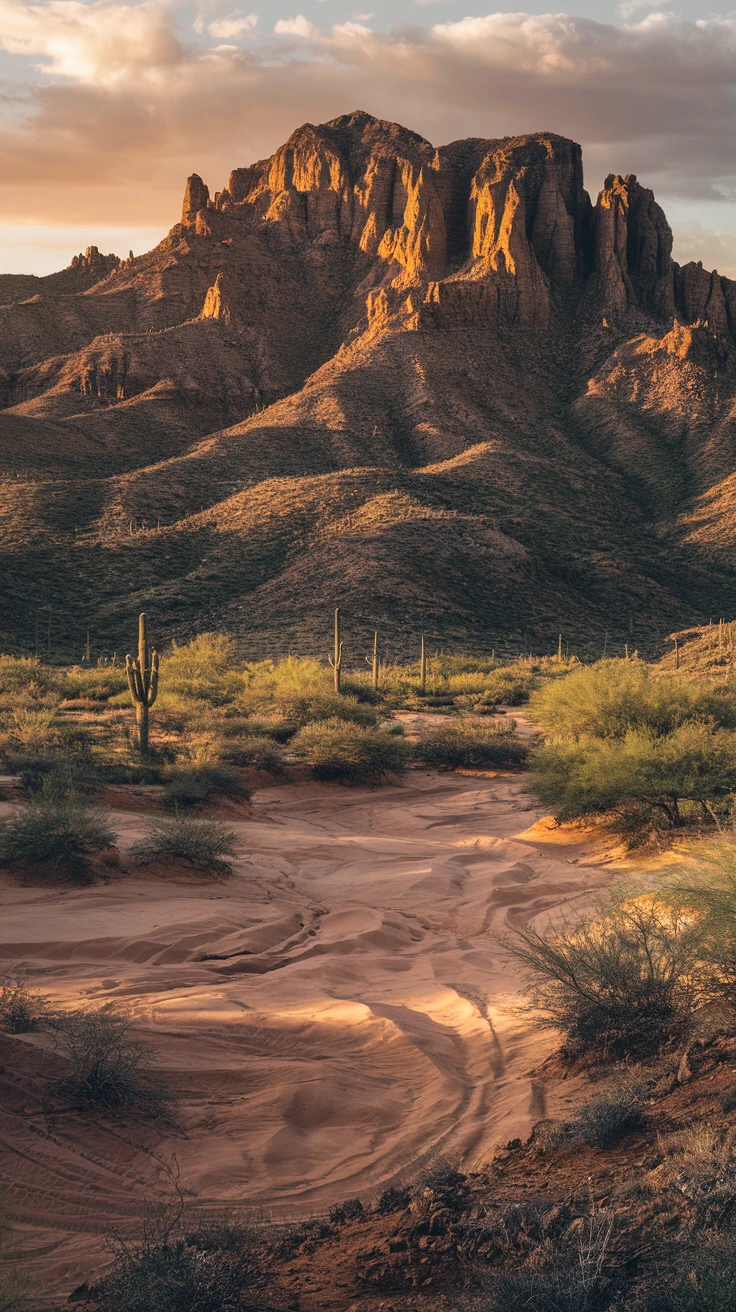
Yes, the legendary Lost Dutchman’s Gold Mine is supposedly hidden somewhere in these mountains. While you might not stumble upon that mythical bonanza, the Goldfield area does produce real gold. The mountains themselves are largely wilderness, but the surrounding washes and foothill drainages can be productive for careful panners and detectorists.
- Accessibility: Good access to foothills, wilderness restrictions in mountains
- Type of gold: Fine placer gold in washes
- Best season: Winter and early spring
Pro Tip: Check out the First Water Creek area—it’s been known to produce color and is accessible via a moderate hiking trail. Pack light with a compact pan, small shovel, and a snuffer bottle kit so you’re not overloaded on the trail.
13. Pinto Creek, Globe/Miami Area
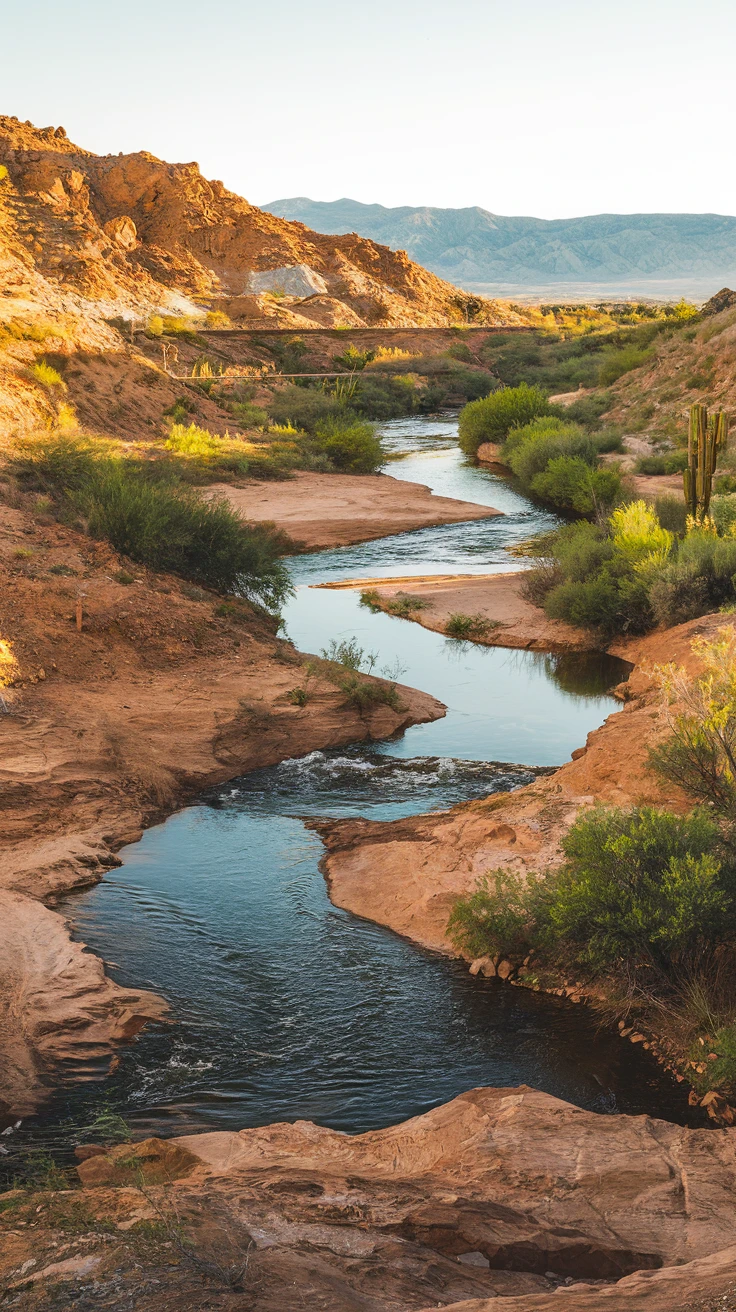
Pinto Creek runs through an area better known for copper mining, but gold has been found here too. The creek cuts through mineralized zones that contribute both fine gold and occasional chunky pieces, especially where bedrock is exposed.
- Accessibility: Moderate, some hiking required
- Type of gold: Fine to medium placer gold
- Best season: Spring and fall
Pro Tip: Look for areas where the creek bends sharply—these “elbows” often create natural gold traps on the inside curve. A compact folding shovel and small rake make it easier to strip off lighter overburden and get down to pay layers.
14. San Domingo Wash, Wickenburg
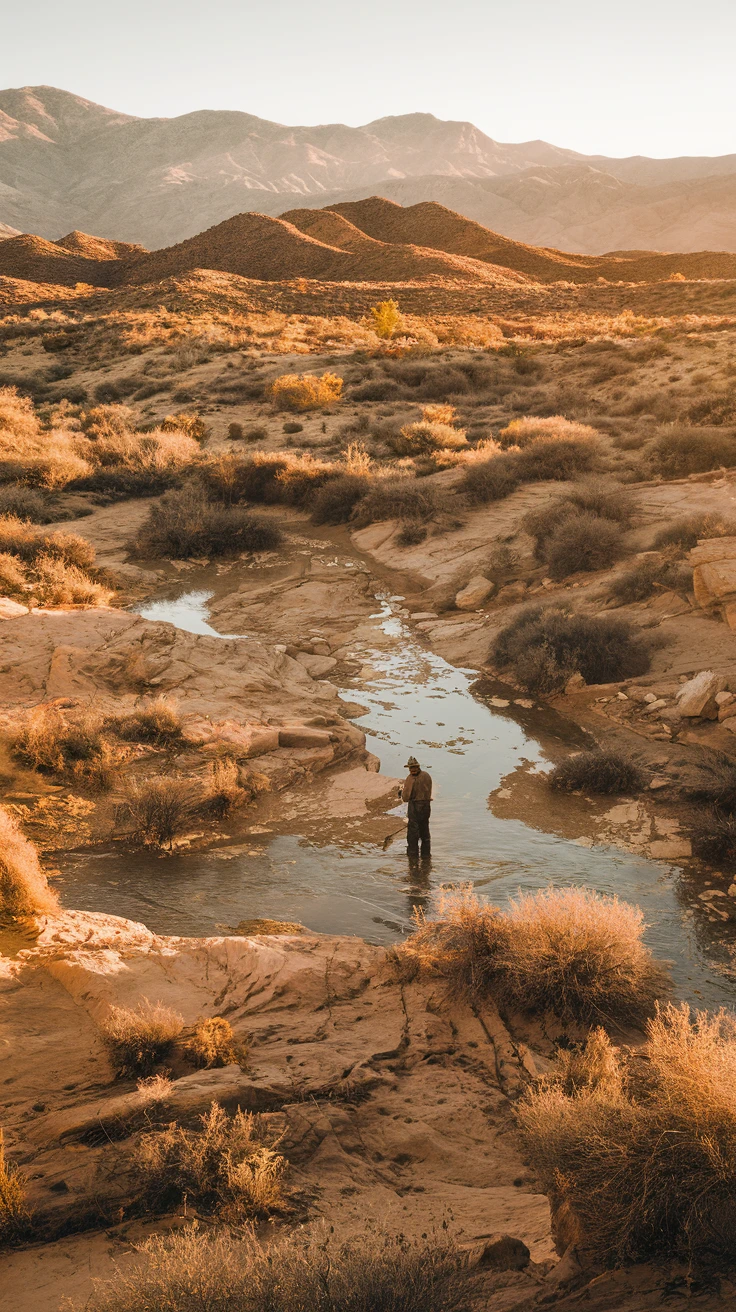
San Domingo Wash has been producing gold since the 1860s and still gives up nice color today. This large desert wash drains the Weaver Mountains and can be especially productive after heavy rains rearrange the gravels and expose fresh layers.
- Accessibility: Good, mostly BLM land
- Type of gold: Fine to coarse placer gold
- Best season: After winter rains or summer monsoons
Pro Tip: The gold in this wash tends to be found on or near bedrock—bring tools to move larger rocks and dig down to potential pay layers. A small pry bar and plastic scoop (check out any basic gold prospecting hand tool kit) go a long way here.
15. Date Creek Mountains, Yavapai County
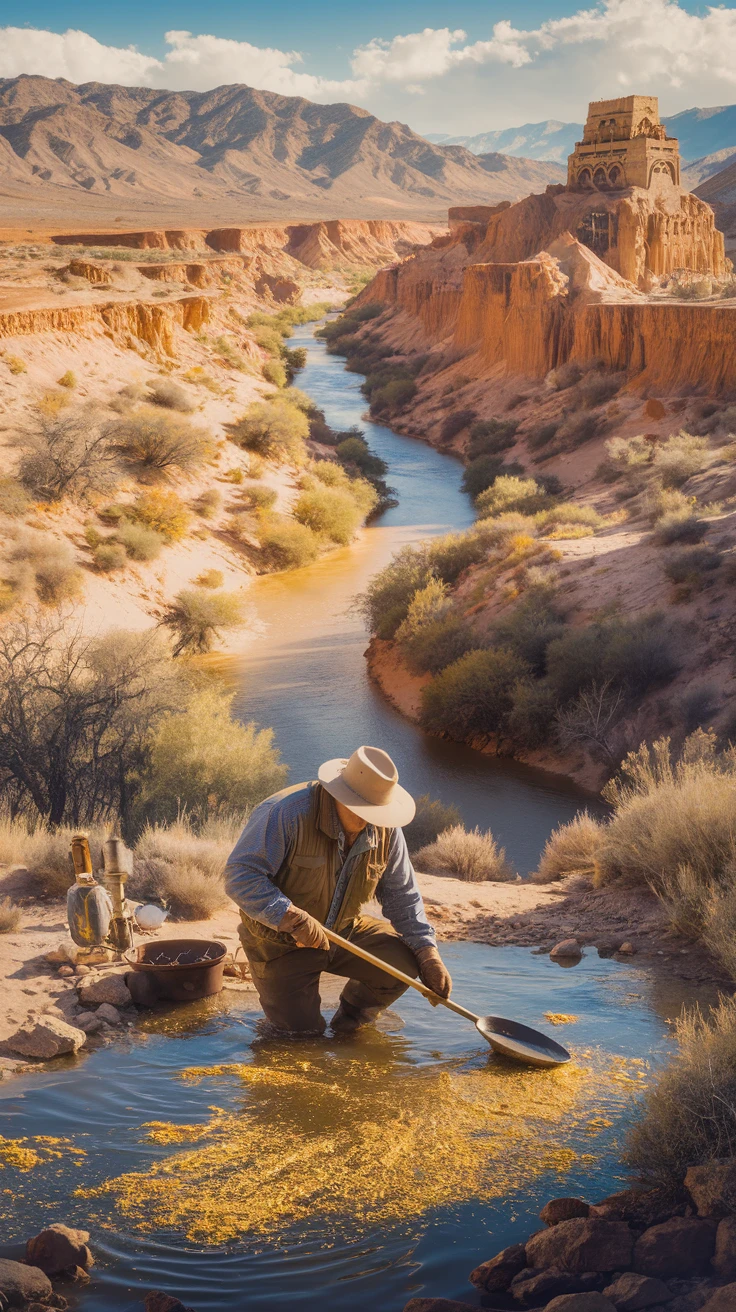
The Date Creek Mountains host several historic gold districts including the famous Congress Mine. The desert washes draining these mountains can be excellent for both panning and metal detecting, especially in less-traveled side gulches.
- Accessibility: Moderate, some rough roads
- Type of gold: Both fine gold and nuggets
- Best season: Winter
Pro Tip: This area is less crowded than many other Arizona prospecting locations—you might have whole gulches to yourself. Just make sure your vehicle and gear are self-sufficient and bring extra water for both you and your recirculating equipment if you use it.
16. Santa Maria River, Yavapai County
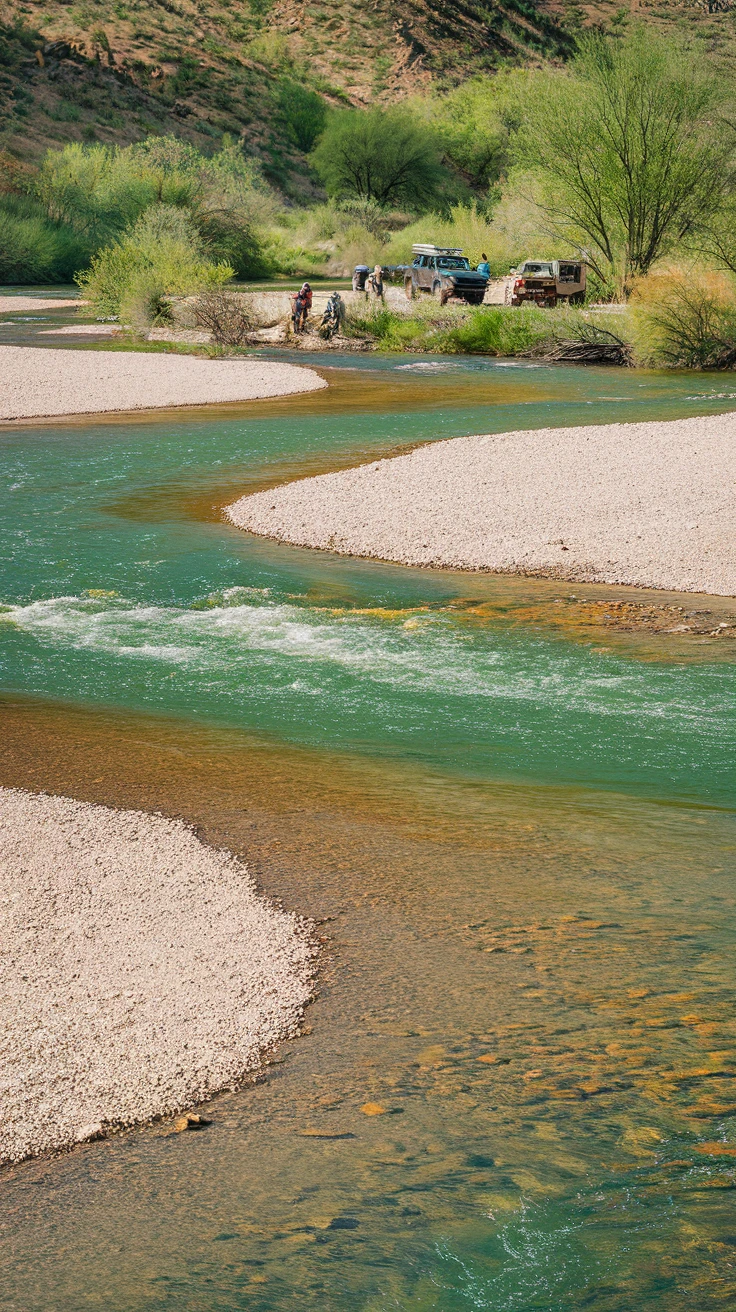
The Santa Maria River is a major drainage system that has gathered gold from numerous mining districts. Its broad gravel bars can be productive for both traditional panning and more advanced recovery methods like sluices and high bankers when water conditions allow.
- Accessibility: Variable, some areas require 4WD
- Type of gold: Mostly fine placer gold
- Best season: Early spring when water is flowing
Pro Tip: Work the inside bends of the river and look for natural collection points where heavier gold would settle—behind large boulders, at drop-offs, and in tight cracks in exposed bedrock.
17. Copper Basin, Prescott
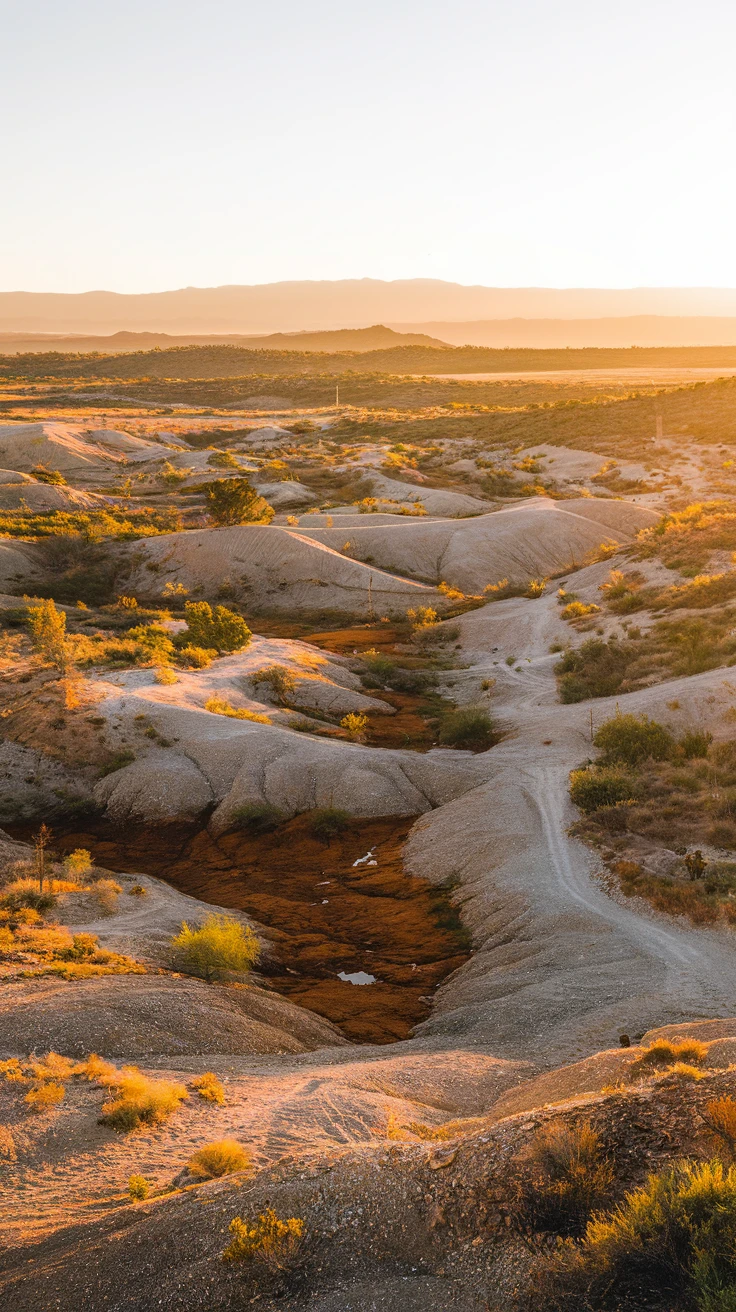
Don’t let the name fool you—Copper Basin has yielded significant gold alongside its copper deposits. The area features numerous small washes and side drainages that can be productive after rains, especially where iron-stained rock and red gravels show up.
- Accessibility: Good, with Forest Service roads throughout
- Type of gold: Fine gold with occasional nuggets
- Best season: Spring and fall
Pro Tip: The gold here is often associated with iron oxides—pay special attention to rusty-colored gravels and soils. A simple pocket magnet is handy for pulling black sand concentrates out of your pan.
18. Castle Hot Springs Area
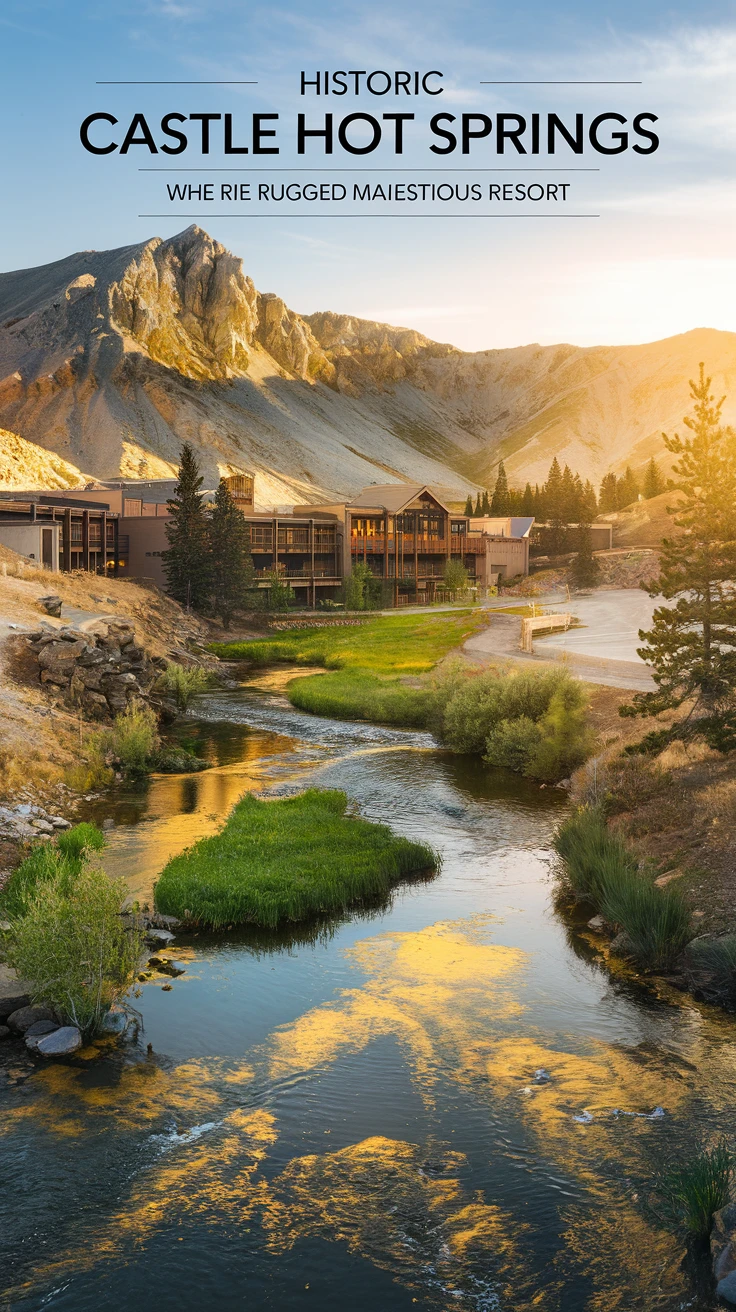
The mountains surrounding the historic Castle Hot Springs resort have produced gold since the late 1800s. Several small creeks and washes in the area continue to yield placer gold to this day, though land status can be a patchwork of public and private holdings.
- Accessibility: Moderate, some private property restrictions
- Type of gold: Fine to medium placer gold
- Best season: Winter and early spring
Pro Tip: Always be certain you’re on public land in this area—some of the most promising-looking spots are on private property. A current claims map or land status app is just as important as your pan here.
19. Harquahala Mountains, La Paz County
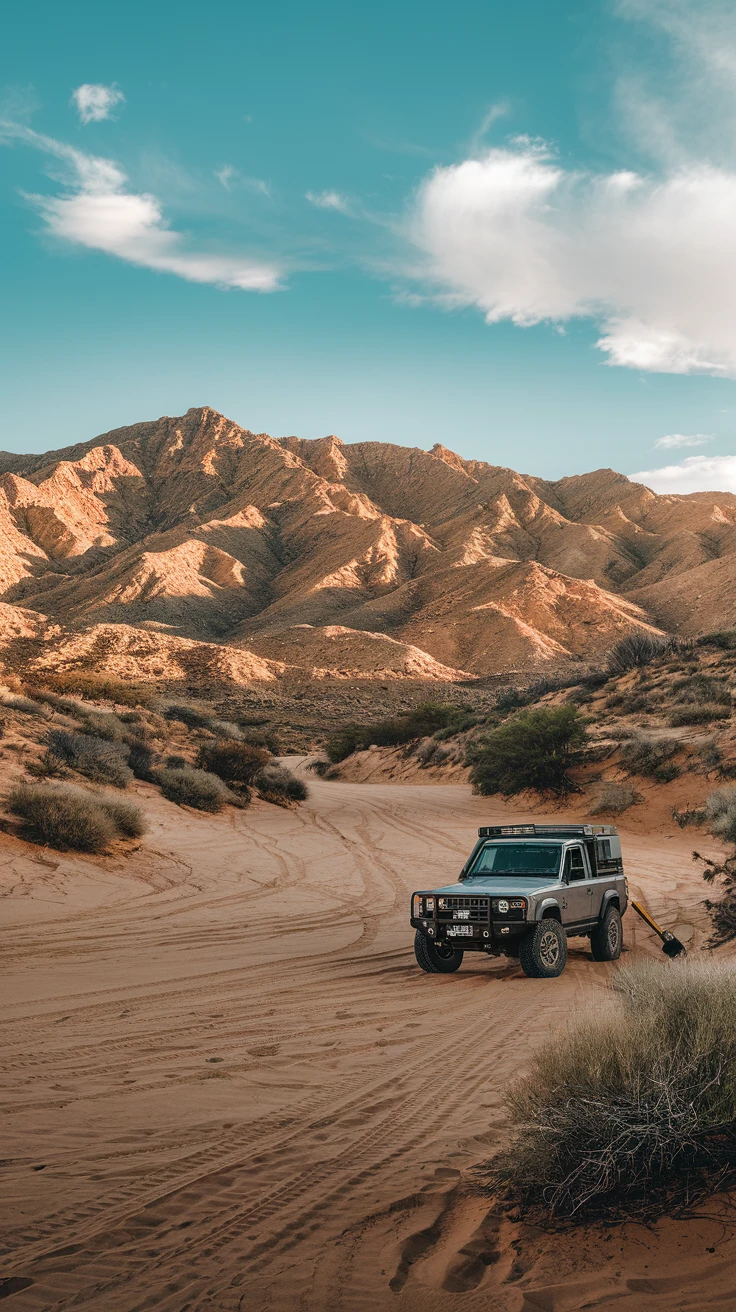
The Harquahala Mountains were the site of a gold rush in the 1890s, with the Harquahala Mine becoming one of Arizona’s richest. The desert washes surrounding these mountains can still produce gold for today’s prospectors, especially for those swinging a detector.
- Accessibility: Moderate, high-clearance vehicle recommended
- Type of gold: Both fine gold and small nuggets
- Best season: Winter only
Pro Tip: This is excellent metal detecting territory—the dry climate has preserved many small nuggets just beneath the surface. Consider a dedicated nugget detector from the gold nugget metal detector category if this area is on your bucket list.
20. Colorado River, Yuma Area
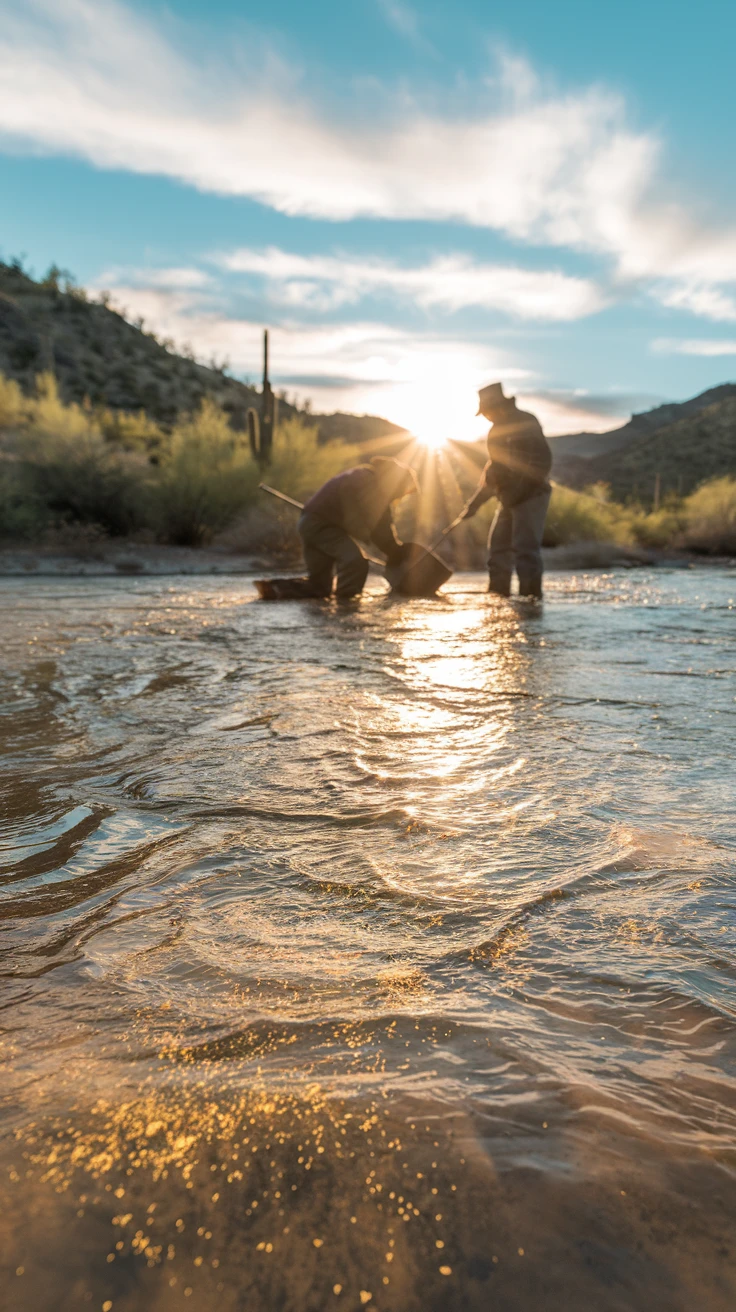
The mighty Colorado River forms Arizona’s western border and has been a gold producer since the 1850s. The river’s gravel bars and banks continue to yield fine gold, especially after high-water events that strip away lighter material and leave heavies behind.
- Accessibility: Good at public access points
- Type of gold: Very fine flour gold
- Best season: Winter and early spring
Pro Tip: This is the place to use fine gold recovery equipment—the gold here is so fine it’s almost like dust, but there’s a lot of it. A good finishing setup (like a spiral wheel or small concentrator) is worth considering if you plan to work Colorado River sands regularly.
Key Takeaways for Gold Prospecting in Arizona
- Timing is everything—most locations are best worked in winter or early spring due to Arizona’s extreme summer heat.
- Always check land status before prospecting (BLM, Forest Service, private claims, and club claims).
- The type of gold varies by region—adjust your equipment (sluice, dry washer, detector, fine gold recovery) accordingly.
- Productive areas are often associated with historic mining districts and old workings.
- Flash floods can both expose new gold and create hazardous conditions—stay weather-aware and never work in active washes during storms.
Conclusion
Arizona truly is a gold prospector’s paradise hiding in plain sight. From the pine-covered streams of Prescott to the sun-baked desert washes near Quartzsite, the diversity of gold prospecting in Arizona means there’s something for everyone—whether you prefer a relaxing day panning with the family or a serious expedition with advanced equipment.
Remember that success in gold prospecting comes down to research, patience, and persistence. The 20 locations I’ve shared are just the beginning—Arizona has countless gulches, creeks, and washes where color can be found. Half the fun is in the exploration. So grab your gold pan, check your maps, and head out to experience the thrill that’s drawn prospectors to Arizona for over 150 years. Who knows? The next big nugget might have your name on it.
Frequently Asked Questions
Do I need a permit to prospect for gold in Arizona?
For casual recreational prospecting using hand tools (pans, sluices, metal detectors) on most public lands, no specific prospecting permit is required. However, you need to follow the regulations of the managing agency (BLM or Forest Service). If you plan to use motorized equipment or disturb more than surface materials, additional permits may be required. Always check with the local BLM or Forest Service office before prospecting.
What’s the best time of year for gold prospecting in Arizona?
Winter (November through March) is generally the best time for desert locations due to cooler temperatures. Spring (March through May) works well for higher elevation areas. Summer is extremely challenging due to dangerous heat in most locations, though early mornings in mountain areas can be workable. Fall is excellent for mid-elevation locations. Always plan around water availability and weather conditions.
What basic equipment do I need for gold prospecting in Arizona?
At minimum, you’ll need a gold pan, shovel, classifier screen, and containers for your finds. A sluice box is helpful if working in flowing water. For dry washing in desert areas, consider a dry washer. A metal detector designed for gold prospecting can be valuable in many Arizona locations. Don’t forget safety equipment: plenty of water, sun protection, first aid kit, and communication devices. If you’re building your kit, you can browse all-in-one complete gold prospecting kits to cover the basics.
Can beginners find gold in Arizona?
Absolutely. Many locations like Lynx Creek near Prescott are perfect for beginners and frequently produce gold. The key for beginners is to start at known productive locations, perhaps join a prospecting club for guidance, and learn proper panning technique. Even complete novices can find at least some fine gold in Arizona’s better locations with basic instruction and patience.
Are there any gold prospecting clubs in Arizona?
Yes, Arizona has several active prospecting clubs including the Arizona Gold Prospectors Association, Phoenix Gold Mining Club, Roadrunners Prospectors Club, and local chapters of the Gold Prospectors Association of America (GPAA). These clubs often have claims members can work, organize group outings, and provide education for new prospectors. Joining a club is one of the best ways to learn and gain access to productive areas.
Is it legal to prospect on public lands in Arizona?
Yes, recreational prospecting is allowed on most BLM and National Forest lands that aren’t otherwise withdrawn (such as wilderness areas or national monuments). However, you must respect existing mining claims, which are common in productive areas. You cannot prospect on private property without permission, and some public lands have specific restrictions. Always research the specific rules for your chosen location.
What’s the largest gold nugget ever found in Arizona?
The largest documented gold nugget found in Arizona was discovered near Wickenburg in 1896 and weighed approximately 27 pounds. More recently, nuggets in the multiple-ounce range continue to be found, particularly in the Bradshaw Mountains, Rich Hill area, and other historic gold districts. Metal detector technology has helped modern prospectors locate nuggets that earlier miners missed.