Introduction
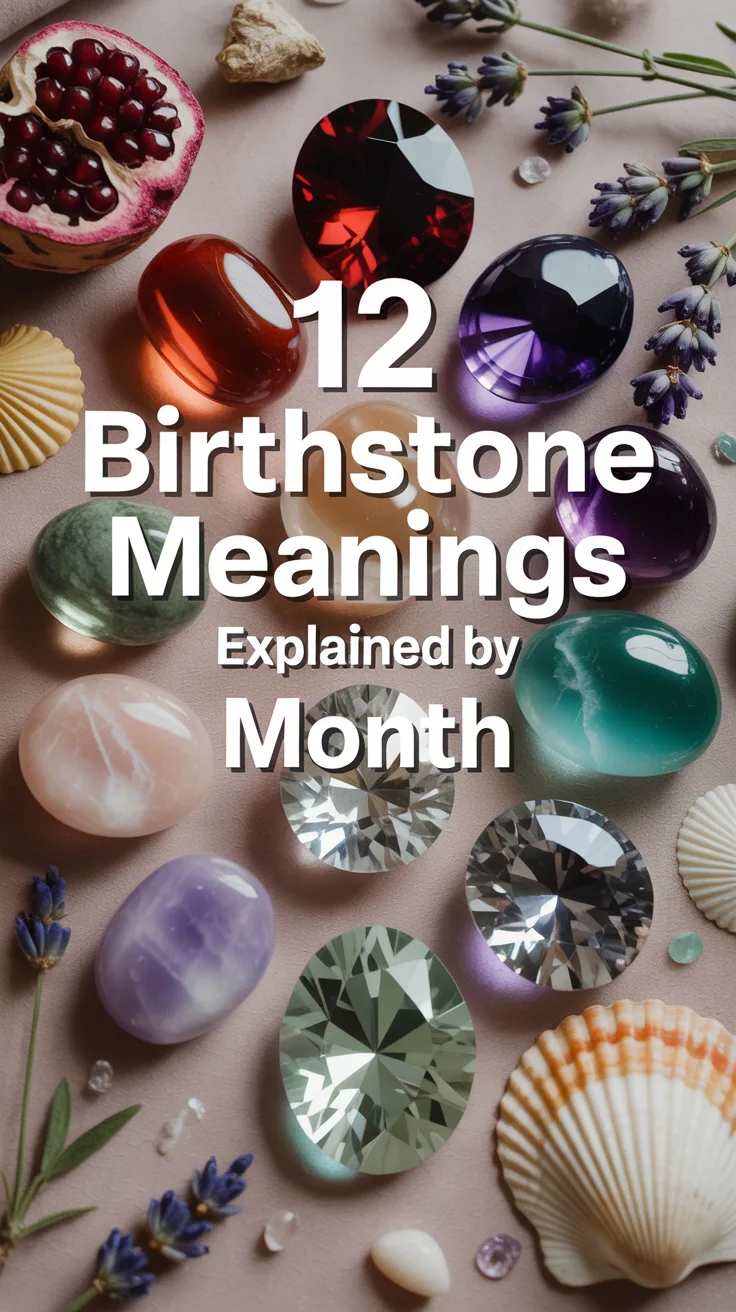
Birthstones have fascinated humans for centuries, connecting us to ancient traditions while adding a personal touch to our jewelry collections. As someone who’s spent years studying gemstones and their cultural significance, I’ve seen firsthand how these colorful treasures can become meaningful symbols in our lives. Each birthstone carries its own unique energy, history, and symbolism tied to the month it represents. In this guide, I’ll walk you through the 12 birthstone meanings by month, sharing insights I’ve gathered along my gemological journey.
January: Garnet
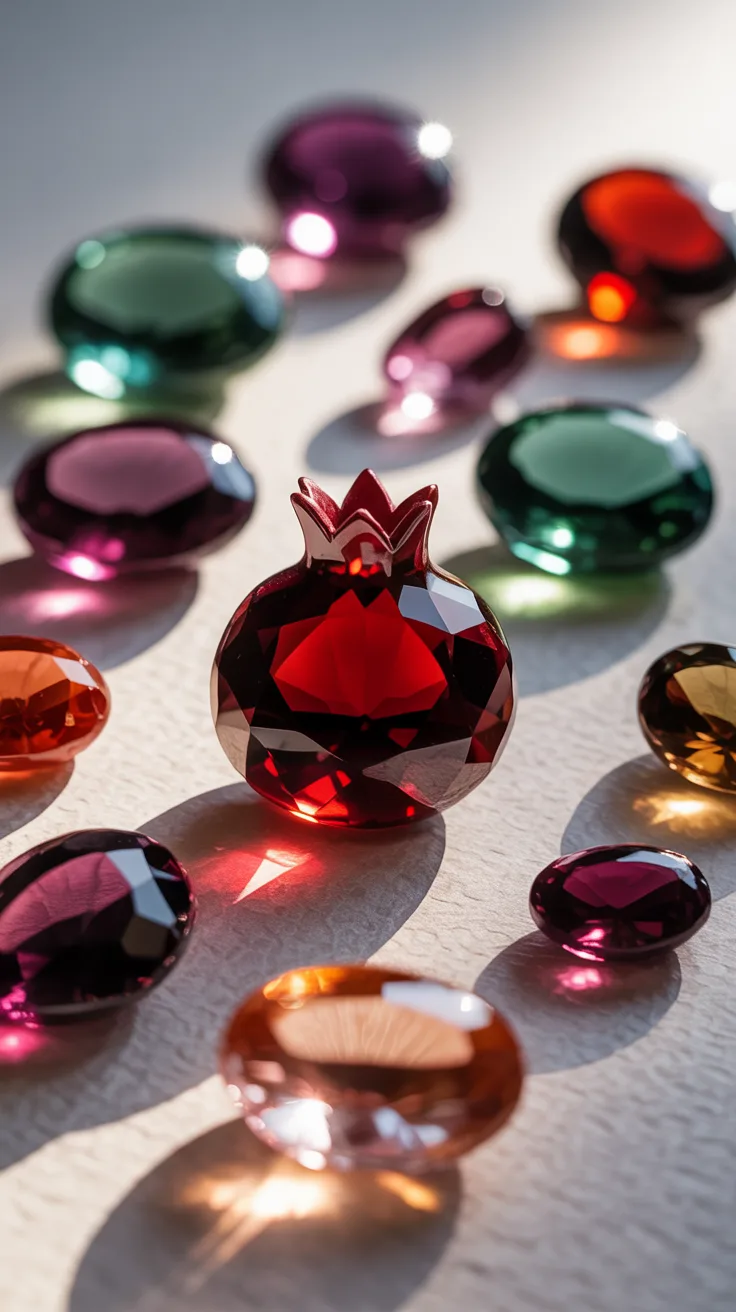
January’s birthstone, the garnet, has been my long-time favorite for its rich, deep red hue that seems to glow from within. While many people think garnets only come in red, I was surprised to discover they actually appear in almost every color! The name “garnet” comes from the Latin word “granatum,” meaning pomegranate seed, which perfectly describes their most common appearance.
Garnets symbolize protection, strength, and prosperity. In medieval times, warriors and travelers wore garnets for protection during their journeys. I once gifted a garnet pendant to a friend embarking on a year-long trip abroad, and she told me it became her talisman of safety throughout her adventures.
Pro Tip: When shopping for garnet jewelry, look beyond the traditional red varieties. Rare green tsavorite garnets and orange spessartite garnets make for unique conversation pieces that few people realize are actually garnets!
February: Amethyst
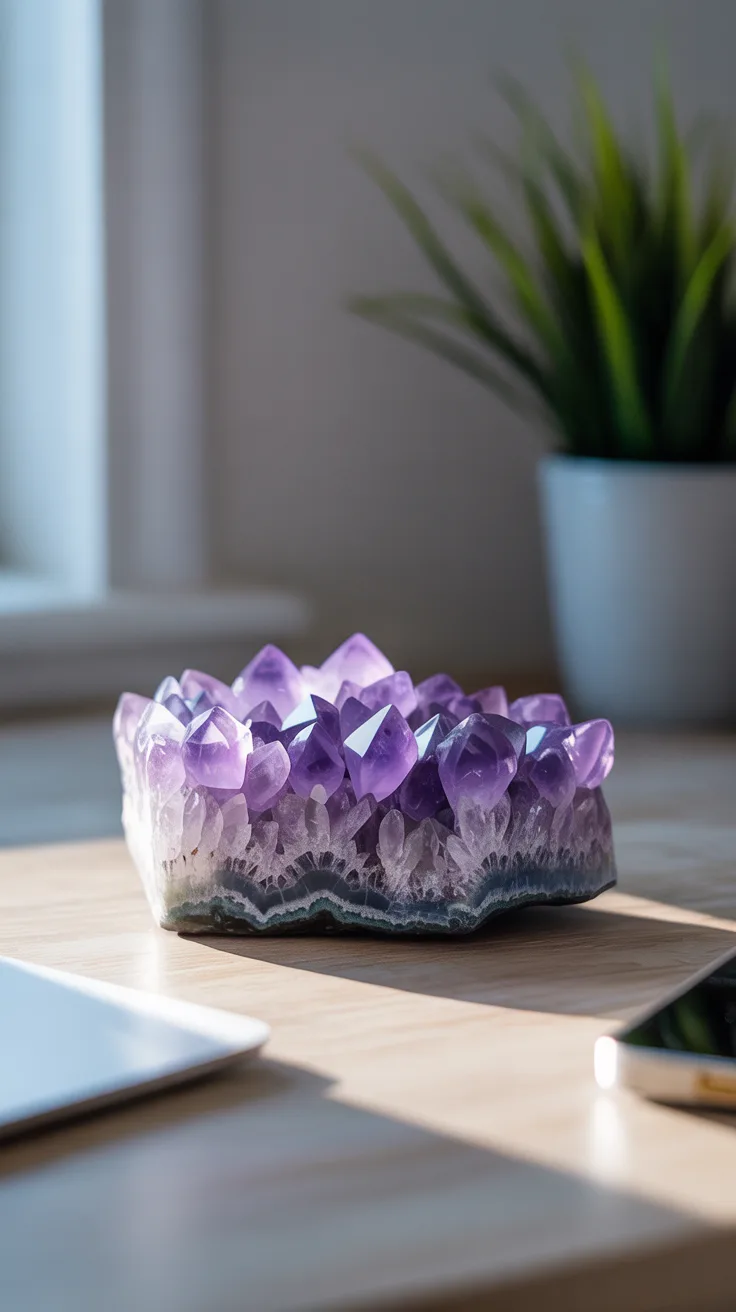
February’s amethyst has always struck me as one of the most visually stunning birthstones. With its purple hues ranging from delicate lavender to deep violet, this quartz variety has been prized throughout history. The ancient Greeks believed amethysts prevented intoxication—in fact, the name comes from “amethystos,” meaning “not drunk.”
Amethyst symbolizes peace, protection, and tranquility. It’s associated with clarity of mind and spiritual awareness. I keep a small amethyst cluster on my desk for those days when writer’s block hits, and I swear it helps clear my mental fog (though that might just be the power of suggestion at work!).
Pro Tip: If you’re sensitive to energies like I am, try placing amethyst under your pillow to promote peaceful sleep and vivid dreams. I’ve done this during particularly stressful periods and noticed a remarkable difference in my sleep quality.
March: Aquamarine
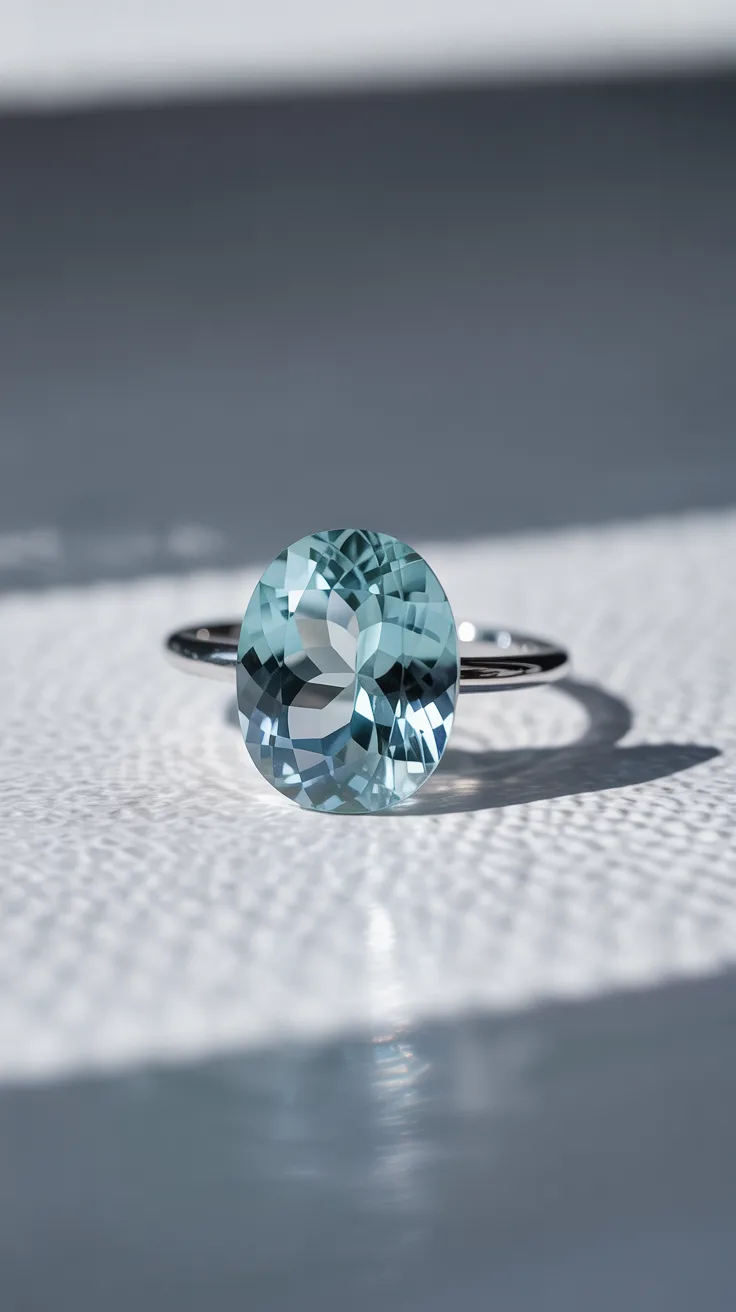
March’s aquamarine reminds me of clear ocean waters on a perfect summer day. The name literally means “water of the sea,” and its tranquil blue-green color has made it a favorite among my clients seeking something both elegant and understated.
Historically, sailors carried aquamarines as talismans against drowning. This gemstone symbolizes courage, honesty, and clarity. It’s said to enhance communication skills—something I desperately needed when I first started giving presentations about gemstones years ago! I wore an aquamarine pendant during my first major speaking engagement, and while I can’t prove it helped, I did feel more articulate than usual.
Pro Tip: Aquamarines look stunning in white metal settings like white gold or platinum. The cool tones complement each other beautifully, creating a sophisticated look that works for both casual and formal occasions.
April: Diamond
April babies hit the jackpot with diamond as their birthstone. As the hardest natural substance on Earth, diamonds symbolize endurance, strength, and eternal love. I’ll never forget my embarrassment when I first started in the jewelry industry and pronounced “carat” like the vegetable instead of “karat”—a rookie mistake that still makes me laugh!
While most people associate diamonds with clear, colorless stones, they naturally occur in a rainbow of colors. Yellow, pink, blue, and even black diamonds each have their own unique beauty and symbolism. I once helped a client select a stunning champagne diamond engagement ring that perfectly matched her unique personality—far more meaningful to her than a traditional colorless stone.
Pro Tip: When shopping for diamonds, don’t get too caught up in the “perfect” specs. I’ve seen stones with slightly lower clarity grades that look absolutely stunning to the naked eye and cost significantly less than their technically “superior” counterparts.
May: Emerald
The lush green emerald represents May, and it’s a gemstone that’s taught me patience. My first emerald purchase was a disaster—I was so enchanted by the color that I overlooked the heavy treatments and poor clarity. Now I know better!
Emeralds symbolize rebirth, fertility, and wisdom. Cleopatra was famously obsessed with these gems, claiming ownership of all emerald mines in Egypt during her reign. The rich green color represents the renewal of spring and has long been associated with Venus, the goddess of love and beauty.
Pro Tip: Almost all emeralds have inclusions (what gemologists affectionately call their “garden”), so don’t expect perfection. Instead, look for stones with vivid color and inclusions that don’t detract from the overall beauty or durability.
June: Pearl
June’s birthstone is unique among the calendar—pearls are organic gems formed within living creatures, not mined from the earth. I’ve always found something poetic about that distinction. Pearls develop when an irritant (like a grain of sand) enters an oyster or mollusk, which then secretes layer upon layer of nacre to protect itself, creating the lustrous gem we cherish.
Pearls symbolize purity, innocence, and wisdom gained through experience. They’re the only gems that require no cutting or polishing to reveal their beauty. I learned this lesson the hard way after attempting to “clean” an antique pearl necklace with jewelry cleaner—a mistake that damaged their delicate surface.
Pro Tip: Store your pearls separately from other jewelry to prevent scratches, and make them the last thing you put on when getting dressed. The acids in perfume, hairspray, and even your skin can damage their delicate surface over time.
July: Ruby
July’s ruby has always commanded respect with its fiery red brilliance. In Sanskrit, ruby is called “ratnaraj,” meaning “king of precious stones,” and I believe it lives up to that title. The most valuable rubies come from Burma (Myanmar), displaying a specific red color often described as “pigeon’s blood”—a term I initially found off-putting until I saw the indescribable depth of color it references.
Rubies symbolize passion, protection, and prosperity. Ancient warriors implanted rubies under their skin, believing the stones would make them invincible in battle. While I wouldn’t recommend such extreme measures, I do understand the sense of power a fine ruby can impart to its wearer.
Pro Tip: When shopping for rubies, pay attention to the color saturation. The most valuable rubies have a vivid red color that’s neither too dark nor too light, with strong fluorescence that makes them appear to glow from within.
August: Peridot
August’s peridot (which I embarrassingly mispronounced as “peri-dot” for years before learning it’s “peri-doh”) is one of the few gemstones that occurs in only one color: olive-green. The intensity of the green depends on the amount of iron in the crystal structure.
Ancient Egyptians called peridot the “gem of the sun,” believing it protected against nightmares and evil spirits. It symbolizes strength and good fortune. I’ve always appreciated how peridot seems to glow from within, especially in the evening light—ancient peoples weren’t wrong when they noted its ability to seemingly shine in darkness.
Pro Tip: Peridot looks particularly stunning when set in yellow gold, which complements its warm, sunny tones. I once paired a peridot pendant with amethyst earrings for a color combination that received countless compliments.
September: Sapphire
September’s sapphire has a regal quality that’s hard to match. While most people think of deep blue when they hear “sapphire,” these corundum gems actually come in every color except red (which would make them rubies). I learned this distinction during my gemology studies and have enjoyed surprising people with padparadscha sapphires—a rare pinkish-orange variety that few recognize as sapphires.
Sapphires symbolize wisdom, loyalty, and nobility. They’ve adorned royal crowns and engagement rings for centuries, including the famous ring Prince Charles gave to Princess Diana (and later, Prince William to Kate Middleton). The stone represents faithfulness and sincerity, making it a meaningful choice for commitment jewelry.
Pro Tip: Consider Montana sapphires for a unique American-sourced gemstone. These often come in unusual greenish-blue hues and tend to be more affordable than their Kashmir or Ceylon counterparts while still offering excellent quality.
October: Opal
October’s opal displays a phenomenon called “play-of-color” that continues to mesmerize me even after years in the jewelry industry. Each opal contains microscopic spheres that diffract light into flashes of rainbow colors. No two opals are exactly alike, making each one a unique treasure.
Opals symbolize creativity, inspiration, and spontaneity. They’ve been both revered and feared throughout history—in medieval times, they were thought to hold the power of all gemstones due to their multi-colored appearance, while Victorian-era superstitions sometimes cast them as unlucky unless you were born in October.
Pro Tip: Opals contain water and are relatively soft (5.5-6.5 on the Mohs scale), making them more delicate than many birthstones. I learned this lesson when I cracked my first opal ring by accidentally hitting it against a doorframe. Consider protective settings like bezels or halos for everyday opal jewelry.
November: Topaz
November’s birthstone comes in a rainbow of colors, though imperial topaz—with its golden to reddish-orange hues—is the most valued variety. Blue topaz, while popular and beautiful, is almost always the result of treatment processes (something I didn’t realize until I studied gemology).
Topaz symbolizes love, affection, and strength. Ancient Greeks believed it could increase strength and make the wearer invisible in times of emergency. While I can’t vouch for invisibility powers, I do find that wearing topaz brings a certain warmth and confidence.
Pro Tip: If you’re looking for an affordable statement gemstone, blue topaz offers impressive size and clarity for a fraction of the cost of similarly colored stones like aquamarine or sapphire. Just be aware that the vivid blue color is achieved through treatment.
December: Turquoise
December’s turquoise has been prized for thousands of years across multiple civilizations. Its distinctive blue-green color comes from copper, while iron can create greener hues. I’ve always been drawn to the natural matrix patterns (dark veining) that make each piece unique, though I’ve learned that the finest quality turquoise actually has minimal matrix.
Turquoise symbolizes protection, wisdom, and good fortune. Native American cultures have long revered it as a sacred stone that connects earth and sky. I’ve collected turquoise jewelry from various Southwest artists over the years, each piece telling a different story through its distinctive patterning and setting style.
Pro Tip: Be cautious when purchasing turquoise, as the market is floode