

Introduction
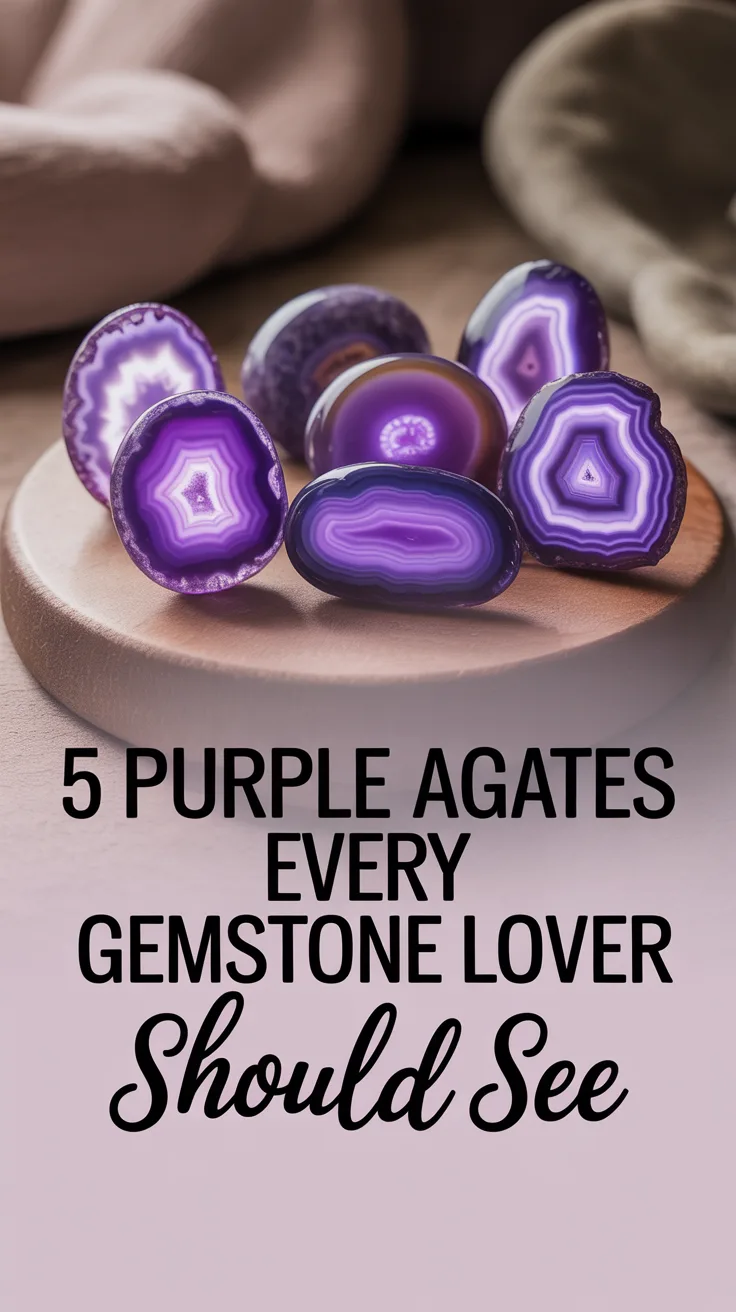
Purple agate can be a beautiful addition to any gemstone collection, with colors ranging from soft lavender to rich violet. Some specimens feature delicate bands, while others display rounded crystal formations, branching inclusions, or intricate patterns.
However, not every stone sold as purple agate is naturally purple. Some varieties are naturally gray, brown, or cream and are dyed to produce brighter colors. Other stones, including grape agate, have trade names that do not always match their mineralogical classification.
Here are five purple agates and closely related chalcedony varieties worth exploring, along with their identifying features, common treatments, and tips for choosing authentic specimens.
1. Grape Agate: Purple Botryoidal Chalcedony
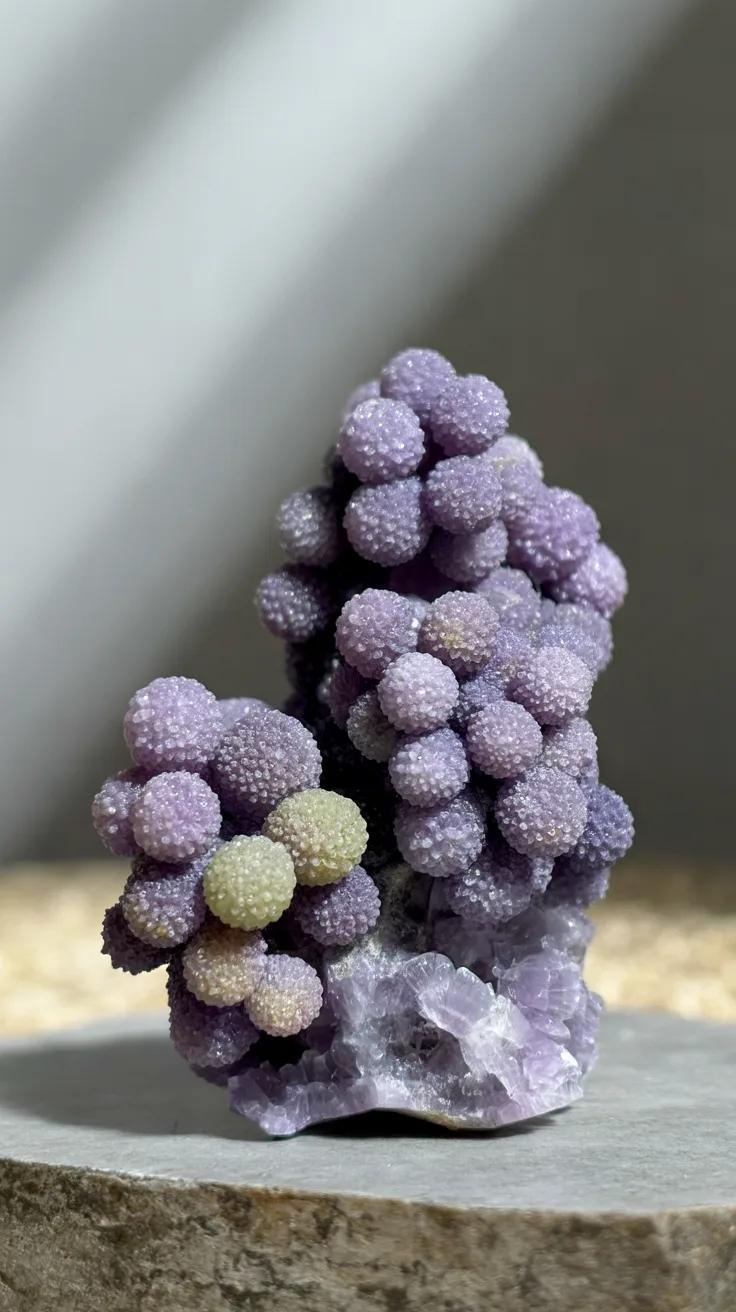
Grape agate is one of the most recognizable purple stones in the gemstone market. Found in Indonesia, particularly on Sulawesi, this material forms clusters of small, rounded spheres that resemble miniature bunches of grapes.
Despite its commercial name, grape agate is generally classified as botryoidal chalcedony rather than traditional banded agate. Its surface may range from pale lavender to deeper violet, and some specimens contain green or nearly colorless areas.
How to Identify Grape Agate
- Rounded, grape-like clusters rather than conventional agate bands
- Lavender, violet, or occasionally green coloration
- A waxy to subtly sparkling surface
- Individual spheres that vary naturally in size
- Possible patches of host rock attached to the specimen

View on AmazonAs an Amazon Associate, I earn from qualifying purchases.

View on AmazonAs an Amazon Associate, I earn from qualifying purchases.
What to Look For: Choose specimens with well-preserved rounded formations and minimal broken spheres. Natural color variation is normal, and a specimen does not need to be uniformly dark purple to be attractive.
Collector Tip: Avoid assuming that every perfectly round purple cluster is natural grape agate. Ask for the source location and examine detailed photographs before purchasing expensive specimens.
2. Botswana Agate with Purple or Lavender Tones
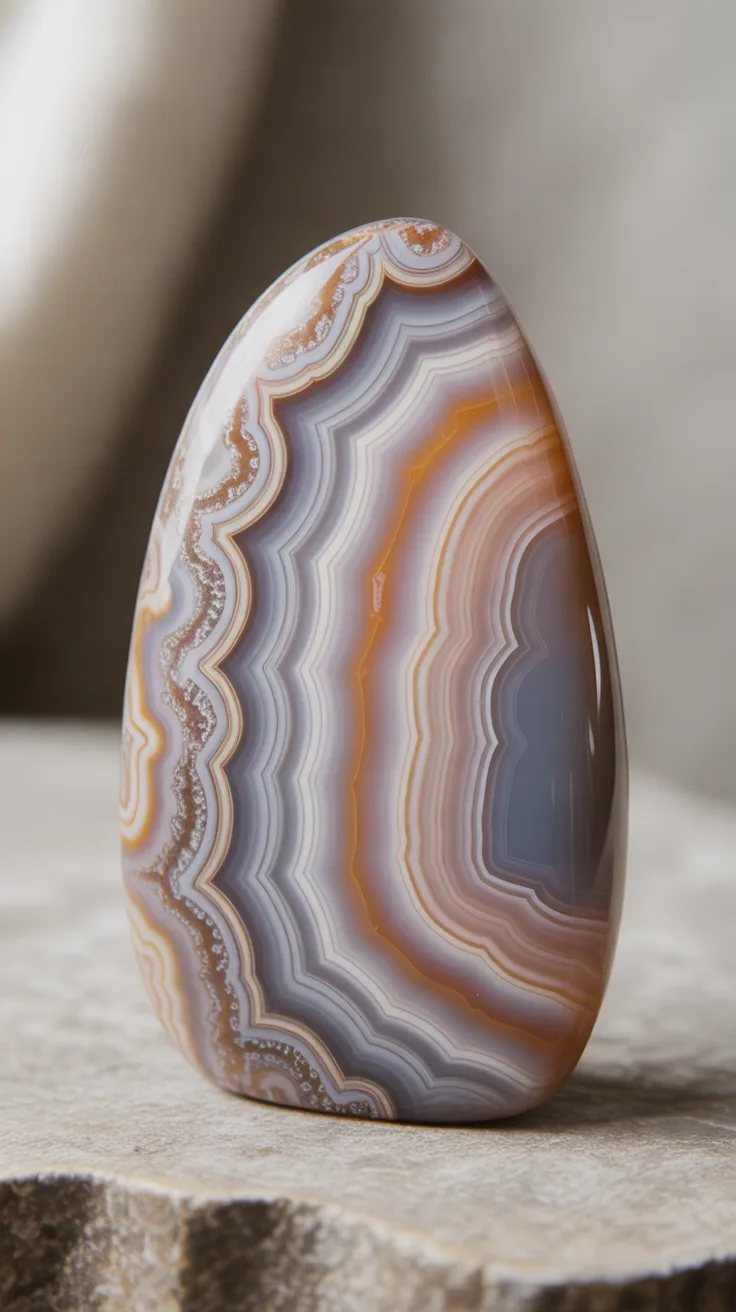
Botswana agate is known for its fine, delicate banding and subdued colors. Typical specimens display gray, white, brown, peach, and pink layers. Some may have lavender-looking tones, particularly under certain lighting conditions.
Bright purple Botswana agate is also sold commercially, but buyers should be aware that vivid purple colors may result from dyeing rather than natural mineral coloration.
How to Identify Botswana Agate
- Fine, closely spaced bands
- Gray, white, pink, and brown natural color combinations
- Curved or parallel banding patterns
- Translucent edges on some polished pieces
- A smooth, waxy to glassy appearance when polished
View on AmazonAs an Amazon Associate, I earn from qualifying purchases.

View on AmazonAs an Amazon Associate, I earn from qualifying purchases.
What to Look For: Examine the bands carefully. Natural Botswana agate often has subtle transitions between colors, while dyed material may show unusually strong purple saturation.
Collector Tip: If a seller advertises vivid purple Botswana agate as completely natural, request confirmation that the stone has not been dyed.
3. Amethyst Sage Agate: Purple-Toned Dendritic Chalcedony
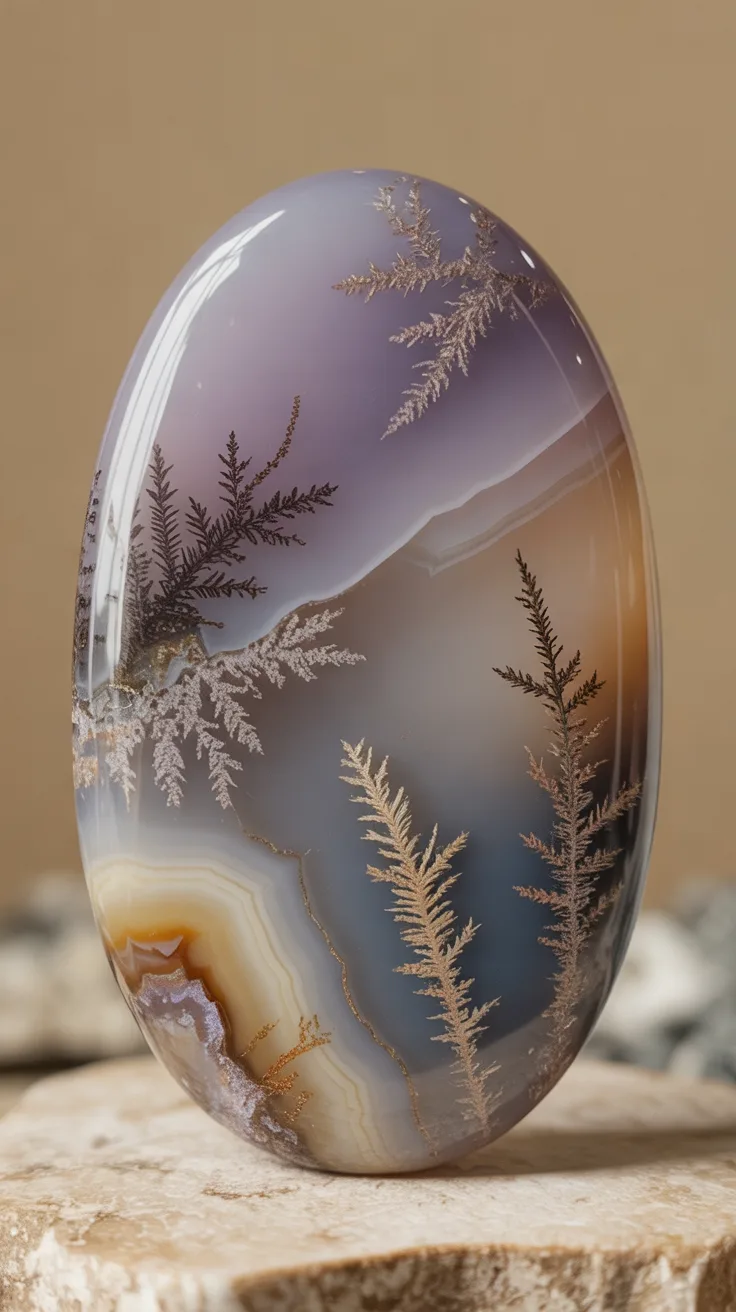
Amethyst sage agate is a trade name associated with chalcedony containing branching, plant-like mineral inclusions. The material is especially associated with the western United States, including Nevada.
Its appearance can include lavender, gray, cream, and brown tones, with dark dendritic patterns that resemble miniature trees, feathers, or landscape scenes.
Despite the name, amethyst sage agate should not automatically be confused with crystalline amethyst. The word “amethyst” in the trade name refers to the stone’s purple appearance.
How to Identify Amethyst Sage Agate
- Lavender, gray, or purple-toned chalcedony
- Dark branching dendritic inclusions
- Patterns resembling ferns, trees, or miniature landscapes
- Opaque to translucent areas
- Attractive patterns when cut into cabochons or polished slabs

View on AmazonAs an Amazon Associate, I earn from qualifying purchases.
View on AmazonAs an Amazon Associate, I earn from qualifying purchases.
What to Look For: Well-positioned dendritic patterns are often more visually important than the depth of purple coloration. A specimen with delicate, clearly defined branching can be especially attractive.
Collector Tip: Request photographs of the actual stone rather than a representative product image. Each dendritic pattern is different, and the exact piece matters.
4. Purple Crazy Lace Agate: Natural Patterns or Dyed Color?
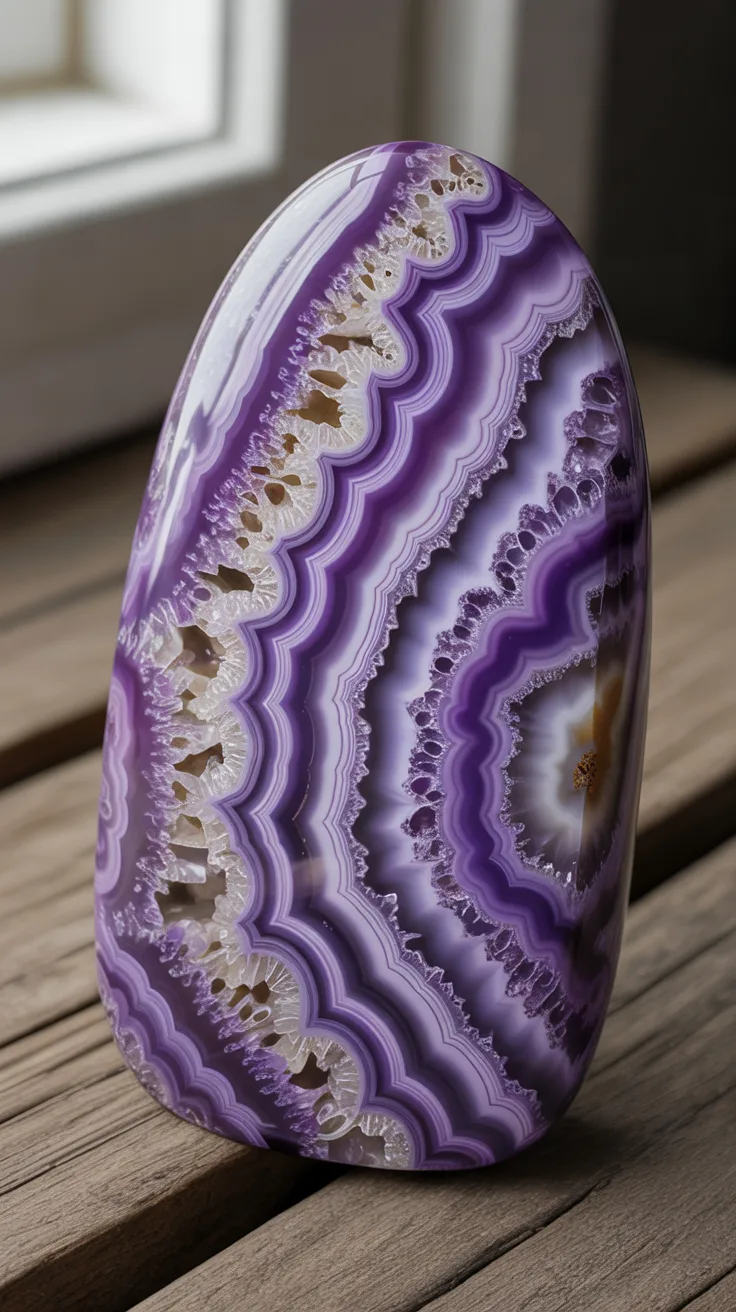
Crazy lace agate is a distinctive Mexican agate celebrated for its swirling, twisting, and irregular bands. It is especially associated with Chihuahua, Mexico.
Natural crazy lace agate commonly displays combinations of cream, white, gray, yellow, red, orange, and brown. Although purple crazy lace agate appears in online gemstone listings, strongly saturated purple specimens may have been dyed.
This does not necessarily make the stone undesirable. Dyed agate can be attractive for decorative pieces and jewelry, but collectors should understand what they are buying.
How to Identify Crazy Lace Agate
- Complex curved or swirling bands
- Irregular patterns that resemble lace or folded ribbons
- Contrasting layers of different colors
- Occasional circular or fortification-style patterns
- Distinctive designs visible on polished slabs and cabochons

View on AmazonAs an Amazon Associate, I earn from qualifying purchases.

View on AmazonAs an Amazon Associate, I earn from qualifying purchases.
What to Look For: Prioritize intricate banding and strong pattern contrast. If the entire stone is an intense purple color, ask whether dye was used.
Collector Tip: Dyed crazy lace agate can still make beautiful jewelry. Just avoid paying a premium based on an unsupported claim that an unusually vivid purple color is natural.
5. Purple Plume Agate: Feather-Like Mineral Inclusions
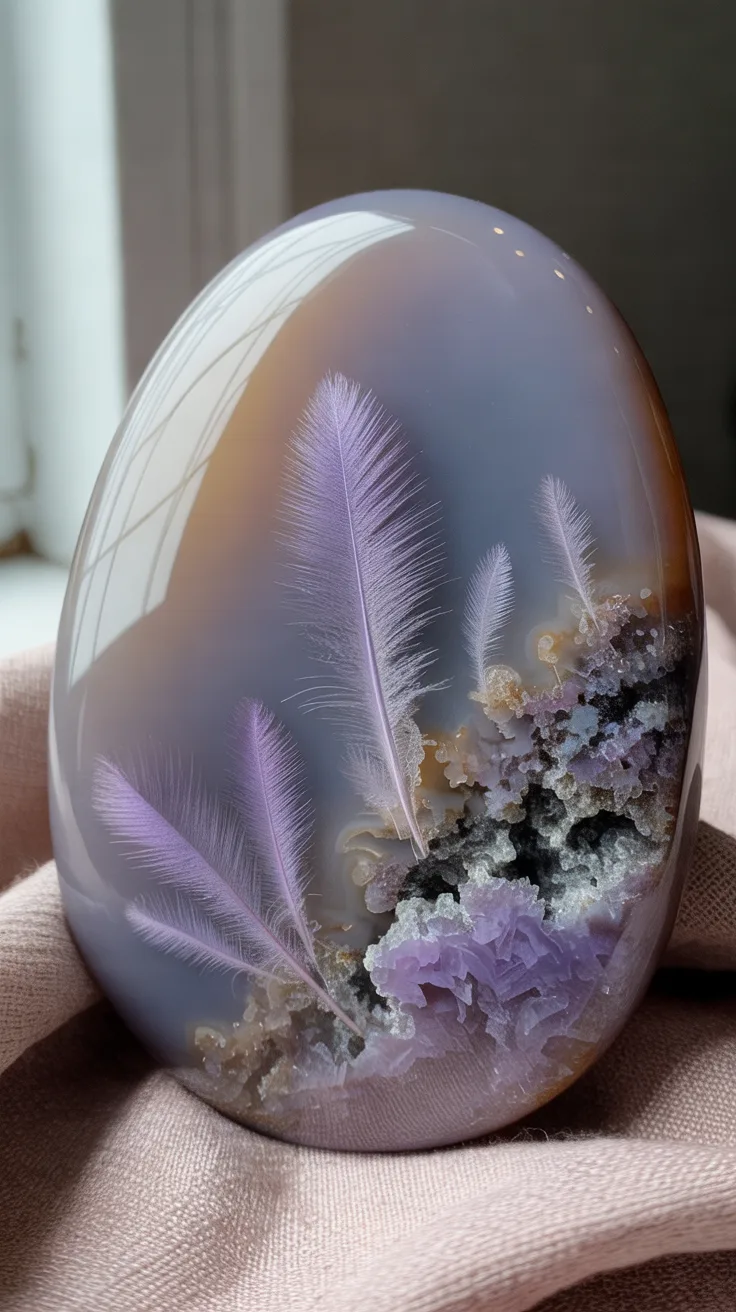
Plume agate is known for its delicate, feather-like inclusions suspended within chalcedony. These formations can resemble smoke, underwater plants, clouds, or soft feathers.
Plume agates occur in several regions, including parts of the western United States and Mexico. Purple-toned examples may be encountered, but the term “purple plume agate” is a descriptive market label rather than one universally defined geological variety.
The stone’s appeal comes primarily from its internal patterns, which can appear three-dimensional when viewed from different angles.
How to Identify Plume Agate
- Feathery or plume-shaped internal inclusions
- Translucent to opaque chalcedony
- Branching, cloud-like, or floating mineral patterns
- Different colors depending on mineral inclusions
- Distinctive patterns that become more visible when polished
What to Look For: Choose specimens with clearly visible plume formations and attractive contrast between the inclusions and surrounding chalcedony.
Collector Tip: Examine photographs taken from multiple angles. Plume patterns can look dramatically different depending on lighting and viewing direction.
How to Tell Natural Purple Agate from Dyed Agate
One of the most important skills for purple agate collectors is recognizing that purple coloration alone does not establish whether a stone is natural or treated.
Agate is frequently dyed because its porous microscopic structure can accept coloring agents under suitable treatment conditions.
Signs That May Suggest Dyeing
- Extremely bright or unusually uniform purple coloration
- Color concentrated inside cracks or along certain bands
- Strong purple staining around cavities or porous areas
- Colors inconsistent with the material’s commonly documented appearance
- A seller who cannot provide reliable treatment information
These signs are not definitive proof of dyeing. Natural stones can also display strong colors, and some treatments are difficult to recognize without laboratory testing.
Important: Avoid using acetone or other household solvents to test valuable specimens. Such tests are unreliable and may damage coatings or finishes.
Comparing the Five Purple Agate Varieties
| Variety | Main Appearance | What to Check |
|---|---|---|
| Grape Agate | Rounded purple chalcedony clusters | Intact spheres and provenance |
| Botswana Agate | Fine, delicate banding | Whether vivid purple color is dyed |
| Amethyst Sage Agate | Lavender tones with dendritic patterns | Inclusion definition and origin |
| Purple Crazy Lace Agate | Swirling and intricate bands | Color treatment disclosure |
| Purple Plume Agate | Feathery internal formations | Pattern clarity and accurate labeling |
How to Care for Purple Agate
Agate and chalcedony generally have a Mohs hardness of approximately 6.5 to 7, making them reasonably durable for collecting and jewelry use. However, they can still chip, fracture, or become scratched by harder materials.
- Clean specimens with lukewarm water and mild soap.
- Use a soft cloth to remove dust and fingerprints.
- Store polished stones separately from harder gemstones.
- Avoid harsh chemicals and sudden temperature changes.
- Keep dyed or color-sensitive specimens away from prolonged strong sunlight.
- Handle delicate grape agate clusters carefully to avoid breaking individual spheres.
Frequently Asked Questions
Is purple agate naturally occurring?
Yes, some agate and chalcedony specimens naturally display purple or lavender coloration. However, many brightly colored purple agates sold commercially are dyed. The exact variety and treatment history should be considered before assuming the color is natural.
Is grape agate actually agate?
Grape agate is a commercial name for rounded, botryoidal chalcedony formations. Unlike traditional banded agate, it typically does not display the distinctive layered banding associated with agate.
Is purple crazy lace agate natural?
Crazy lace agate is a natural gemstone material, but strongly purple examples may be dyed. Ask sellers about treatment and avoid assuming that all advertised purple crazy lace agates have natural coloration.
What makes purple agate valuable?
Value depends on the material’s identity, natural coloration, pattern quality, condition, size, provenance, and buyer demand. Natural and well-documented specimens may attract collectors willing to pay more than they would for common dyed material.
Can purple agate be used in jewelry?
Yes. Purple agate and related chalcedony varieties are used in pendants, beads, earrings, and rings. More delicate specimens, such as grape agate clusters, are generally better suited to protected display than everyday jewelry.
Where can I buy purple agate?
Gem and mineral shows, established gemstone dealers, specialty rock shops, and reputable online sellers are useful places to look. Choose sellers who provide clear photographs, accurate variety names, and treatment disclosures.