
Introduction
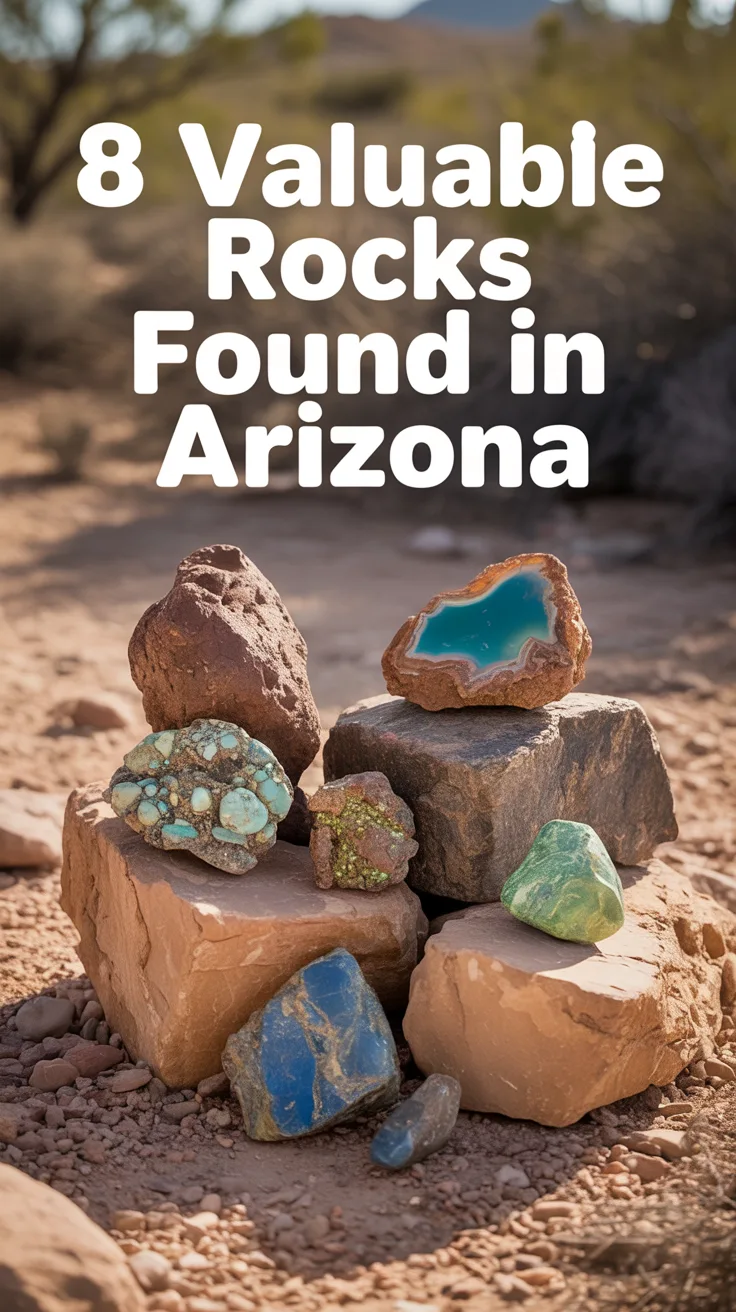
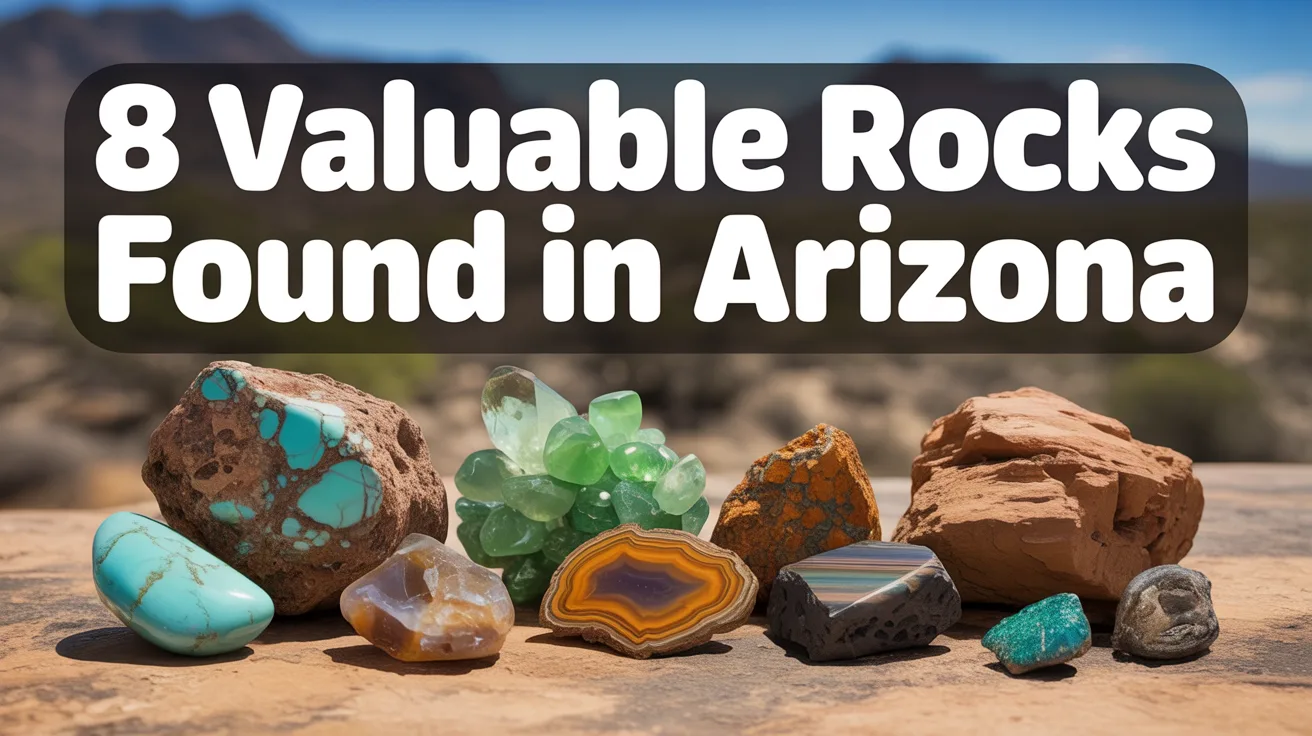
Arizona’s diverse geological landscape makes it one of the most rewarding states for rock and mineral enthusiasts. From copper-rich mining districts to ancient volcanic terrain, the Grand Canyon State is associated with an impressive variety of gemstones, minerals, precious metals, and collectible specimens.
For rockhounds, the exciting part is learning what these materials actually look like in rough form. A piece of turquoise, fire agate, petrified wood, or gold-bearing material encountered outdoors may look very different from the polished specimens commonly shown in jewelry stores.
This guide explores eight notable rocks and minerals associated with Arizona, explains the characteristics collectors look for, and provides practical identification clues for examining possible finds.
Before You Start Rockhounding in Arizona
Finding an interesting mineral does not automatically mean it can legally be collected. Land ownership, mineral rights, protected areas, local restrictions, claim status, and collection rules can all affect what may be removed from a particular location.
Research the specific site before collecting anything and verify current rules with the appropriate land manager or property owner.
Arizona’s climate also deserves serious consideration. Desert heat, limited shade, rough roads, flash-flood hazards, wildlife, and long distances between services can turn a simple rockhounding trip into a difficult situation.
Carry substantially more drinking water than you expect to need, tell someone where you’re going, and avoid relying exclusively on cellular service for navigation.
1. Turquoise: Arizona’s Signature Gemstone
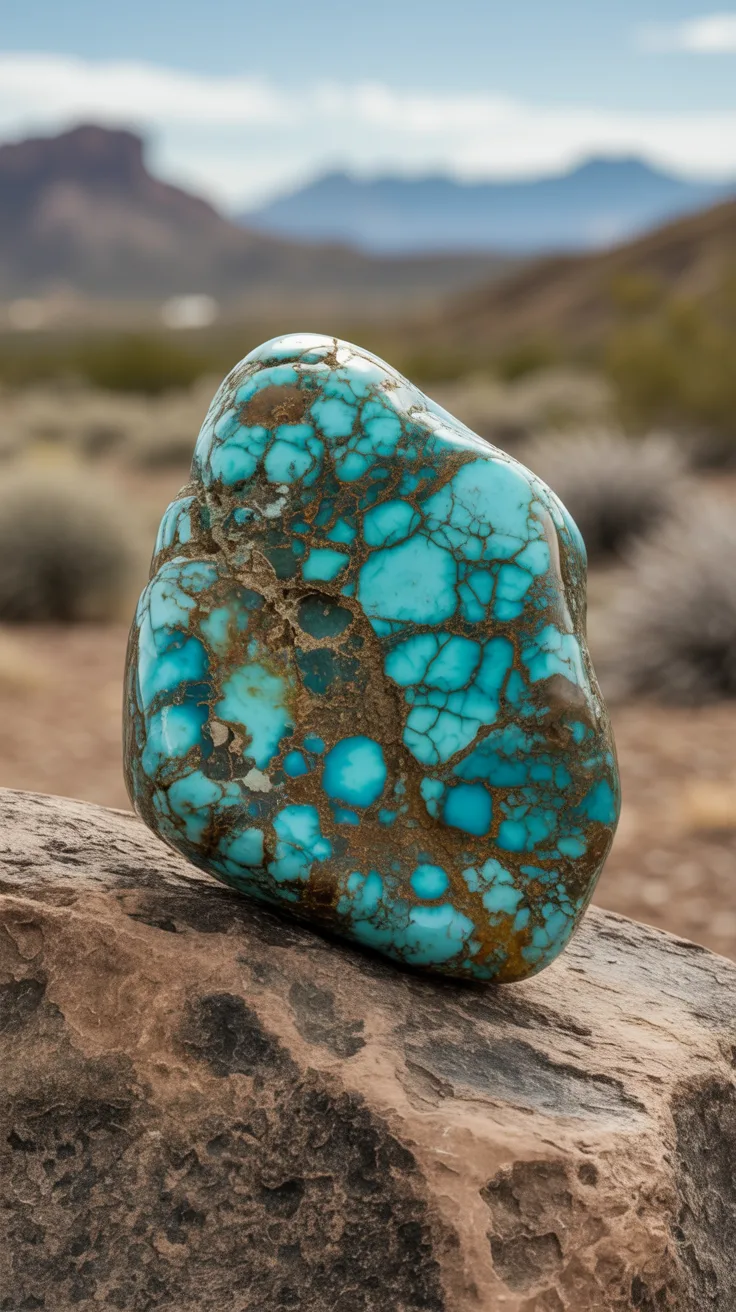
Turquoise is one of the minerals most strongly associated with Arizona. Famous Arizona mining districts have produced material ranging from bright blue to blue-green, often accompanied by brown, black, or tan matrix.
The appearance and desirability of turquoise can depend on several characteristics:
- Color and saturation
- Matrix pattern
- Hardness and stability
- Amount of usable material
- Treatment status
- Documented mine or locality information
What Rough Turquoise Can Look Like
Beginners sometimes expect rough turquoise to resemble polished jewelry immediately. In reality, potentially interesting material may occur as irregular blue or greenish material associated with host rock.
What to look for:
- Examine blue-green material in natural daylight.
- Look at how the colored material occurs within or against the surrounding rock.
- Inspect the surface for veins, patches, or matrix patterns.
- Use a loupe to examine texture and fractures.
- Photograph the specimen before cleaning or altering it.
- Record the locality when legally collected because provenance can be important.

View on AmazonAs an Amazon Associate, I earn from qualifying purchases.

View on AmazonAs an Amazon Associate, I earn from qualifying purchases.
Pro Tip: Color alone cannot confirm turquoise because several minerals and manufactured materials can produce similar blue-green appearances.
2. Peridot: The Volcanic Gem of San Carlos
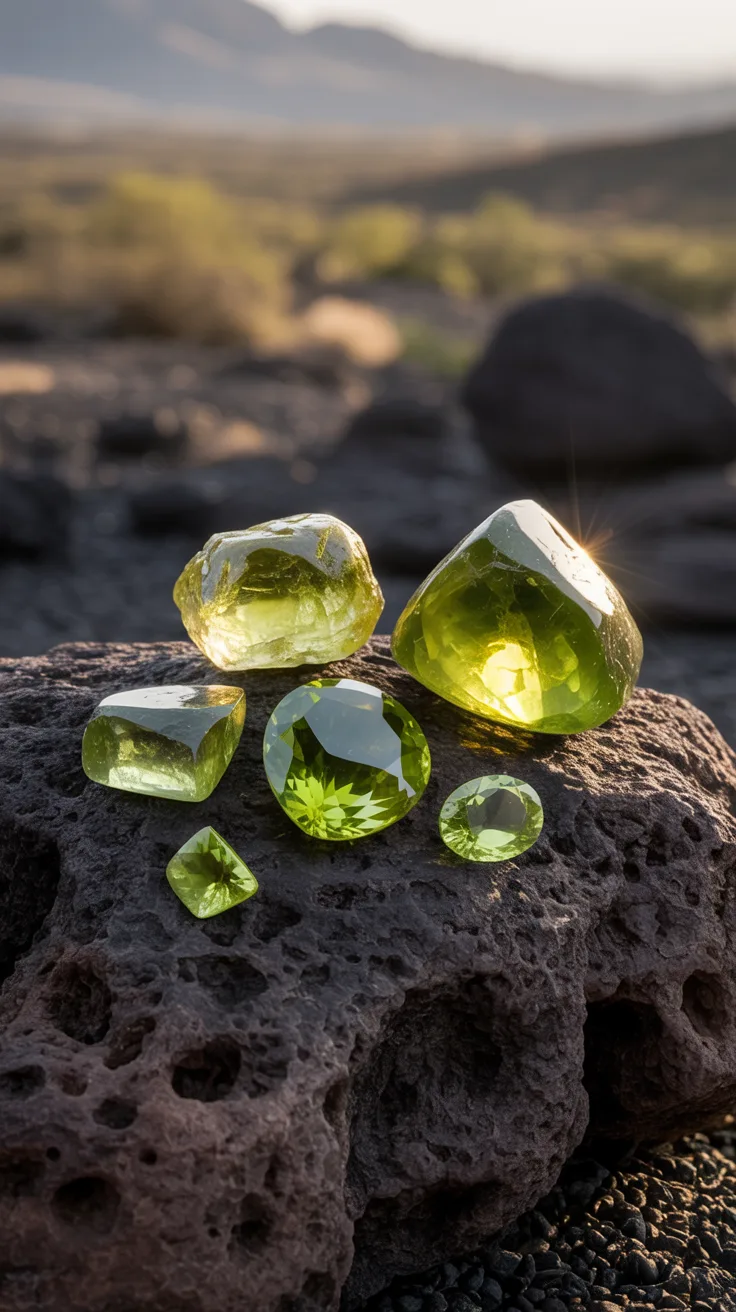
Arizona is famous for gem-quality peridot associated with the San Carlos Apache Reservation. Peridot is the gem variety of olivine and is recognized for its characteristic yellow-green to green coloration.
Collectors appreciate Arizona peridot for characteristics that can include:
- Bright yellow-green to olive-green color
- Transparent gem-quality material
- Distinctive volcanic geological association
- Strong connection with Arizona mineral history
What to Look For
When studying known peridot specimens, pay attention to color, transparency, crystal form, associated host material, and locality information rather than trying to identify a stone from green color alone.
- Examine the specimen under neutral daylight.
- Look for the characteristic green coloration associated with olivine.
- Use magnification to inspect crystal surfaces and inclusions.
- Compare questionable material with documented specimens.
- Seek gemological testing when identification has financial importance.

View on AmazonAs an Amazon Associate, I earn from qualifying purchases.

View on AmazonAs an Amazon Associate, I earn from qualifying purchases.
Important: Access and collecting rights are especially important around tribal lands, and collectors should never assume that material may be removed without authorization.
3. Fire Agate: Arizona’s Iridescent Treasure
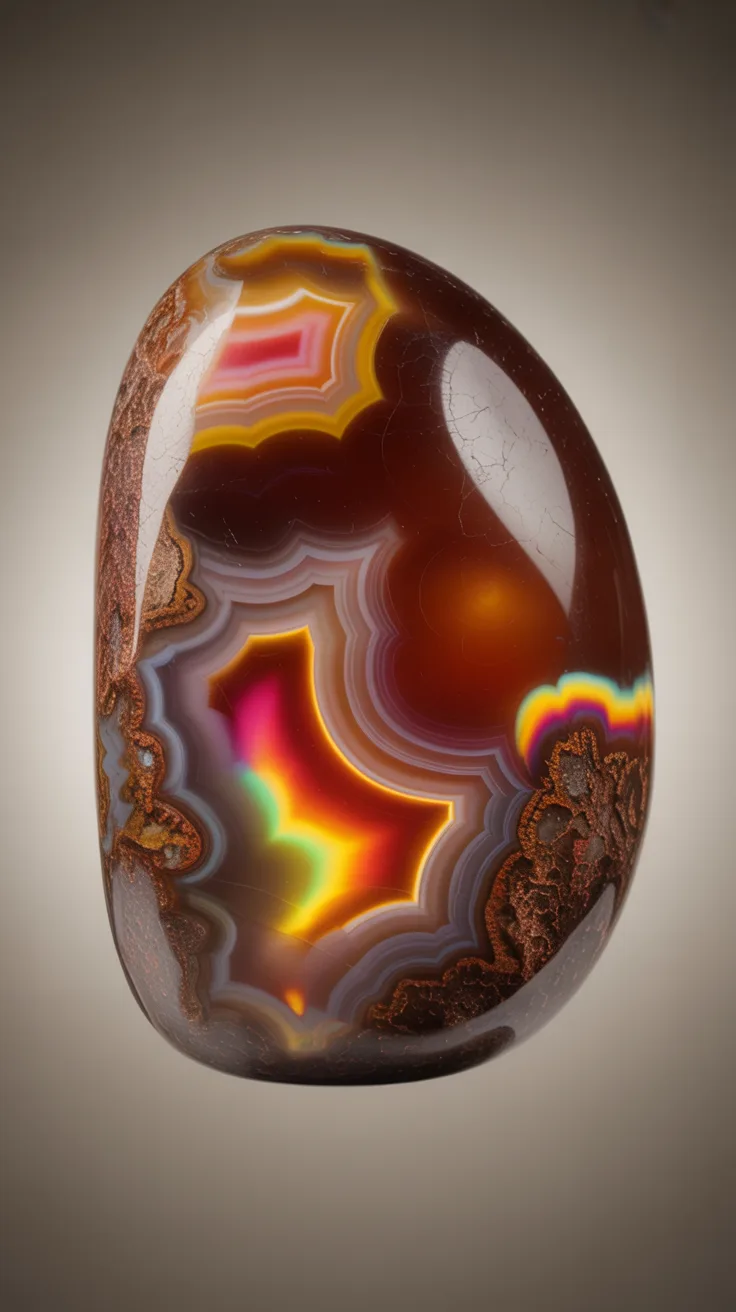
Fire agate is one of the most visually distinctive materials associated with the southwestern United States. It is a variety of chalcedony capable of displaying vivid iridescent colors produced by its internal structure.
Finished fire agate can reveal flashes of red, orange, yellow, green, and occasionally other colors that seem to move as the viewing angle changes.
Collectors examining fire agate commonly consider:
- Brightness of the fire
- Range of visible colors
- Pattern and coverage
- Depth of the visual effect
- Size and condition
- Potential for careful lapidary work
How to Examine Possible Fire Agate
- Clean loose surface dirt gently with water and a soft brush.
- Allow the specimen to dry and examine its natural surface.
- Wet the surface again to approximate how some areas might appear when polished.
- Rotate the stone under strong light.
- Look for areas with botryoidal or rounded chalcedony structures.
- Use magnification to inspect promising areas without grinding into them.

View on AmazonAs an Amazon Associate, I earn from qualifying purchases.
View on AmazonAs an Amazon Associate, I earn from qualifying purchases.
A 10x jeweler’s loupe for rock collecting makes it easier to inspect small mineral features while evaluating rough specimens.
Pro Tip: Cutting fire agate is specialized lapidary work because removing too much material can destroy desirable color layers.
4. Azurite and Malachite: Copper’s Colorful Companions
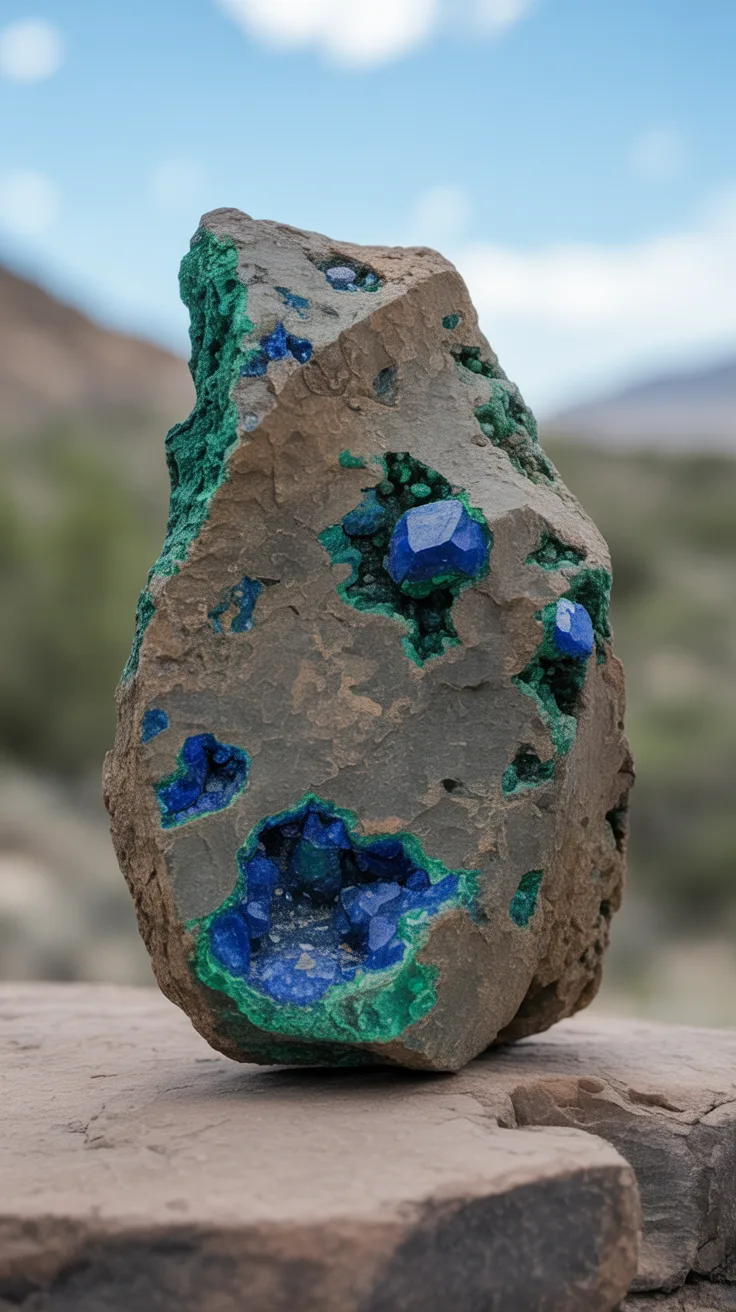
Arizona’s long copper-mining history has produced notable specimens of azurite and malachite. These copper minerals are famous for their intense colors and can occur together in visually striking blue-and-green combinations.
Identifying Azurite
Azurite is best known for its rich blue coloration. Specimens may occur as crystals, coatings, masses, or other forms depending on their geological environment.
Look for:
- Deep blue coloration
- Blue crystal growth where present
- Association with other copper minerals
- Green malachite occurring nearby or on the same specimen
Identifying Malachite
Malachite is immediately recognizable in many classic specimens because of its strong green coloration. It can form bands, crusts, botryoidal surfaces, fibrous structures, and other habits.
Look for:
- Strong green coloration
- Light and dark green banding
- Rounded or botryoidal surfaces
- Association with azurite and other copper minerals
Why Combination Specimens Stand Out
Pieces containing both deep blue azurite and green malachite can be especially visually appealing because of the dramatic contrast between the two minerals.
Do not aggressively clean an attractive mineral specimen before identifying it. Crystal coatings and delicate formations can be permanently damaged by harsh brushes, chemicals, or inappropriate cleaning methods.
5. Wulfenite: The Collector’s Crystal
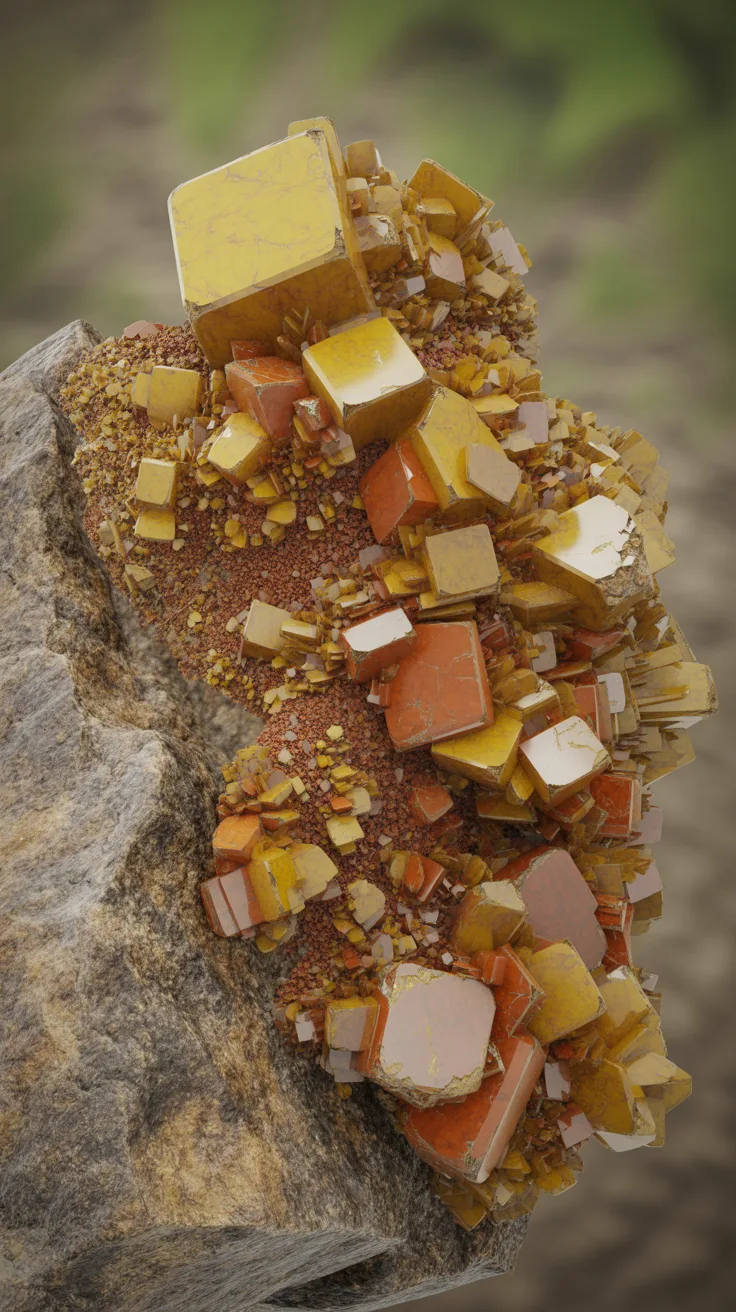
Arizona is internationally known among mineral collectors for remarkable wulfenite specimens. Wulfenite is a lead molybdate mineral that can form striking tabular crystals, including orange, yellow, and reddish-orange examples.
Collectors examining wulfenite specimens often consider:
- Crystal size
- Crystal form
- Color
- Transparency
- Luster
- Damage or missing crystal edges
- Overall arrangement on the matrix
- Documented locality
What to Look For
Classic wulfenite crystals can appear as thin plates or tabs projecting from matrix material. Their unusual crystal habit can make good specimens dramatically different from ordinary massive rocks.
- Examine suspected crystals without unnecessary handling.
- Look for thin tabular crystal forms.
- Observe coloration under natural or neutral light.
- Use magnification without touching delicate crystal edges.
- Photograph the specimen from several angles.
- Keep any locality information associated with the specimen.
Pro Tip: Attractive mineral specimens should generally be handled by their matrix or base rather than by exposed crystals.
6. Gold: Arizona’s Precious Metal Legacy
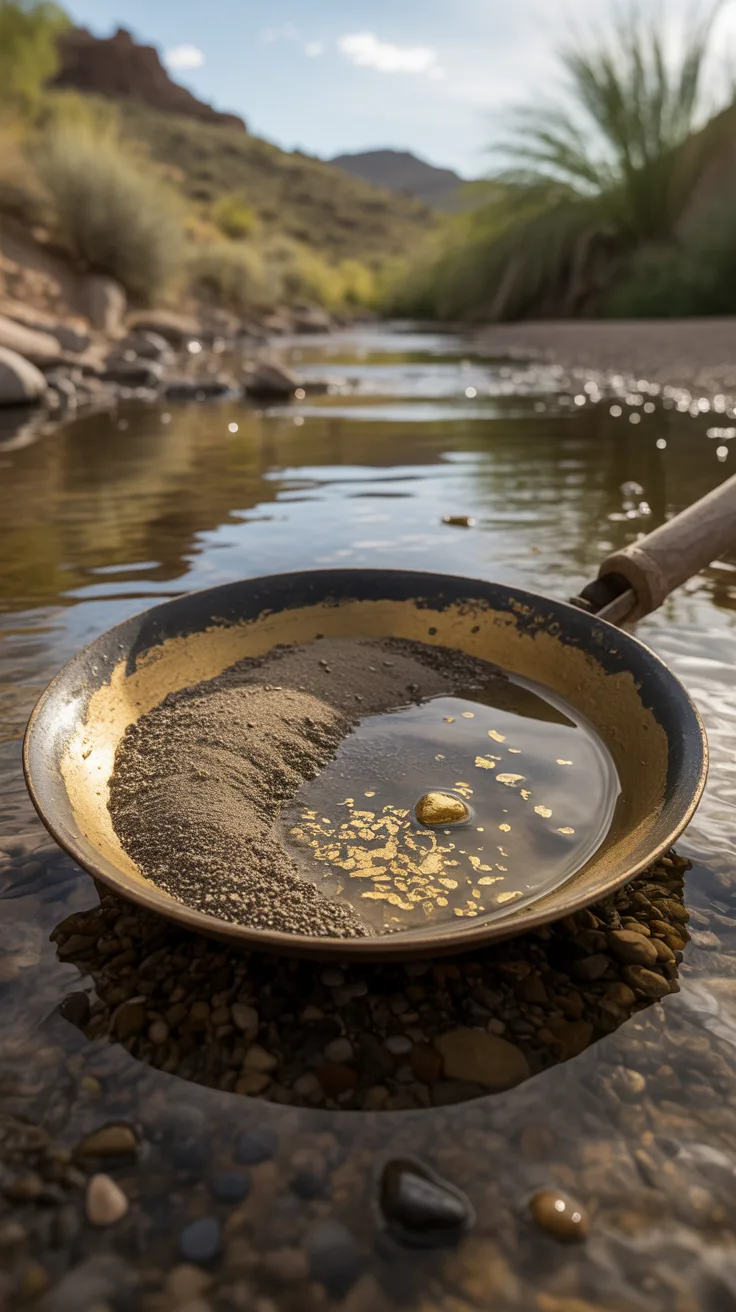
Arizona has a long history of gold mining and prospecting, and recreational gold panning continues to attract people interested in learning traditional prospecting techniques.
Gold can occur in primary mineral deposits as well as placer deposits where erosion and water have concentrated resistant heavy minerals.
How Placer Gold Behaves in a Pan
Learning how genuine gold behaves can be more useful than relying on color alone. Several shiny minerals can initially fool beginners.
- Place suitable sediment into the pan.
- Submerge it and completely wet the material.
- Break apart clay and compacted sediment.
- Use controlled washing motions to remove lighter material gradually.
- Continue concentrating the heavier fraction.
- Examine the remaining material carefully.
- Look for dense yellow particles that remain with the heavy concentrate.
A beginner gold panning kit provides the basic equipment needed to practice recreational placer panning.
Gold vs. Pyrite
Pyrite and other reflective minerals are commonly mistaken for gold by inexperienced prospectors. Color, shape, hardness, malleability, density, and how a particle behaves physically can all provide identification clues.
Native gold is notably dense and malleable, while brittle minerals behave differently when subjected to appropriate identification tests.
Pro Tip: Practice with known samples before relying on visual field identification alone.
7. Petrified Wood: Ancient Trees Preserved in Stone
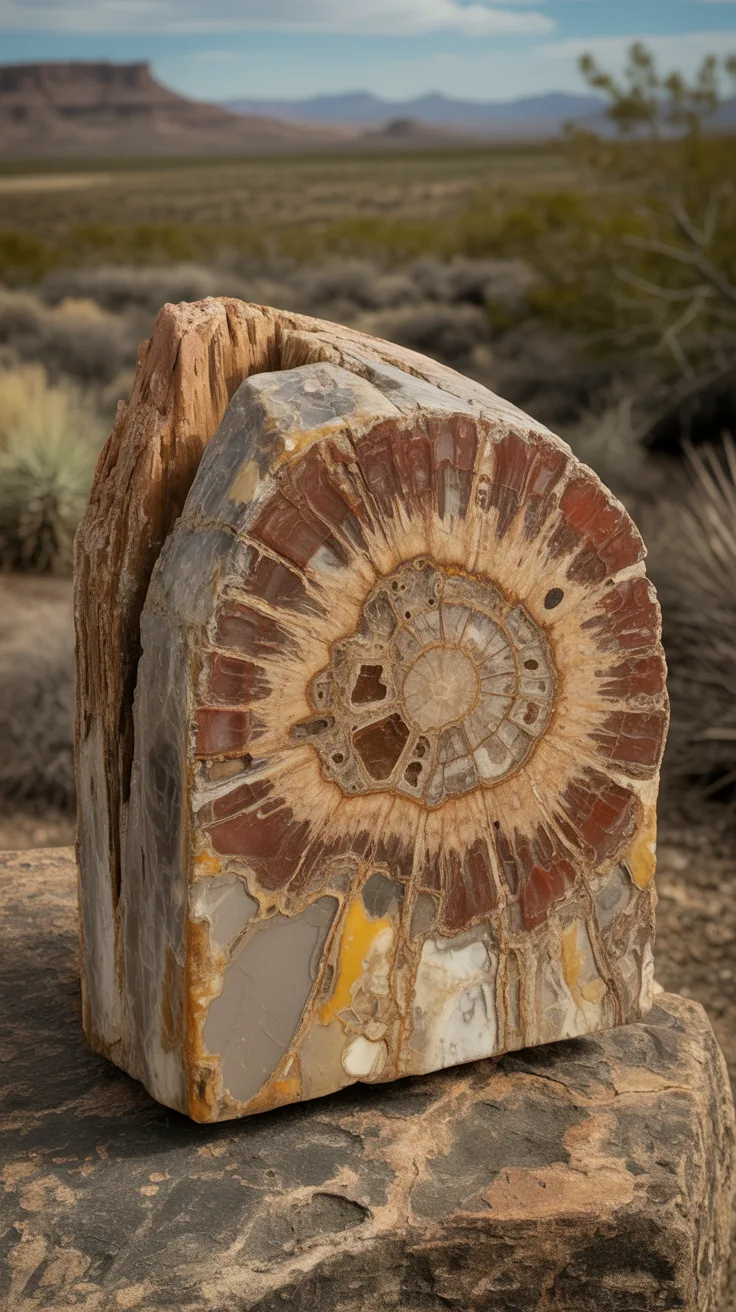
Arizona is famous for spectacular petrified wood. Petrification occurs when mineral-rich processes preserve or replace portions of buried plant material over geological time, sometimes retaining remarkable details of the original wood structure.
Collectible specimens may display:
- Recognizable wood grain
- Preserved growth structures
- Red, yellow, brown, gray, or other mineral coloration
- Interesting internal patterns
- Areas capable of taking an attractive polish
How to Recognize Petrified Wood
- Look for grain-like lines resembling natural wood.
- Examine the ends for structures suggestive of growth patterns.
- Notice whether the specimen has the weight and hardness of stone rather than wood.
- Look for mineral coloration running through preserved structures.
- Compare questionable material with verified petrified wood specimens.
Important: Petrified Forest National Park protects its natural resources, and collecting specimens from the park is prohibited.
Collectors interested in petrified wood should obtain material legally from locations where collection is specifically permitted or purchase documented specimens from reputable sources.
8. Apache Tears: Arizona’s Volcanic Glass
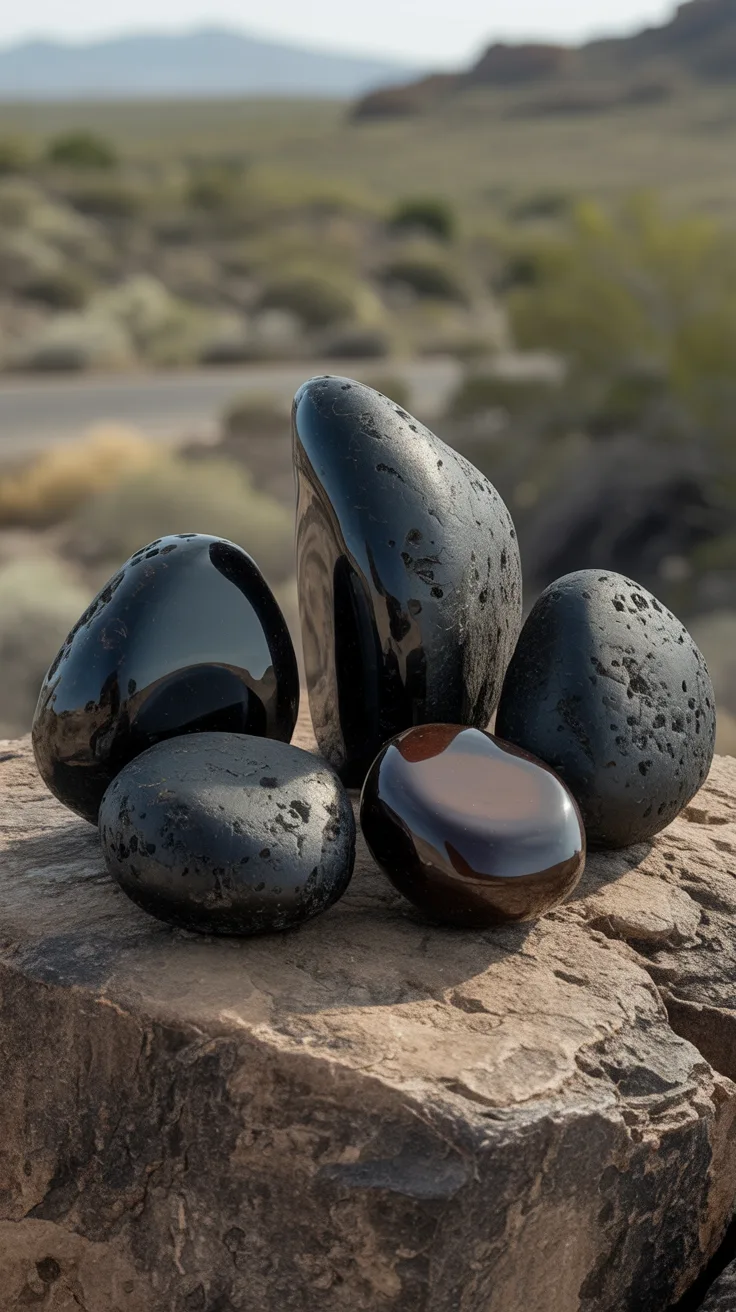
Apache tears are rounded nodules of obsidian associated with volcanic deposits in the American Southwest. Their rounded exterior can make them look rather ordinary until a thinner portion is held against strong light.
Backlighting may reveal translucent brown, smoky, or dark glassy interiors.
How to Examine an Apache Tear
- Look for a naturally rounded or subrounded dark nodule.
- Clean surface dust gently.
- Hold the specimen near a strong flashlight.
- Move thinner edges directly in front of the light.
- Look for smoky brown translucency through those areas.
- Examine the surface for glass-like characteristics.
A compact LED rockhounding flashlight can help when examining translucent edges and internal features in field specimens.
Quick Arizona Rock Identification Guide
| Material | Primary Clue | Typical Color | Useful Examination Method |
|---|---|---|---|
| Turquoise | Blue-green mineral material and matrix | Blue to green | Loupe and comparison |
| Peridot | Green olivine | Yellow-green to olive | Magnification and gem testing |
| Fire Agate | Potential iridescent internal effect | Brown chalcedony with spectral colors | Strong light and careful rotation |
| Azurite | Intense blue copper mineral | Deep blue | Visual examination and mineral testing |
| Malachite | Green copper mineral | Bright to dark green | Visual examination and mineral testing |
| Wulfenite | Tabular crystals | Yellow to orange-red | Magnification |
| Gold | Dense and malleable native metal | Metallic yellow | Panning and appropriate identification tests |
| Petrified Wood | Stone preserving wood-like structure | Highly variable | Structural examination |
| Apache Tears | Rounded obsidian nodules | Black to smoky brown | Strong backlighting |
Essential Equipment for Arizona Rockhounding
You don’t need a truck full of specialized equipment to begin rockhounding. A carefully selected basic kit can cover identification, collection, documentation, and personal safety.
Basic Field Kit
- Safety glasses
- Sturdy gloves
- Appropriate rock hammer where its use is permitted
- 10x hand lens or loupe
- Bright LED flashlight
- Small specimen bags
- Labels and permanent marker
- Field notebook
- Navigation tools
- Sun protection
- First-aid supplies
- Plenty of drinking water
A basic geology field kit with a rock hammer and eye protection can cover several common rockhounding tasks where collecting and tool use are permitted.
How to Document a Potentially Interesting Find
Good documentation can be as important as the specimen itself, especially when locality information contributes to its scientific or collector interest.
- Photograph the specimen before removing it when collection is permitted.
- Record the general locality accurately without trespassing or disturbing protected resources.
- Note the surrounding rock type and visible mineral associations.
- Assign the specimen a number.
- Place a matching number on its collection bag or label.
- Record the date and relevant observations in a field notebook.
- Keep locality information with the specimen after cleaning, cutting, or polishing.
This simple habit prevents collections from becoming boxes of attractive rocks with forgotten origins.
Don’t Assume an Interesting Rock Is Valuable
A beautiful specimen and a financially valuable specimen are not necessarily the same thing. Mineral value can depend on identification, locality, crystal quality, size, damage, aesthetics, rarity, treatment, provenance, current demand, and many other factors.
Online asking prices can also be misleading because a listed price does not demonstrate that comparable material actually sells for that amount.
If you believe you’ve found an unusually important specimen, preserve it in its current condition until you understand what it is. Aggressive cleaning, polishing, breaking, or cutting can sometimes reduce the usefulness or appeal of a specimen.
Frequently Asked Questions
Where can valuable rocks be legally collected in Arizona?
Rules depend on the specific land, material, claim status, ownership, and managing agency. Some public lands may allow limited noncommercial collection of certain materials under applicable rules, while other locations prohibit removal or require authorization. Always verify the regulations for the exact location before collecting.
How can the authenticity of Arizona turquoise be verified?
Visual inspection can provide clues but may not conclusively establish identity, treatment status, or mine origin. When those details affect a purchase or valuation, documentation and examination by a qualified gemological professional can provide stronger evidence.
What equipment is needed for rock hunting in Arizona?
A practical beginner kit includes safety glasses, gloves, a loupe, flashlight, specimen bags, labels, navigation tools, sun protection, first-aid supplies, and ample water. A rock hammer can be useful where its use and specimen collection are permitted.
Can I collect rocks inside Arizona national parks?
Do not assume rocks, minerals, fossils, plants, or other natural resources may be removed from national park lands. Check the rules for the specific protected area and enjoy protected specimens where they occur.
What is the best season for rock hunting in Arizona?
Cooler months generally provide more comfortable conditions for lower-elevation desert exploration, while conditions vary substantially by elevation and region. Always check current weather and local hazards before heading into the field.
What should I do if I think I’ve found gold?
Keep the sample and document where it was legally collected. Compare its physical characteristics with known gold and common look-alikes, and seek additional testing when identification matters.
Should I polish a valuable-looking rock immediately?
No. Identify and document an unusual specimen before altering it because cutting or polishing can permanently remove features that may be useful for identification or desirable to collectors.