
Introduction
Collectors and enthusiasts often find themselves puzzled when trying to distinguish between two of the most popular chalcedony varieties in the mineral world. Understanding the differences between agate vs jasper is essential for anyone who collects, purchases, or simply appreciates these stunning stones. While both belong to the quartz family and share similar chemical compositions, they possess distinct characteristics that set them apart.
These two gemstones have captivated humans for thousands of years, appearing in jewelry, decorative objects, and spiritual practices across cultures. Despite their similarities, knowing how to tell them apart can help collectors make informed purchasing decisions, properly identify specimens, and deepen their appreciation for these remarkable minerals.
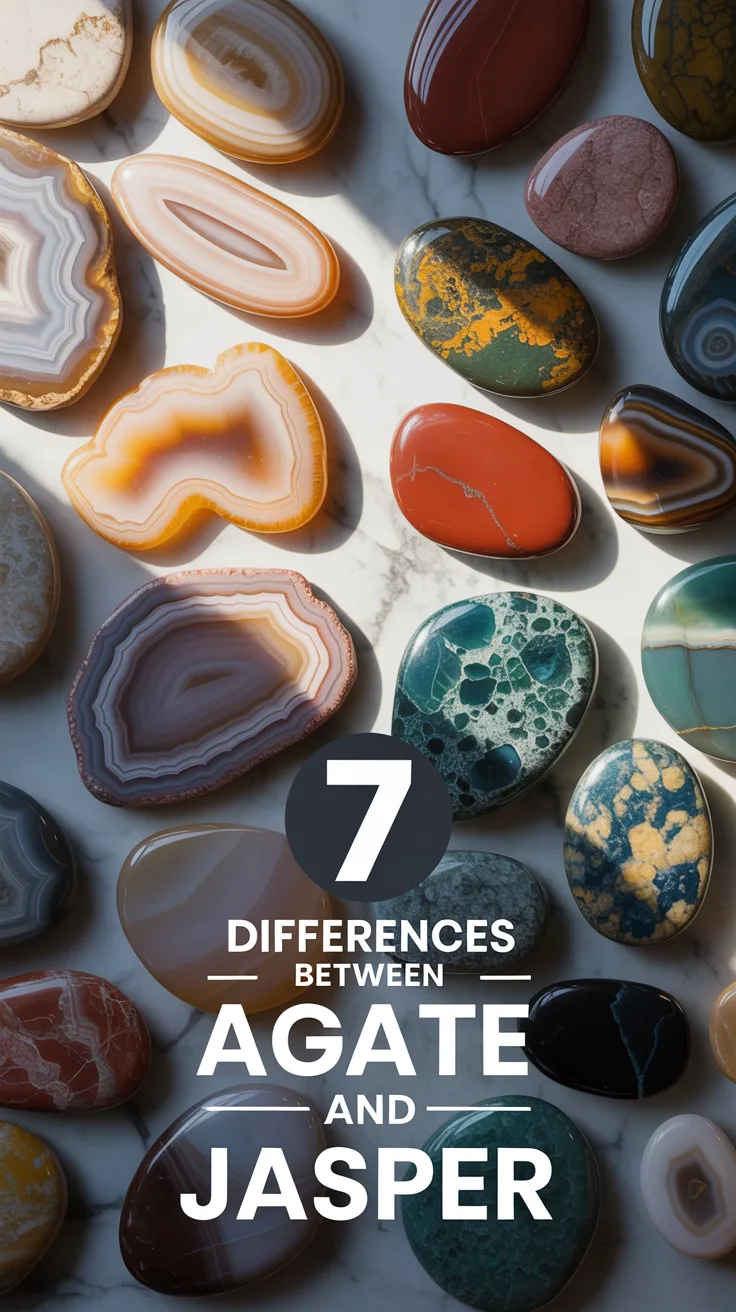
Beginners can build a useful comparison collection with agate and jasper rock specimens.
1. Translucency: The Primary Visual Distinction
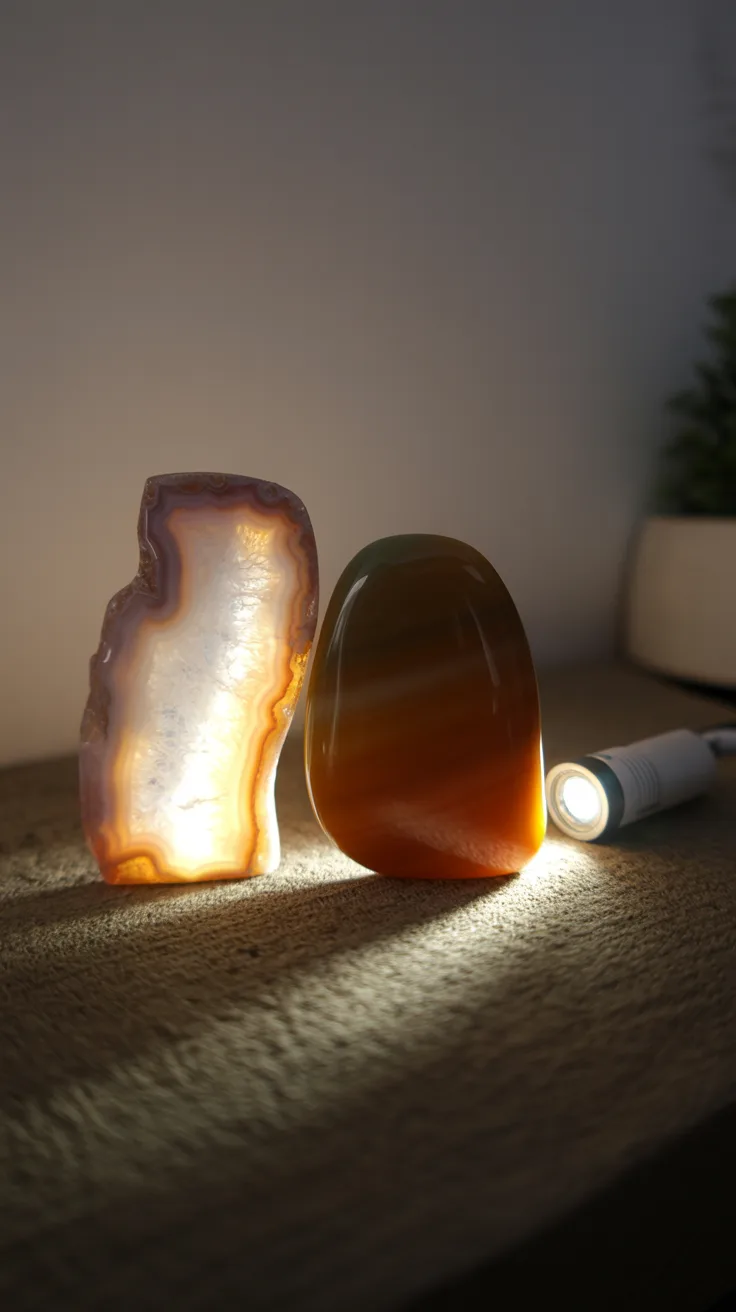
The most reliable way to differentiate agate vs jasper is by examining their translucency. Agate is characteristically translucent to semi-translucent, meaning light can pass through it to varying degrees. When held up to a light source, agate allows some illumination to penetrate its surface, creating a glowing effect.
Jasper, in contrast, is completely opaque. No light passes through jasper specimens, regardless of how thin the slice or how bright the light source. This fundamental difference in light transmission serves as the quickest identification method for distinguishing between these two stones.

View on AmazonAs an Amazon Associate, I earn from qualifying purchases.

View on AmazonAs an Amazon Associate, I earn from qualifying purchases.
Pro Tip: Use a small flashlight pressed against the stone in a dark room. If any light glows through the edges or thin areas, the specimen is likely agate rather than jasper.
A compact LED flashlight for rock collecting makes this translucency test easy to perform at home or in the field.
2. Banding Patterns and Visual Characteristics
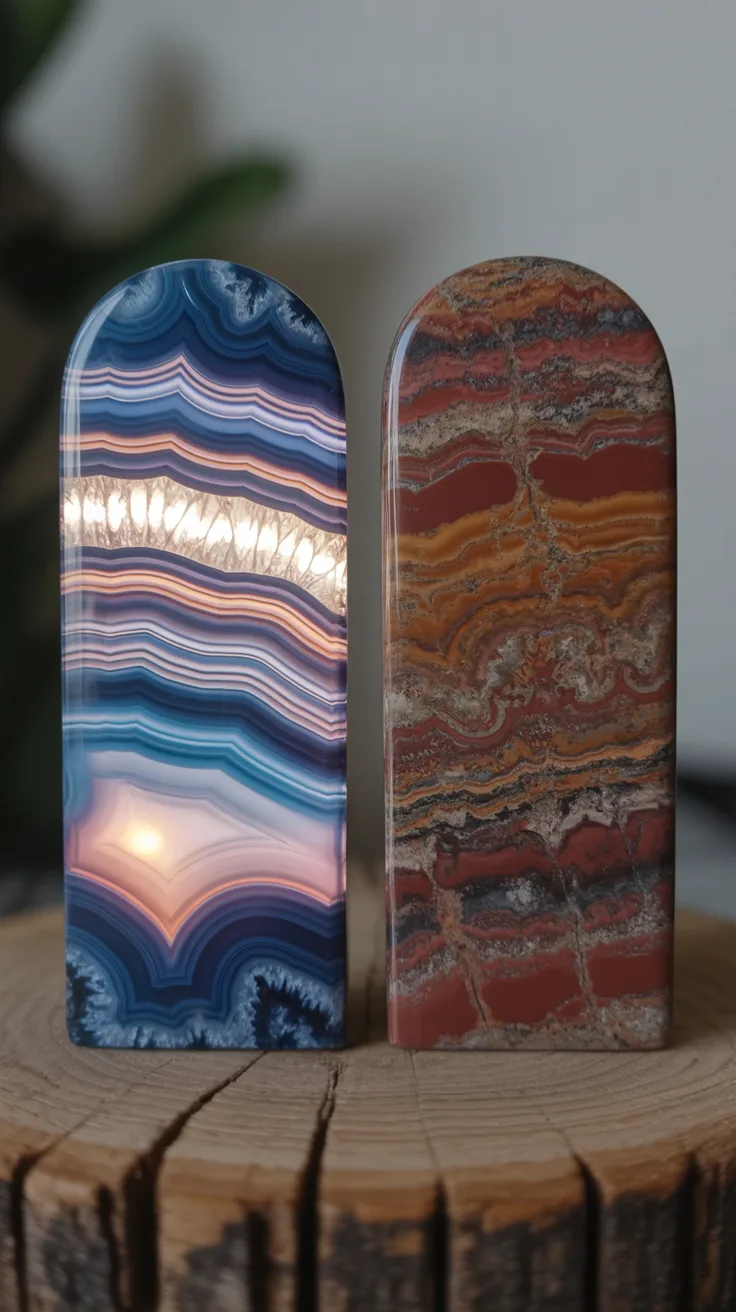
Agate is renowned for its distinctive banding patterns. These bands form in concentric layers, parallel lines, or fortification-like patterns that create the stone’s signature appearance. The bands result from rhythmic crystallization of silica-rich fluids within volcanic rock cavities over millions of years.
Jasper typically displays more uniform coloration or features irregular patterns such as:
- Speckled or spotted appearances
- Swirling, marble-like patterns
- Brecciated (fragmented) textures
- Scenic or landscape-like formations
- Orbicular (circular) patterns in certain varieties

View on AmazonAs an Amazon Associate, I earn from qualifying purchases.

View on AmazonAs an Amazon Associate, I earn from qualifying purchases.
While some jasper varieties may show banding, these bands lack the fine, consistent layering characteristic of true agate.
3. Formation Process and Geological Origins
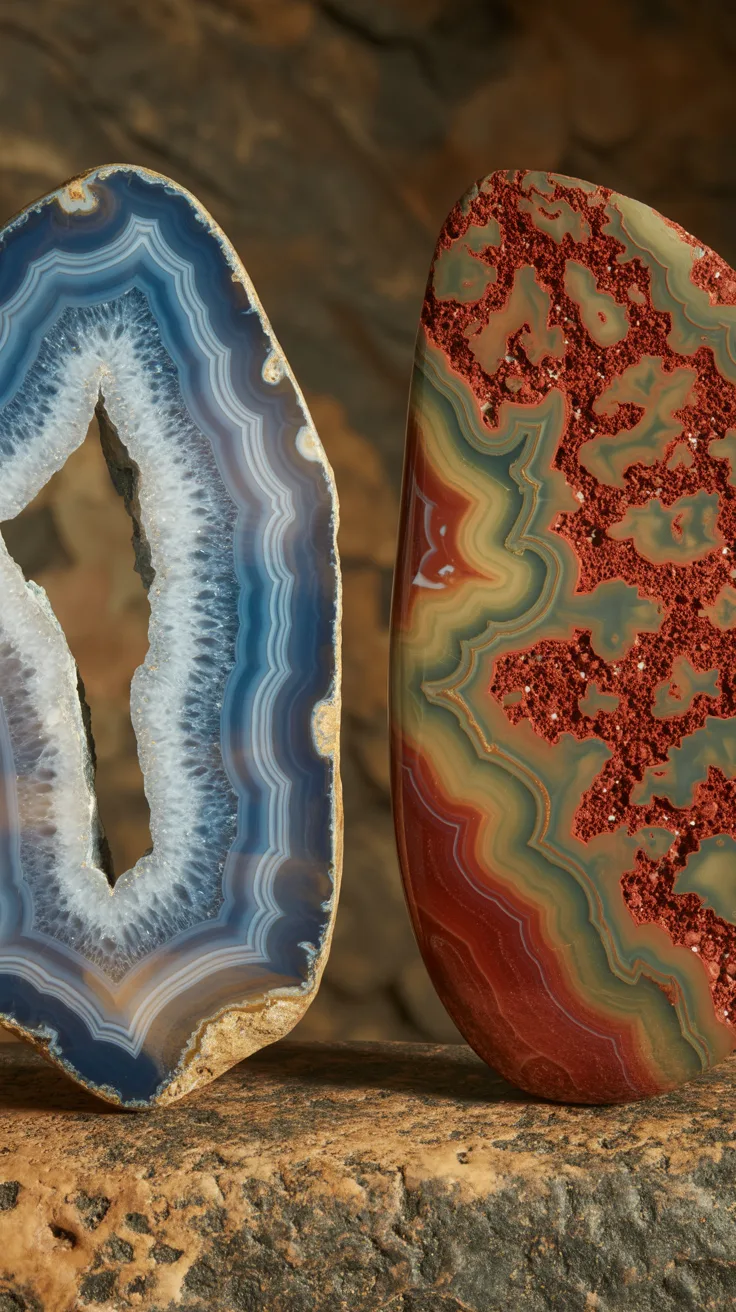
Both stones form through similar geological processes but with key differences that affect their final appearance. Agate forms when silica-rich groundwater fills cavities in volcanic rocks, depositing microscopic quartz crystals in successive layers. The slow, methodical deposition creates the characteristic banding.
Jasper forms when fine particulate matter, including clay, iron oxides, and other minerals, becomes incorporated into the silica matrix during formation. This inclusion of foreign materials creates jasper’s opacity and contributes to its wide range of colors and patterns.
Pro Tip: Understanding formation helps explain why agate specimens often appear in nodule form with hollow centers (geodes), while jasper typically forms as solid masses within sedimentary or volcanic rocks.
4. Color Range and Pigmentation Sources
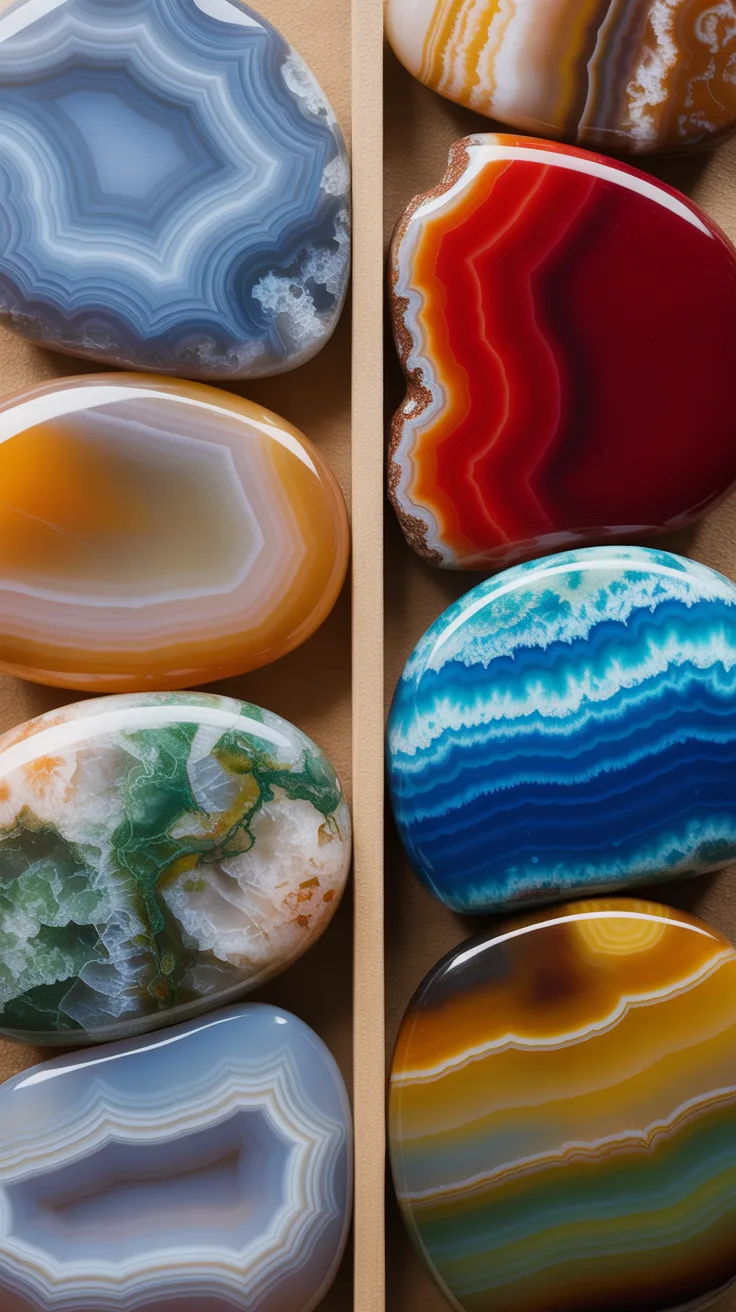
The color palettes of these stones overlap significantly, yet their coloration mechanisms differ. Agate colors tend to appear softer and more subtle due to light passing through the translucent material. Common agate colors include:
- Blue and blue-gray (Blue Lace Agate)
- Warm browns and oranges (Carnelian)
- Mossy greens (Moss Agate)
- White and gray banding
- Pink and red hues
Jasper displays bolder, more saturated colors because its opacity allows pigments to appear more vivid. The extensive mineral inclusions in jasper create an impressive spectrum including deep reds, forest greens, mustard yellows, and rich browns. Popular jasper varieties showcase colors like the blood-red of Red Jasper, the oceanic blues and greens of Ocean Jasper, and the earthy tones of Picture Jasper.
5. Crystal Structure and Surface Texture
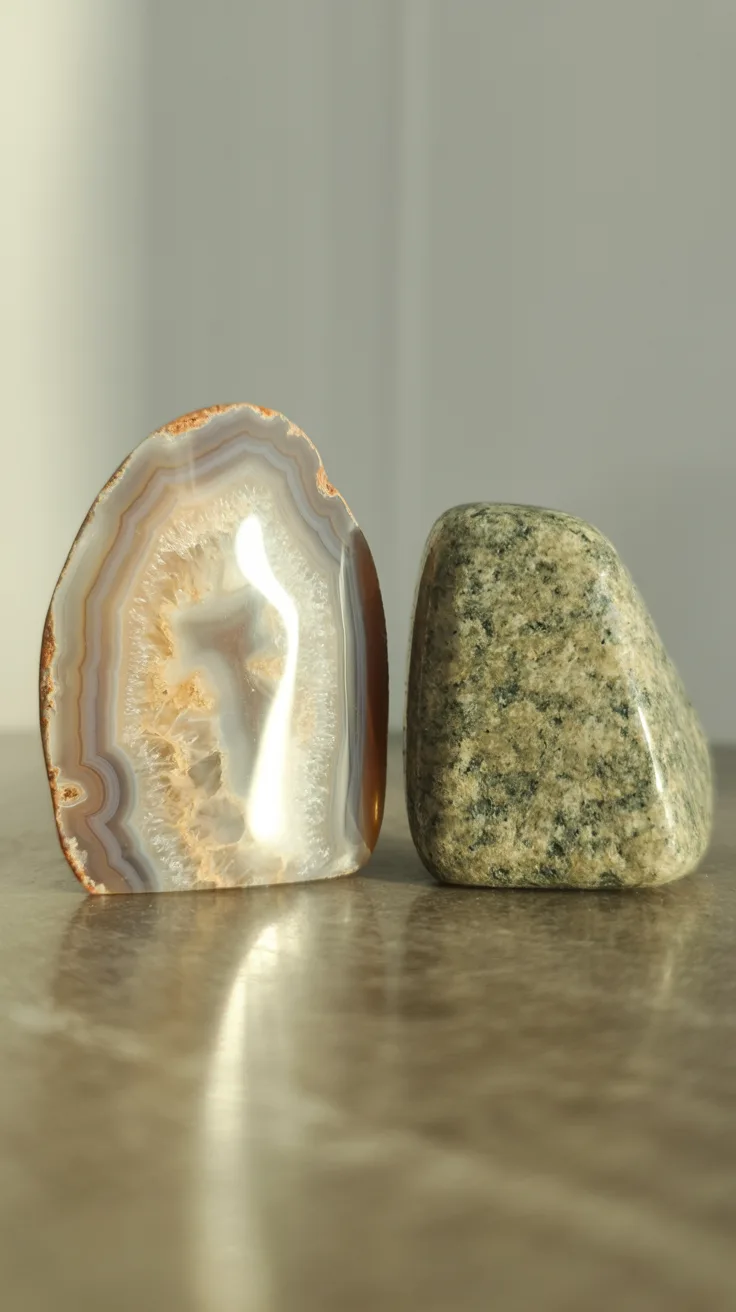
Examining the crystal structure reveals another distinction between agate vs jasper. Agate consists of microcrystalline quartz arranged in fibrous formations that contribute to its translucent quality and smooth, waxy luster when polished.
Jasper contains a more granular microcrystalline structure with abundant inclusions that interrupt the crystal matrix. This structure gives jasper a slightly different feel and appearance:
- Agate: Smooth, glassy, waxy luster
- Jasper: Smooth but with a more matte or dull luster
- Agate: May show slight crystalline sparkle
- Jasper: Generally lacks internal reflectivity
Pro Tip: When examining polished specimens, agate often displays a higher shine and more reflective surface compared to jasper’s earthier appearance.
6. Hardness and Durability Considerations
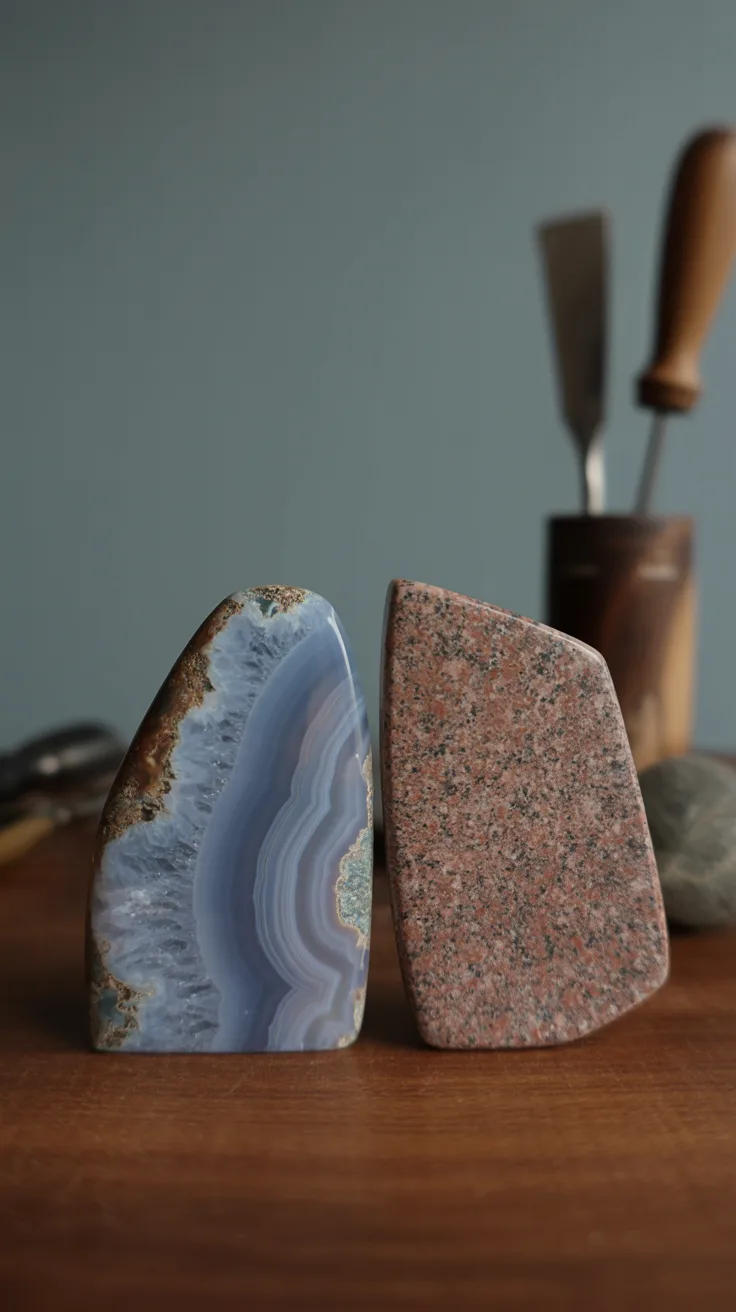
Both agate and jasper rate approximately 6.5 to 7 on the Mohs hardness scale, making them equally suitable for jewelry and decorative purposes. However, subtle differences in their internal structures affect their working properties.
Agate’s fibrous structure makes it slightly more resistant to chipping along edges, which is why it has historically been favored for cameos and detailed carvings. Jasper’s granular structure, while equally hard, may be more prone to fracturing along inclusion boundaries when subjected to stress.
For practical purposes, both stones offer excellent durability for:
- Cabochon jewelry
- Beaded jewelry
- Decorative carvings
- Tumbled stones
- Bookends and display pieces
Collectors who want to polish rough specimens can explore a beginner rock tumbler kit.
7. Market Value and Collector Considerations
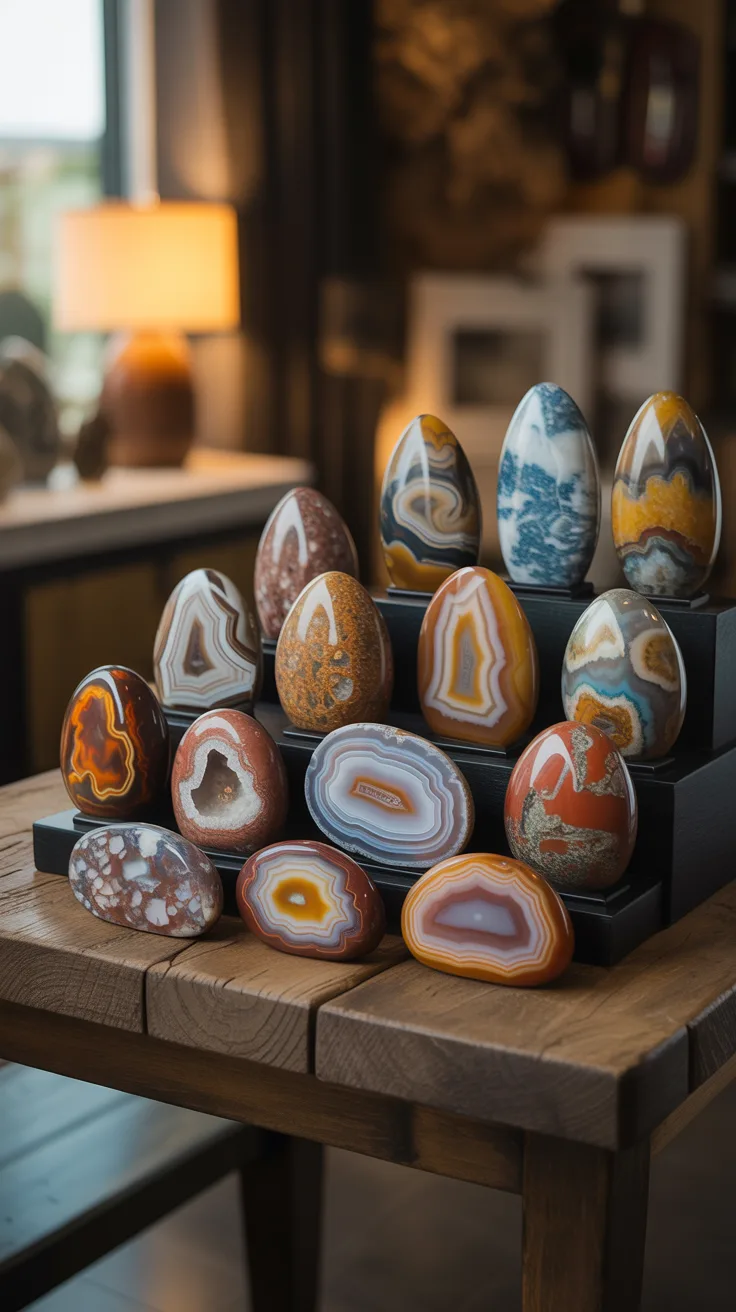
The value of both stones depends heavily on specific varieties, quality, and rarity rather than simply being agate or jasper. Certain varieties command premium prices in the collector market.
High-value agate varieties include:
- Fire Agate with exceptional play of color
- Lake Superior Agates with vivid banding
- Dendritic Agate with clear, detailed inclusions
- Laguna Agate with tight, colorful banding
Sought-after jasper varieties include:
- Imperial Jasper from Mexico
- Ocean Jasper from Madagascar
- Bruneau Jasper from Idaho
- Mookaite from Australia
Pro Tip: When purchasing specimens, request information about the stone’s origin. Locality-specific varieties often carry higher value and greater collector interest than generic labeled stones.
Hybrid Specimens and Classification Challenges
Nature rarely creates perfect categories, and many specimens blur the line between agate and jasper. Some stones contain both translucent agate portions and opaque jasper sections within the same specimen. These hybrid stones may be labeled as “jasper-agate” or by specific variety names.
Moss Agate presents an interesting classification challenge. Despite its name, Moss Agate contains dendritic inclusions that can make portions appear opaque. However, the base material remains translucent, keeping it in the agate category.
Frequently Asked Questions
Can agate and jasper be found in the same location?
Yes, both stones frequently occur in the same geological environments since they form through similar processes. Many famous collecting localities produce both agate and jasper specimens, sometimes even within the same rock formation.
Is one stone more valuable than the other?
Neither stone is inherently more valuable. Value depends on the specific variety, quality, color saturation, pattern uniqueness, and collector demand. Exceptional specimens of either stone can command significant prices.
How can beginners practice identifying these stones?
Starting with clearly labeled specimens from reputable dealers helps develop identification skills. Practicing the flashlight test on known samples builds confidence. Visiting mineral shows and examining specimens with experienced collectors also accelerates learning.
New rockhounds can also start with a beginner rockhounding kit.
For trips that may include stream or placer exploration, a beginner gold panning kit can round out a basic field setup.
Do these stones require different care methods?
Both stones require similar care. Clean them with mild soap and water, avoid harsh chemicals, and store them separately to prevent scratching. Neither stone should be exposed to extreme temperature changes or prolonged direct sunlight, which can fade some colors.
Are dyed specimens common in the market?
Dyed agate is extremely common, particularly in bright, unnatural colors like vivid pink, purple, or blue. Jasper is less frequently dyed due to its opacity, but enhanced specimens do exist. Purchasing from reputable dealers and requesting disclosure of treatments helps ensure authentic specimens.