
Introduction
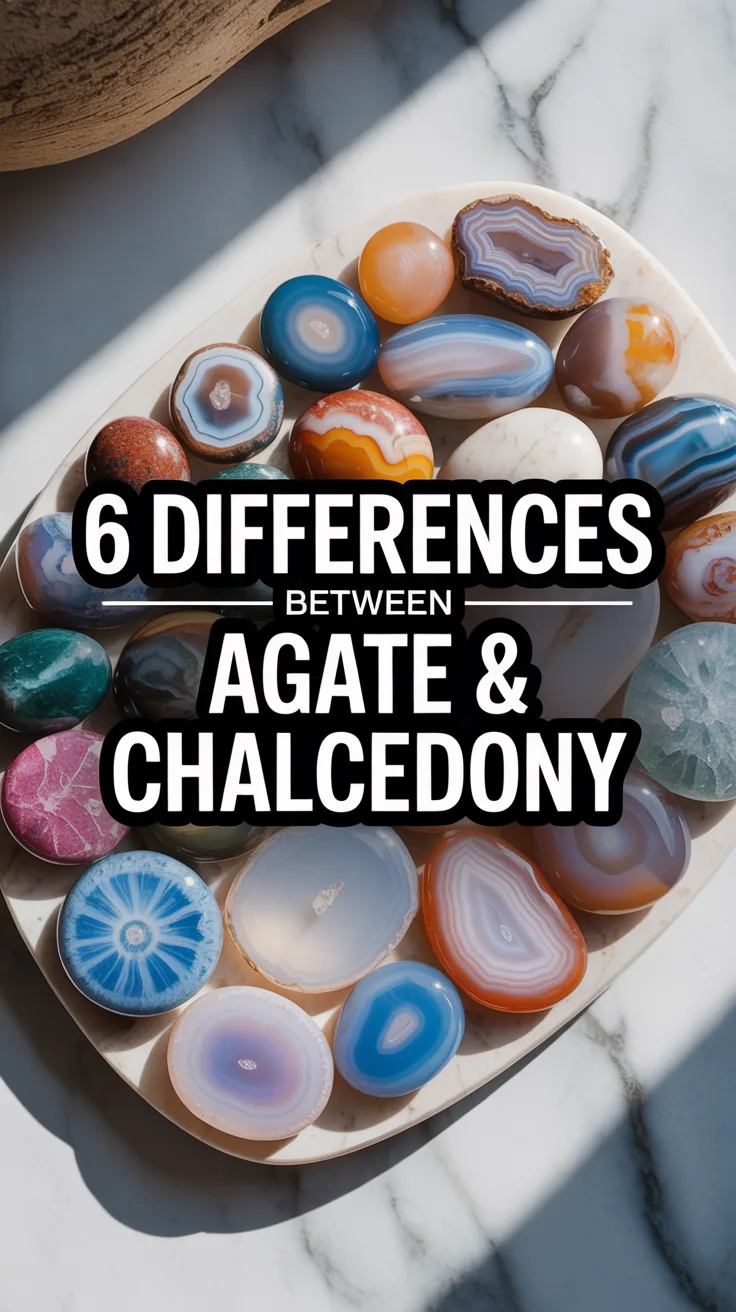
When exploring the world of gemstones and minerals, few comparisons generate as much confusion as agate vs chalcedony. These two terms are often used interchangeably, yet they represent distinct categories within the quartz family. Understanding their differences is essential for collectors, jewelry enthusiasts, and anyone interested in mineralogy.
Both agate and chalcedony belong to the cryptocrystalline quartz family, meaning their crystal structures are too small to see with the naked eye. However, their formation processes, visual characteristics, and market values differ significantly. This guide explores six key differences that separate these beautiful stones and helps clarify the relationship between them.

1. Definition and Classification: The Parent-Child Relationship
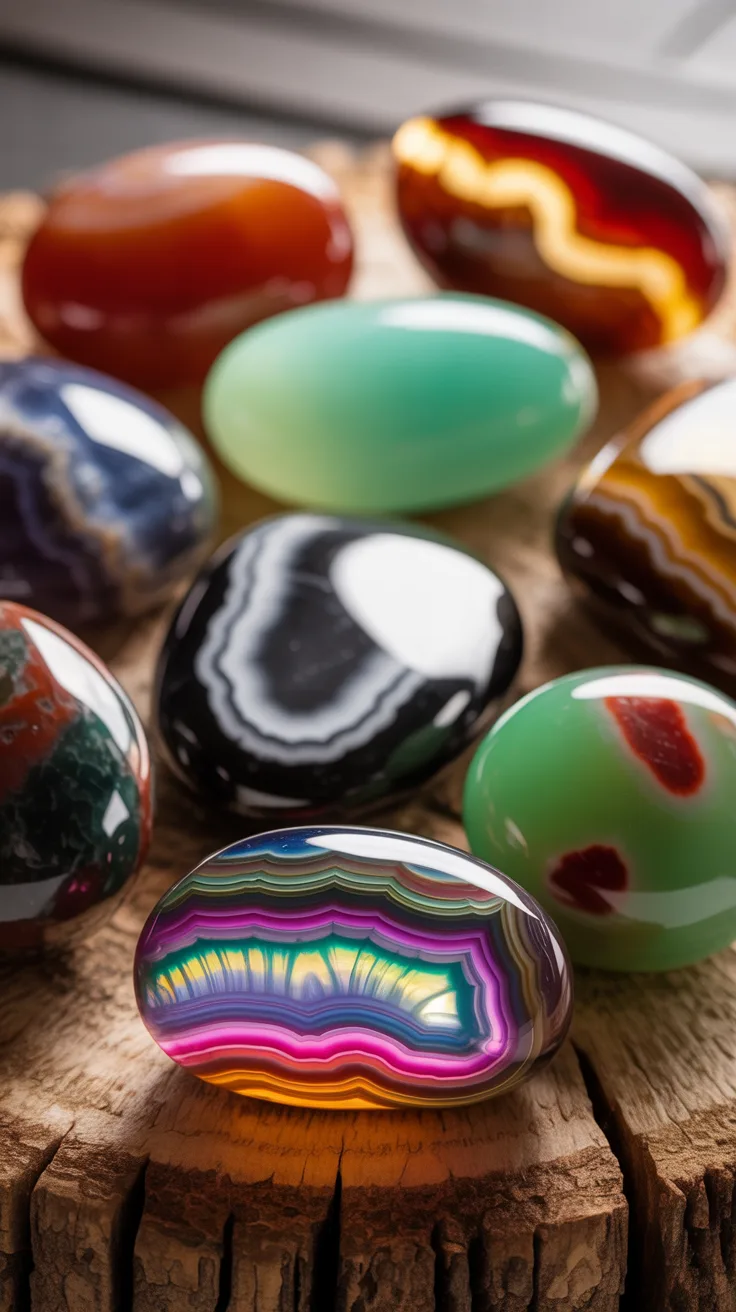
The most fundamental difference between agate and chalcedony lies in their classification hierarchy. Chalcedony serves as the parent category—a broad term encompassing all cryptocrystalline quartz varieties. Agate, on the other hand, is a specific type of chalcedony distinguished by its characteristic banding patterns.
Think of this relationship like squares and rectangles: all agates are chalcedony, but not all chalcedony qualifies as agate. Other chalcedony varieties include:
- Carnelian (orange to red)
- Chrysoprase (apple green)
- Onyx (black and white banded)
- Jasper (opaque, various colors)
- Bloodstone (green with red spots)

View on AmazonAs an Amazon Associate, I earn from qualifying purchases.

View on AmazonAs an Amazon Associate, I earn from qualifying purchases.
Pro Tip: When purchasing gemstones, always ask sellers to specify whether a stone is true banded agate or another chalcedony variety, as pricing and rarity can vary significantly between types.
A rock and mineral identification guide can help beginners compare agate, chalcedony, and other commonly collected specimens.
2. Visual Appearance and Banding Patterns
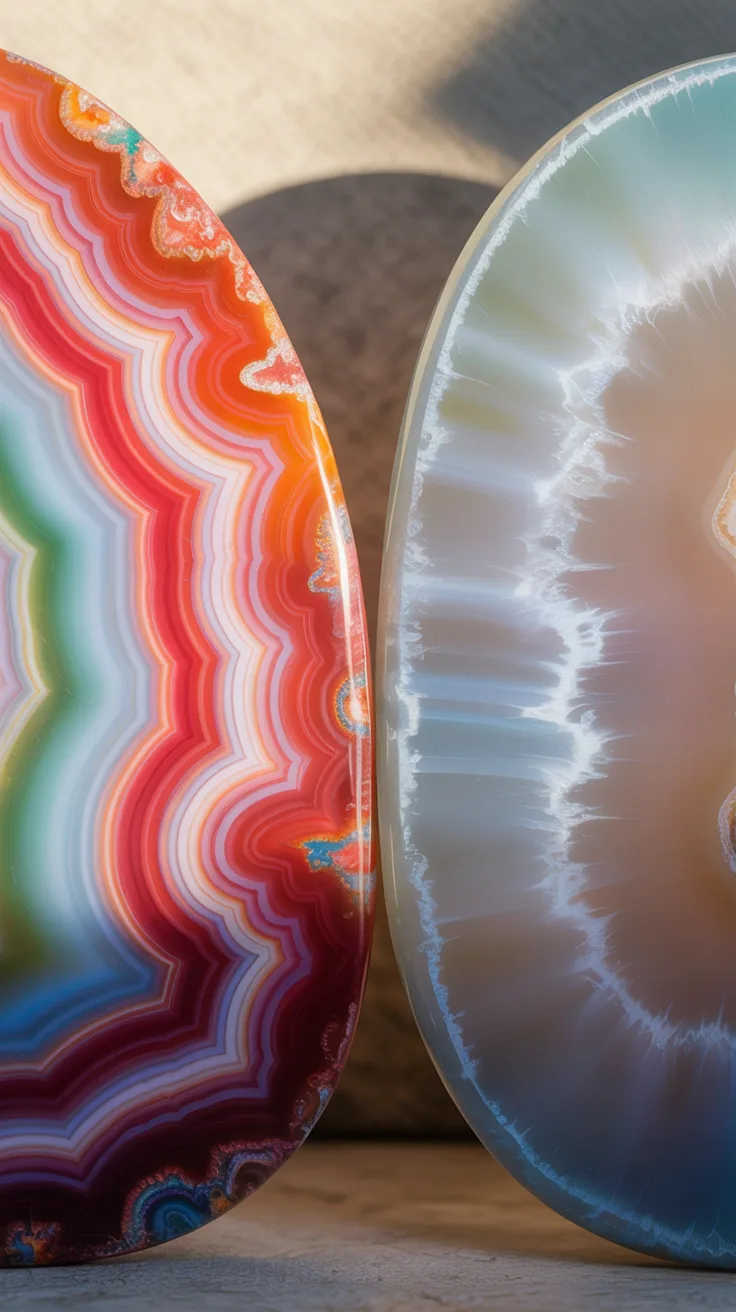
The most obvious visual distinction between agate and plain chalcedony involves their banding characteristics. Agate displays distinctive curved or angular bands of varying colors, created by rhythmic crystallization during formation. These bands can appear as concentric circles, parallel lines, or irregular patterns depending on the specific agate type.
Plain chalcedony typically presents as a solid, translucent stone without visible banding. Its appearance tends toward uniform coloration, ranging from white and gray to blue, pink, or other hues depending on trace mineral content.
Common Agate Banding Types
- Fortification Agate: Angular bands resembling fortress walls
- Eye Agate: Circular bands creating eye-like patterns
- Lace Agate: Delicate, intricate swirling patterns
- Moss Agate: Dendritic inclusions (technically not true banding)
- Fire Agate: Iridescent layers creating rainbow effects

View on AmazonAs an Amazon Associate, I earn from qualifying purchases.

View on AmazonAs an Amazon Associate, I earn from qualifying purchases.
Pro Tip: Examine stones under strong backlighting to reveal subtle banding that may not be visible under normal conditions. This technique helps distinguish true agate from solid chalcedony specimens.
A bright LED flashlight for rockhounding can make subtle bands and translucent areas easier to examine.
3. Formation Processes and Geological Origins
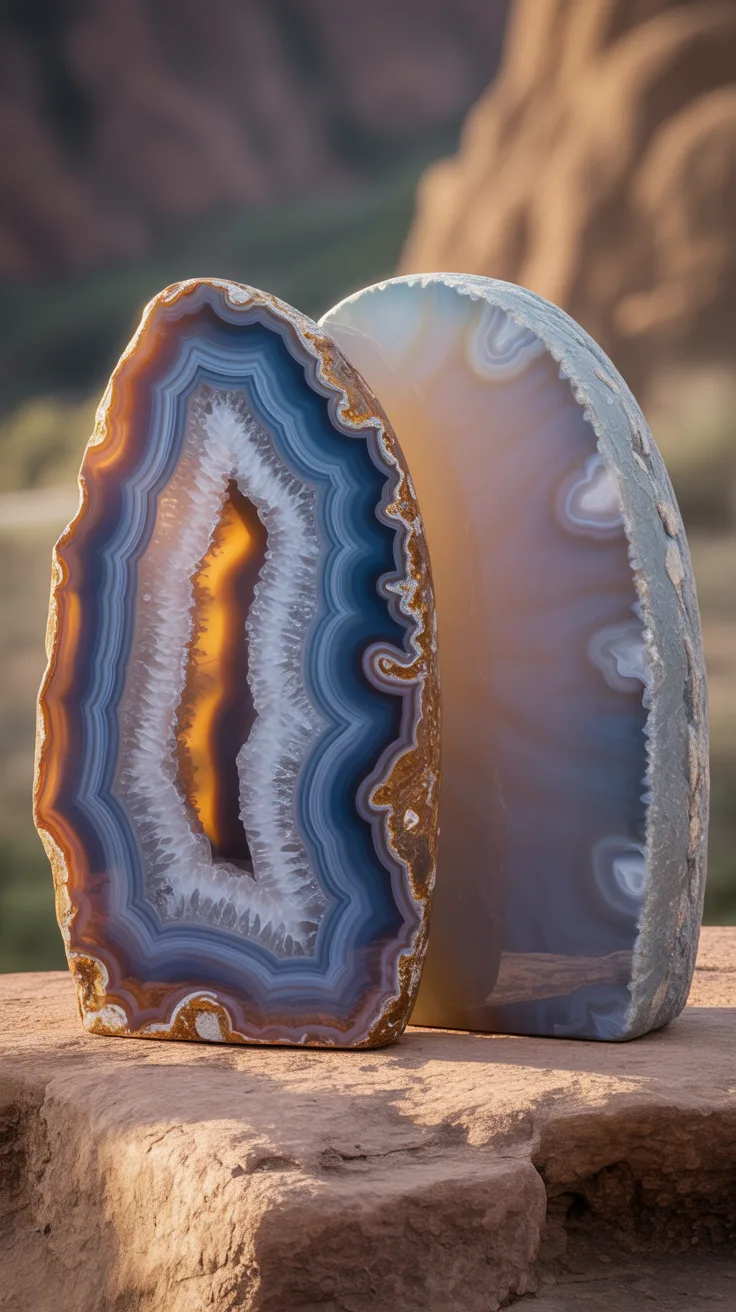
While both stones form through similar geological processes, the specific conditions that create agate differ from those producing unbanded chalcedony. Both originate from silica-rich solutions depositing microscopic quartz crystals over thousands to millions of years.
Agate typically forms within volcanic rock cavities called vesicles or geodes. The banding results from periodic changes in the depositing solution’s chemistry, temperature, or pressure. Each band represents a distinct depositional event, creating the stone’s signature layered appearance.
Plain chalcedony can form in similar environments but also develops in sedimentary settings, replacing organic materials, or filling fractures in various rock types. The absence of banding indicates more consistent formation conditions without the rhythmic variations that create agate’s distinctive patterns.
Key Formation Factors
- Silica concentration in groundwater
- Temperature fluctuations during crystallization
- Presence of trace minerals affecting color
- Cavity size and shape
- Duration of the formation process
4. Color Variations and Causes
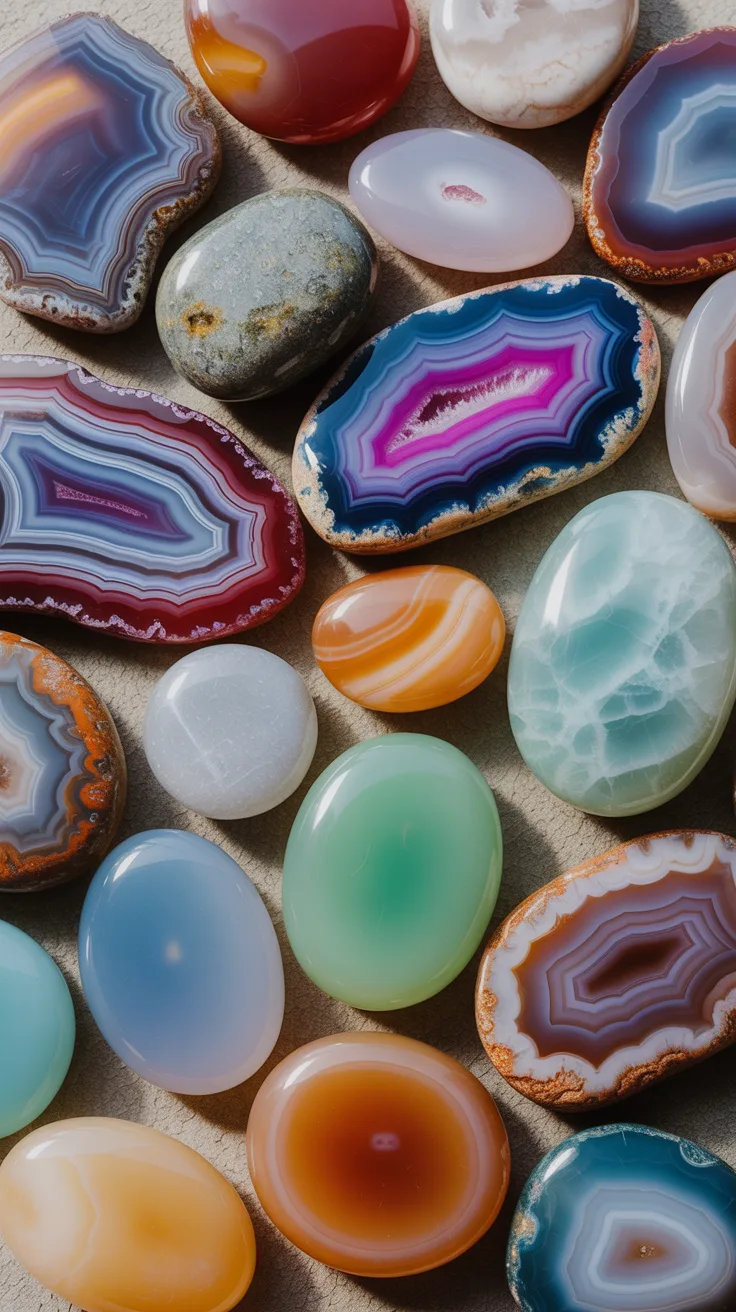
Color represents another significant difference when comparing agate vs chalcedony. Agate’s banding allows for multiple colors within a single specimen, sometimes displaying dramatic contrasts between adjacent layers. These color variations result from different trace elements or mineral inclusions present during each depositional phase.
Common agate colors include:
- White, gray, and black
- Brown, tan, and orange
- Red, pink, and purple
- Blue and green (often enhanced)
- Yellow and gold
Plain chalcedony varieties typically display single, uniform colors throughout the stone. Blue chalcedony, sometimes called “blue lace” when slightly banded, remains highly prized for its soft, calming hue. Chrysoprase derives its apple-green color from nickel content, while carnelian’s orange-red tones come from iron oxide.
Pro Tip: Be aware that many brightly colored agates on the market have been dyed or heat-treated. Natural agates typically display more subtle, earthy tones. Request disclosure of any treatments before purchasing.
5. Market Value and Collectibility
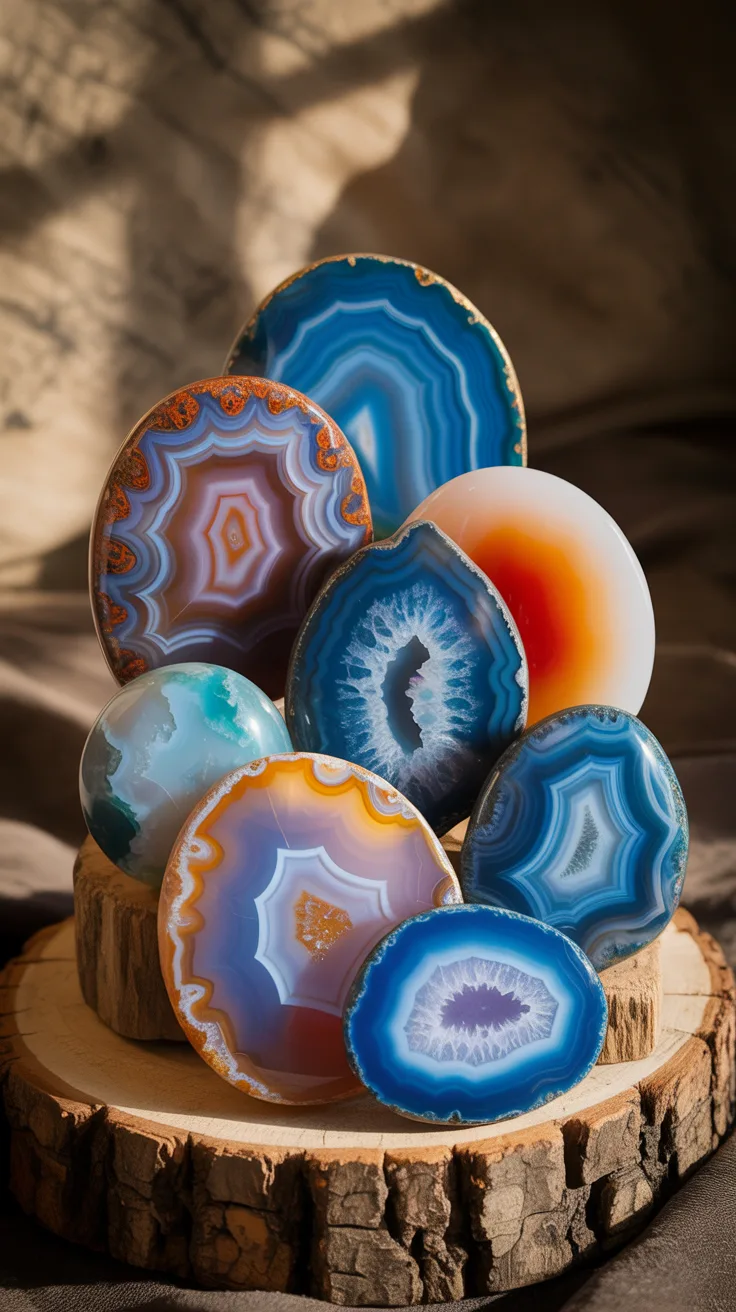
Pricing differences between agate and chalcedony depend heavily on specific varieties, quality, and rarity. Generally, exceptional agate specimens with unusual patterns, rare colors, or notable origin locations command premium prices among collectors.
Factors Affecting Value
- Pattern Uniqueness: Rare banding patterns increase agate value significantly
- Color Saturation: Vivid, natural colors are more valuable than pale or dyed specimens
- Translucency: Higher translucency typically indicates better quality
- Size and Shape: Larger specimens with interesting natural forms attract collectors
- Origin: Certain localities produce highly sought-after varieties
Some chalcedony varieties, particularly gem-quality chrysoprase and fine blue chalcedony, can exceed typical agate prices. Fire agate, with its rare iridescent qualities, represents one of the most valuable agate varieties, sometimes rivaling precious gemstone prices.
6. Practical Uses and Applications
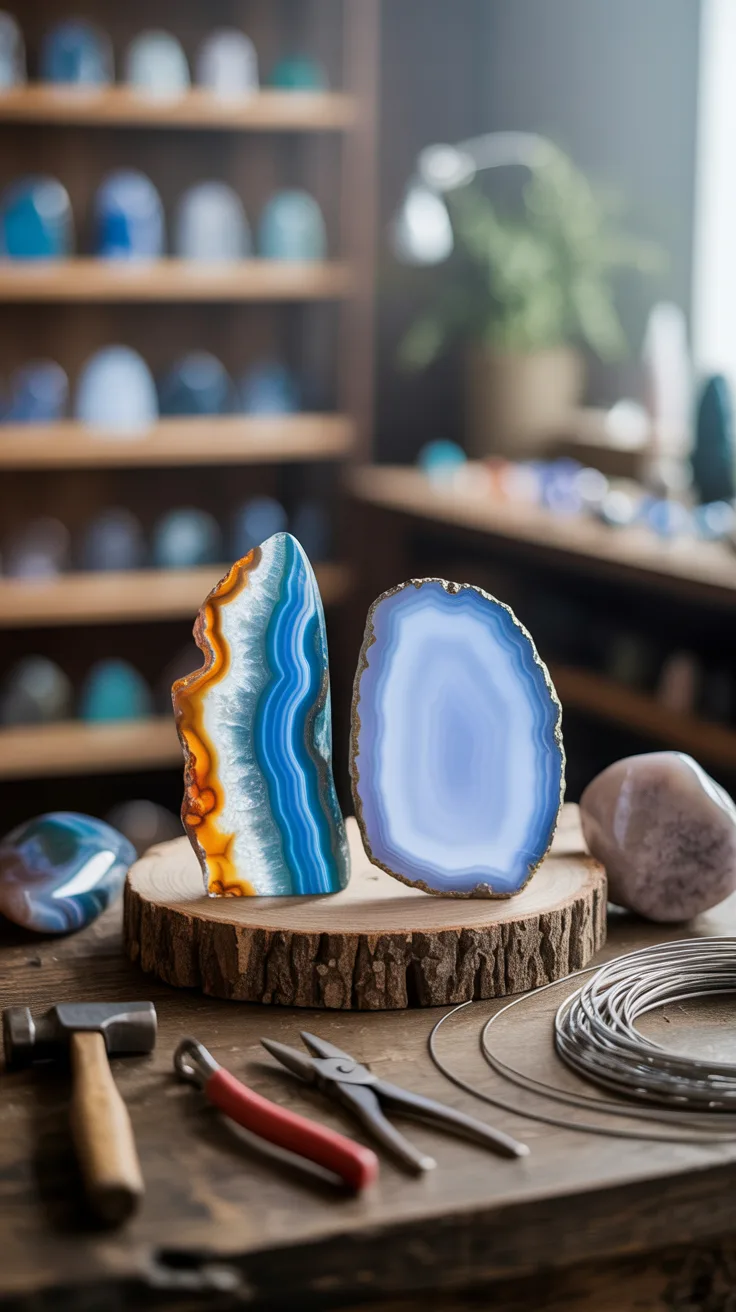
Both agate and chalcedony serve similar practical purposes, though their visual differences influence specific applications. Jewelry makers select between them based on desired aesthetic effects and design requirements.
Common Applications
- Cabochons: Both stones polish beautifully for ring, pendant, and earring settings
- Beads: Agate beads showcase banding patterns; chalcedony beads offer uniform color
- Carvings: Skilled artisans use banding patterns to create cameos and intaglios
- Decorative Objects: Bookends, coasters, and display pieces highlight natural patterns
- Lapidary Practice: Both materials work well for beginning stone cutters
Agate’s hardness (6.5-7 on the Mohs scale) makes it durable enough for everyday jewelry wear. This same hardness applies to all chalcedony varieties, making them practical choices for rings, bracelets, and other pieces subject to regular contact.
Pro Tip: When selecting agate for jewelry, consider how the banding pattern will appear after cutting. Discuss orientation options with lapidary artists to maximize the stone’s visual impact in the finished piece.
A beginner lapidary tool set can provide useful supplies for working with agate and chalcedony.
Frequently Asked Questions
Is agate more valuable than chalcedony?
Value depends on the specific variety and quality rather than the general category. Exceptional agate specimens with rare patterns can be quite valuable, but fine chrysoprase or blue chalcedony may command higher prices than common banded agate. Rarity, color, and craftsmanship ultimately determine market value.
How can beginners tell agate and chalcedony apart?
Look for banding patterns. If the stone displays visible layers, bands, or stripes of different colors or translucencies, it qualifies as agate. Solid, uniformly colored translucent stones without banding are typically classified as plain chalcedony or one of its named varieties.
Are dyed agates considered real agate?
Yes, dyed agates are still genuine agate—the dyeing process only affects color, not mineral composition. However, reputable sellers should disclose any treatments. Natural, untreated specimens generally hold greater value among serious collectors.
Can chalcedony and agate be found in the same location?
Absolutely. Since agate is a variety of chalcedony, both can form in similar geological environments. A single geode might contain banded agate in some areas and unbanded chalcedony in others, depending on localized formation conditions.
Which stone is better for jewelry making?
Both stones work excellently for jewelry due to their identical hardness and durability. The choice depends on aesthetic preference—agate offers dramatic patterns and multiple colors, while plain chalcedony provides elegant, uniform appearance suitable for minimalist designs.