
Gemstone Identification Chart: 20 Popular Stones and How to Identify Them
Finding an unfamiliar gemstone is exciting, but identifying it can be difficult. A green stone might be emerald, peridot, tourmaline, or colored glass. A red crystal could be ruby, garnet, or spinel. Color alone usually isn’t enough to tell them apart.
A gemstone identification chart helps narrow down the possibilities by comparing hardness, color, luster, crystal structure, and other physical properties. These characteristics can provide useful clues whether you’re examining a rough specimen, a polished stone, or a gemstone set in jewelry.
This guide covers 20 popular gemstones, their identifying features, common look-alikes, and the tools used to distinguish them. It also explains which tests are practical for beginners and which should be left to a professional gemologist.

Gemstone Identification Chart: 20 Common Stones
Use this chart as a starting point when identifying an unknown gemstone. Hardness values refer to the Mohs scale, which measures resistance to scratching rather than resistance to breaking.
| Gemstone | Common Colors | Mohs Hardness | Key Identification Clue |
|---|---|---|---|
| Diamond | Colorless, yellow, brown, pink, blue | 10 | Very high brilliance and refractive index |
| Ruby | Red, purplish red | 9 | Red corundum, sometimes fluorescent |
| Sapphire | Blue, pink, yellow, green, colorless | 9 | Corundum with characteristic optical properties |
| Emerald | Green, bluish green | 7.5–8 | Green beryl, often with inclusions |
| Tanzanite | Blue, violet, purple | 6–7 | Strong pleochroism |
| Amethyst | Light purple to deep violet | 7 | Purple quartz |
| Aquamarine | Light blue, blue-green | 7.5–8 | Blue variety of beryl |
| Garnet | Red, orange, green, purple, brown | 6.5–7.5 | Usually singly refractive |
| Peridot | Yellow-green, olive green | 6.5–7 | Strong double refraction in many cut stones |
| Topaz | Blue, yellow, pink, colorless | 8 | Perfect basal cleavage |
| Tourmaline | Green, pink, red, blue, multicolored | 7–7.5 | Strong pleochroism and elongated crystals |
| Opal | White, black, orange, multicolored | 5–6.5 | Play-of-color in precious opal |
| Turquoise | Blue, green, blue-green | 5–6 | Opaque color, sometimes with matrix |
| Moonstone | White, peach, gray, colorless | 6–6.5 | Floating glow called adularescence |
| Labradorite | Gray, greenish gray, dark gray | 6–6.5 | Blue, green, or gold flashes |
| Jade | Green, white, lavender, yellow | Varies by jade type | Exceptional toughness and dense texture |
| Spinel | Red, pink, blue, purple, black | 8 | Singly refractive with high luster |
| Citrine | Pale yellow, golden yellow, orange | 7 | Yellow-to-orange quartz |
| Rose Quartz | Pale pink, rose pink | 7 | Usually translucent, massive pink quartz |
| Alexandrite | Greenish in daylight, reddish in incandescent light | 8.5 | Distinctive color-change phenomenon |
Important: These characteristics help narrow identification, but they cannot establish whether a gemstone is natural, laboratory-grown, treated, or an imitation. Some varieties also have overlapping physical properties.
Understanding Basic Gemstone Properties
Gemologists identify stones by examining several characteristics together. No single feature is reliable for every gemstone.
1. Hardness on the Mohs Scale
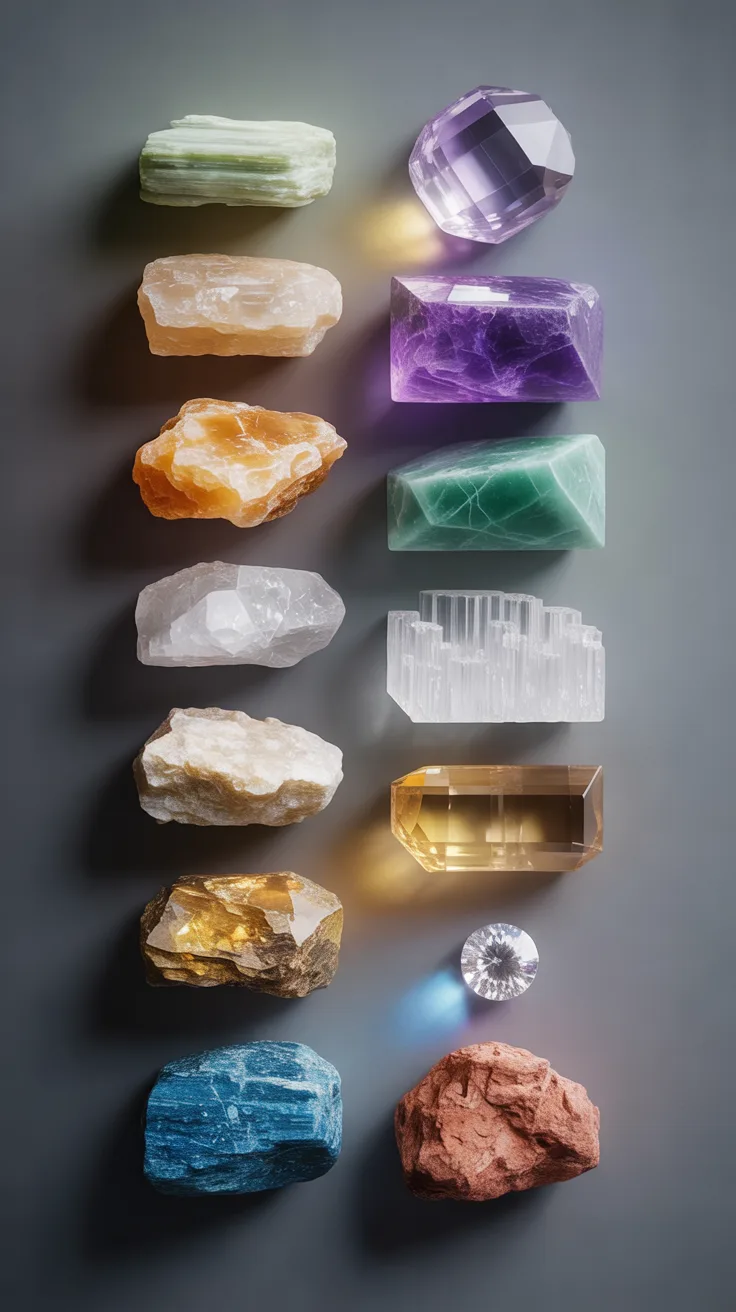
The Mohs scale measures how easily a mineral can be scratched by another mineral. It ranges from 1 for talc to 10 for diamond.
| Mohs Hardness | Example Mineral |
|---|---|
| 1 | Talc |
| 2 | Gypsum |
| 3 | Calcite |
| 4 | Fluorite |
| 5 | Apatite |
| 6 | Orthoclase feldspar |
| 7 | Quartz |
| 8 | Topaz |
| 9 | Corundum |
| 10 | Diamond |
Hardness is useful for mineral identification, but scratch testing can permanently damage a gemstone. Never scratch a finished gemstone, valuable specimen, or piece of jewelry to identify it.
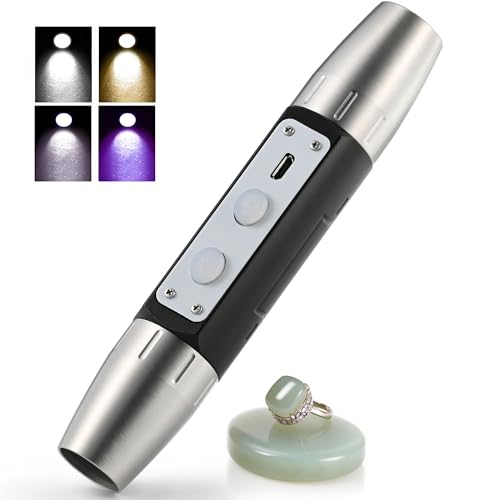
View on AmazonAs an Amazon Associate, I earn from qualifying purchases.
View on AmazonAs an Amazon Associate, I earn from qualifying purchases.
2. Color and Color Zoning
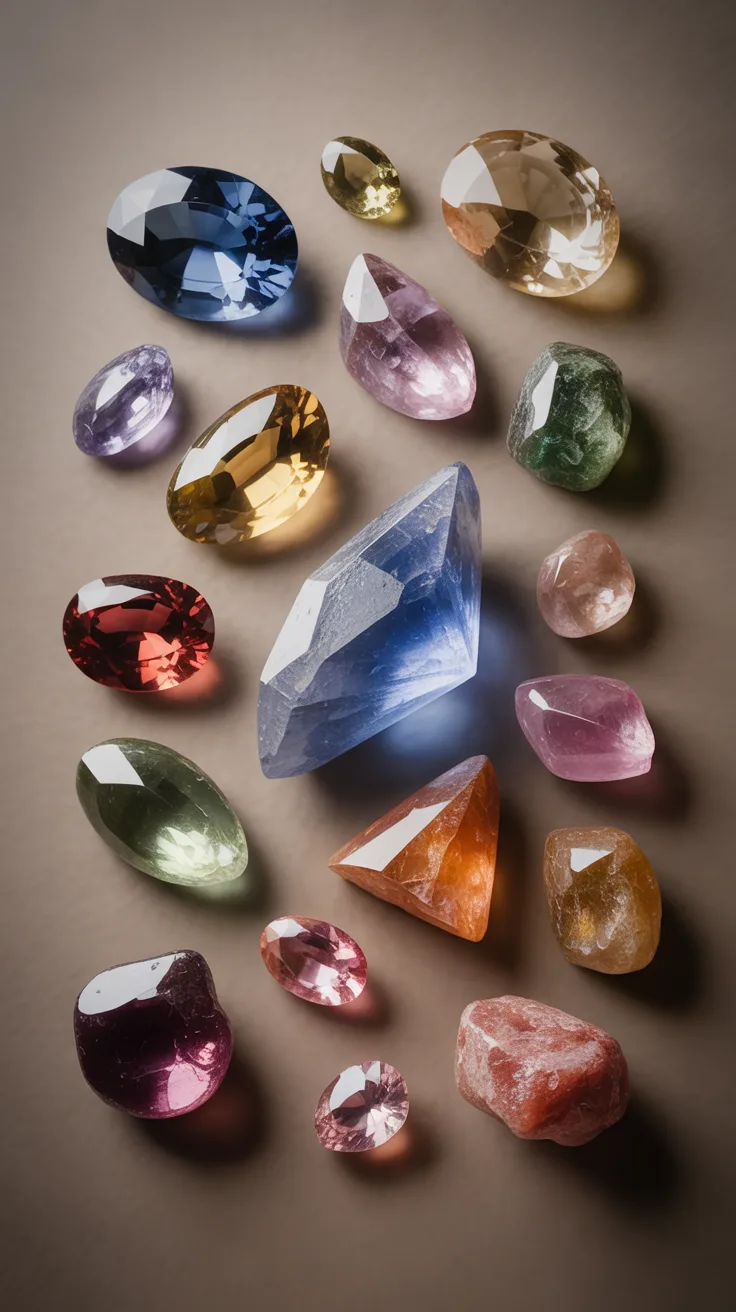
Color is usually the first characteristic people notice, but many gemstones occur in several colors.
Sapphire, for example, can be blue, pink, yellow, or green. Garnet is commonly red but also occurs in orange, green, and other colors.
Color zoning refers to uneven color distribution within a gemstone. It can appear as bands, patches, or distinct sections and may provide clues about crystal growth.

View on AmazonAs an Amazon Associate, I earn from qualifying purchases.

View on AmazonAs an Amazon Associate, I earn from qualifying purchases.
3. Luster
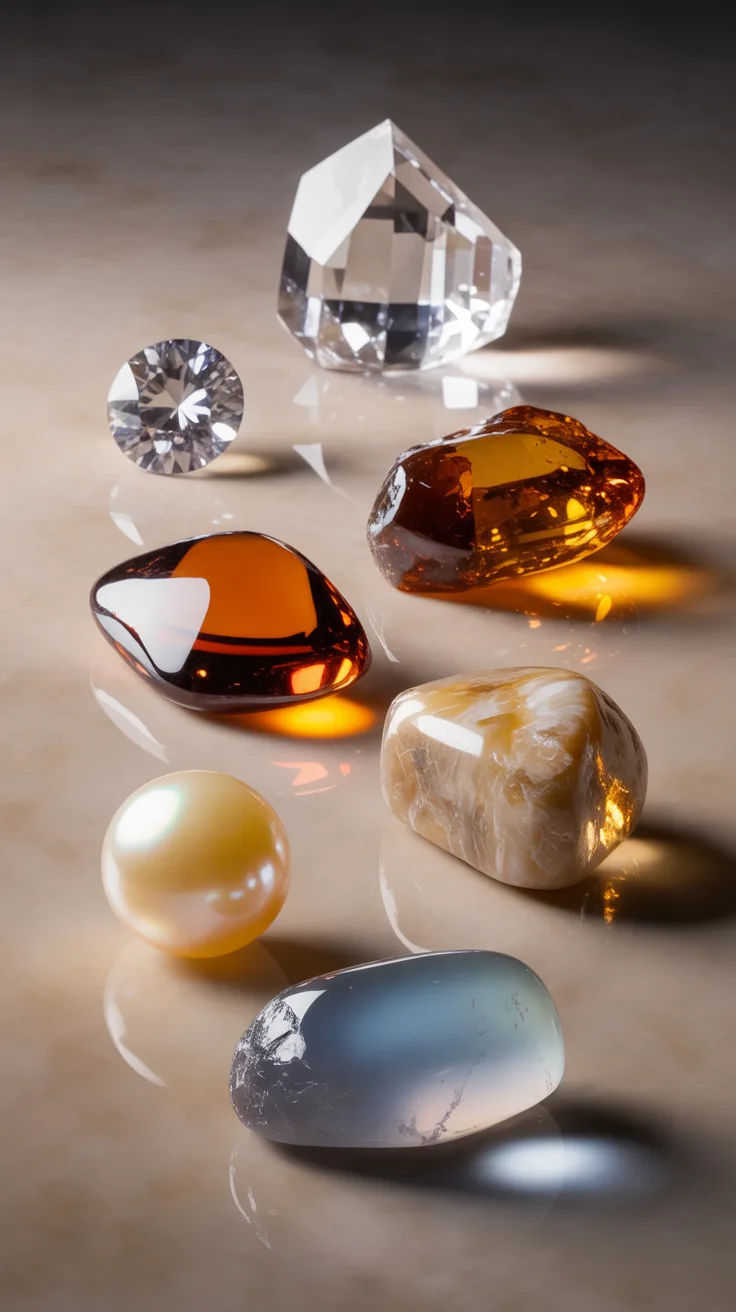
Luster describes how light reflects from a gemstone’s surface.
- Adamantine: Extremely bright, diamond-like luster.
- Vitreous: Glass-like luster, common in quartz and many transparent gemstones.
- Resinous: A surface appearance resembling resin.
- Pearly: Soft reflection resembling the surface of a pearl.
- Waxy: A subdued sheen common in some varieties of chalcedony.
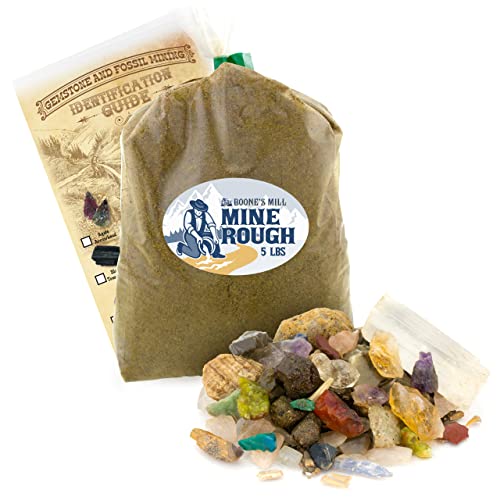
View on AmazonAs an Amazon Associate, I earn from qualifying purchases.

View on AmazonAs an Amazon Associate, I earn from qualifying purchases.
4. Refractive Index
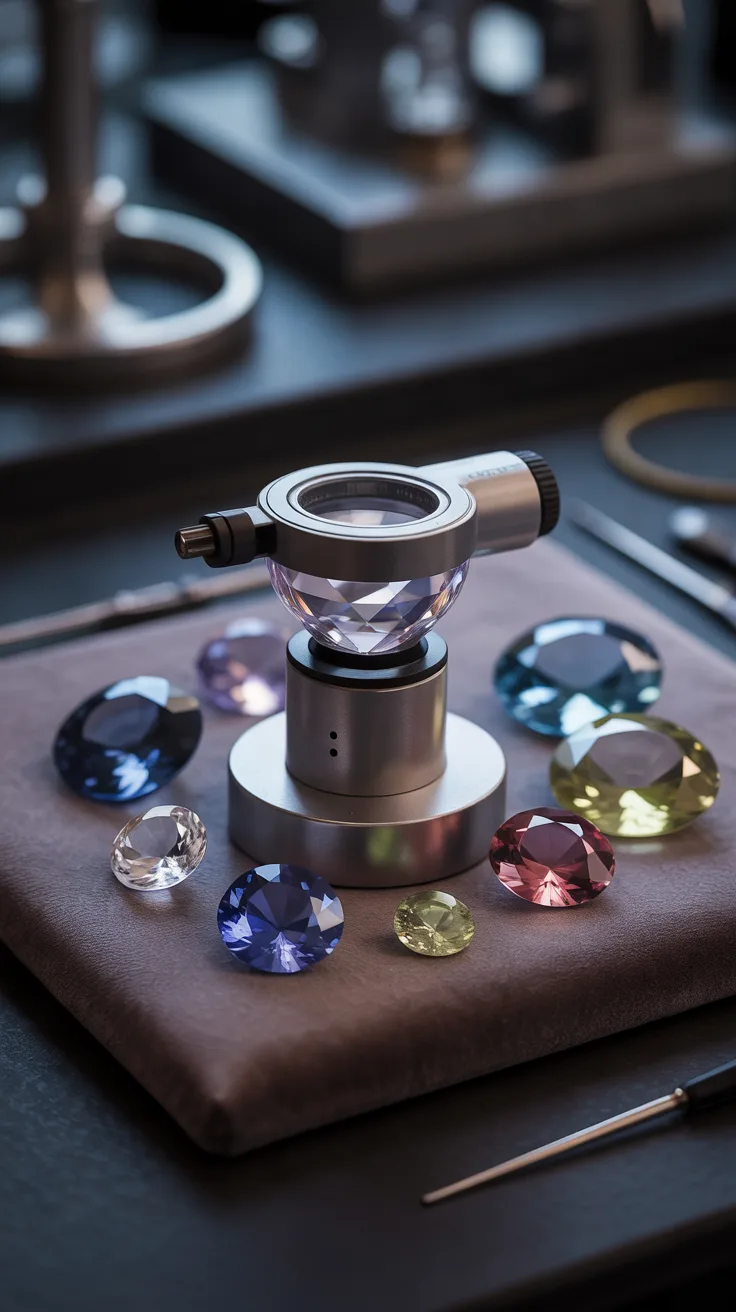
Refractive index describes how strongly a material bends light. Different gemstones have characteristic refractive index ranges, making this one of the most useful gemological measurements.
A refractometer can help distinguish stones that look nearly identical, such as sapphire and tanzanite.
5. Specific Gravity
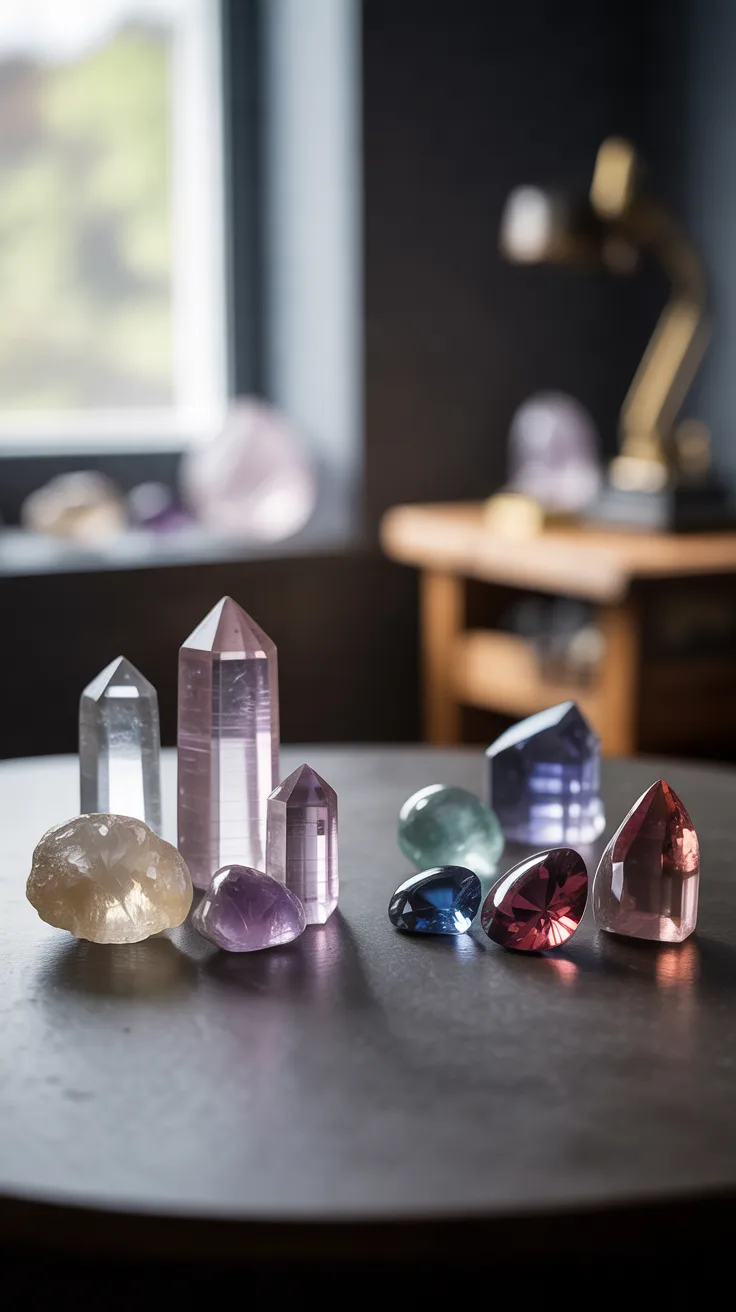
Specific gravity compares the density of a gemstone with the density of water.
Two stones of the same size can have different weights because their densities differ. Specific gravity measurements are particularly useful for loose gemstones and mineral specimens.
6. Pleochroism
Pleochroism occurs when certain gemstones display different colors or shades when viewed from different crystal directions.
Tanzanite and tourmaline can show strong pleochroism. Gemologists often examine this property with a dichroscope.
7. Inclusions
Inclusions are internal features such as mineral crystals, growth structures, or fluid-filled cavities.
Some inclusions help identify a gemstone or provide evidence about its formation. However, inclusions alone rarely prove a stone’s geographic origin or whether it is natural.
Essential Tools for Gemstone Identification
You can learn a great deal with basic observation, but more advanced identification requires specialized equipment.
| Tool | Purpose | Skill Level |
|---|---|---|
| 10x Loupe | Examine inclusions and surface details | Beginner |
| White Light Source | Observe color and transparency | Beginner |
| Digital Scale | Measure specimen weight | Beginner |
| Refractometer | Measure refractive index | Intermediate |
| Polariscope | Examine optical behavior | Intermediate |
| Dichroscope | Observe pleochroism | Intermediate |
| Gemological Microscope | Examine internal features | Advanced |
| Spectroscope | Study absorption patterns | Advanced |
| Diamond Tester | Screen for certain diamond-like materials | Beginner to Intermediate |
A loupe, good lighting, and a reliable gemstone reference guide are enough to begin learning. Avoid immersion liquids, destructive testing, and unfamiliar chemicals without proper training.
20 Popular Gemstones and Their Identifying Features
1. Diamond
Diamond is the hardest naturally occurring mineral on the Mohs scale. Its high refractive index and strong dispersion contribute to the brilliance and colored flashes seen in well-cut stones.
Diamonds occur in several colors, including colorless, yellow, brown, pink, and blue. Colorless diamonds are particularly easy to confuse with cubic zirconia and moissanite.
Identification Features
- Hardness: 10
- Colors: Colorless, yellow, brown, and various fancy colors
- Luster: Adamantine
- Crystal system: Cubic
- Common look-alikes: Moissanite, cubic zirconia, white sapphire
How to identify it: Professional testers can help distinguish diamond from many simulants. Additional testing is needed to distinguish natural diamonds from laboratory-grown diamonds and to identify certain imitations reliably.
2. Ruby
Ruby is the red variety of corundum, the same mineral family as sapphire. Its color comes primarily from chromium.
Rubies range from pinkish red to deep red. Some fluoresce strongly under ultraviolet light, although fluorescence varies with chemical composition and treatment.
Identification Features
- Hardness: 9
- Color: Red
- Luster: Vitreous
- Crystal system: Trigonal
- Common look-alikes: Red spinel, garnet, red glass
How to identify it: Refractive index, optical behavior, and microscopic inclusions help distinguish ruby from red spinel and garnet. Professional testing may be necessary to determine whether a ruby is natural or synthetic.
3. Sapphire
Sapphire is corundum in colors other than red. Blue is the best-known variety, but sapphires can also be pink, yellow, green, purple, or colorless.
Some sapphires show color zoning or fine rutile inclusions. Certain stones display a star effect when cut as cabochons.
Identification Features
- Hardness: 9
- Colors: Blue and numerous other colors
- Luster: Vitreous
- Crystal system: Trigonal
- Common look-alikes: Tanzanite, blue spinel, blue glass
How to identify it: Sapphire has characteristic refractive index and birefringence values. These measurements are more reliable than judging color alone.
4. Emerald
Emerald is the green variety of beryl. Its color is primarily associated with chromium or vanadium.
Natural emeralds frequently contain inclusions, sometimes described collectively as a jardin, the French word for garden. However, a stone’s inclusions alone cannot establish that it is a natural emerald.
Identification Features
- Hardness: 7.5–8
- Color: Green to bluish green
- Luster: Vitreous
- Crystal system: Hexagonal
- Common look-alikes: Green tourmaline, peridot, green glass
How to identify it: Refractive index and microscopic examination are useful. Many emeralds are treated with oils or resins to improve the appearance of fractures.
5. Tanzanite
Tanzanite is the blue-to-violet variety of zoisite. It is particularly known for its pleochroism, meaning different colors may be visible from different crystal directions.
Most commercially available tanzanite has been heat-treated to develop or improve its blue-violet appearance.
Identification Features
- Hardness: 6–7
- Colors: Blue, violet, purple
- Luster: Vitreous
- Crystal system: Orthorhombic
- Common look-alikes: Blue sapphire, iolite, blue glass
How to identify it: Pleochroism and refractive index help distinguish tanzanite from sapphire. Tanzanite is also more vulnerable to damage than sapphire.
6. Amethyst
Amethyst is the purple variety of quartz. Its color ranges from pale lavender to deep violet, and some crystals show distinct color zoning.
Amethyst is commonly found in geodes, veins, and crystal-lined cavities.
Identification Features
- Hardness: 7
- Color: Purple to violet
- Luster: Vitreous
- Crystal system: Trigonal
- Common look-alikes: Purple fluorite, glass, synthetic quartz
How to identify it: Quartz has a characteristic refractive index range and lacks cleavage. Natural amethyst and synthetic amethyst can be difficult to distinguish without specialized testing.
7. Aquamarine
Aquamarine is the blue-to-blue-green variety of beryl. It commonly forms elongated hexagonal crystals and may appear pale blue or nearly colorless.
Many aquamarines are heat-treated to reduce greenish tones and emphasize blue coloration.
Identification Features
- Hardness: 7.5–8
- Colors: Light blue, blue-green
- Luster: Vitreous
- Crystal system: Hexagonal
- Common look-alikes: Blue topaz, blue glass
How to identify it: Refractive index and specific gravity help separate aquamarine from blue topaz, which can look similar in cut stones.
8. Garnet
Garnet refers to a group of related minerals rather than one gemstone species. Although red garnets are common, garnets also occur in orange, green, purple, and other colors.
Many garnets form rounded, equant crystals, including dodecahedral forms.
Identification Features
- Hardness: Approximately 6.5–7.5, depending on variety
- Colors: Red, orange, green, purple, brown
- Luster: Vitreous to resinous
- Crystal system: Cubic
- Common look-alikes: Ruby, spinel, tourmaline
How to identify it: Garnets are normally singly refractive. Refractive index, specific gravity, and other tests help identify the particular garnet variety.
9. Peridot
Peridot is the gem variety of olivine. It is best known for its yellow-green to olive-green color.
Unlike gemstones that occur in many colors, peridot is consistently associated with green hues.
Identification Features
- Hardness: 6.5–7
- Color: Yellow-green to olive green
- Luster: Vitreous
- Crystal system: Orthorhombic
- Common look-alikes: Emerald, green tourmaline, green glass
How to identify it: Strong double refraction may cause doubling of facet edges when viewed through some cut stones under magnification.
10. Topaz
Topaz occurs naturally in several colors, including colorless, yellow, brown, pink, and blue. Much of the blue topaz sold in jewelry has been treated to produce its color.
Topaz is relatively hard but has perfect cleavage in one direction, meaning it can split if struck along the appropriate plane.
Identification Features
- Hardness: 8
- Colors: Blue, yellow, pink, brown, colorless
- Luster: Vitreous
- Crystal system: Orthorhombic
- Common look-alikes: Aquamarine, citrine, glass
How to identify it: Refractive index and specific gravity help distinguish topaz from aquamarine and quartz.
11. Tourmaline
Tourmaline is a group of minerals that produces gemstones in a wide range of colors. Some crystals contain multiple colors, such as pink centers surrounded by green outer zones.
Tourmaline often forms elongated crystals with lengthwise striations.
Identification Features
- Hardness: 7–7.5
- Colors: Green, pink, red, blue, black, multicolored
- Luster: Vitreous
- Crystal system: Trigonal
- Common look-alikes: Emerald, ruby, spinel
How to identify it: Pleochroism, crystal shape, and refractive index are useful identification characteristics.
12. Opal
Opal is a hydrated form of silica. Precious opal displays play-of-color, an optical effect that produces shifting flashes of color as the stone or viewing angle changes.
Common opal may lack play-of-color and can appear white, brown, orange, or other colors.
Identification Features
- Hardness: Approximately 5–6.5
- Colors: White, black, orange, and many others
- Luster: Vitreous to waxy
- Structure: Amorphous
- Common look-alikes: Synthetic opal, opal imitations, glass
How to identify it: Examine the play-of-color and internal structure. Doublets, triplets, and synthetic opals may require professional examination.
13. Turquoise
Turquoise is an opaque phosphate mineral known for its blue-to-green color. Some specimens contain dark veins or patches of surrounding rock called matrix.
Turquoise may be stabilized, dyed, or reconstructed, so appearance alone is not enough to determine whether a stone is natural and untreated.
Identification Features
- Hardness: 5–6
- Colors: Blue, blue-green, green
- Luster: Waxy to subvitreous
- Crystal system: Triclinic
- Common look-alikes: Dyed howlite, dyed magnesite, reconstructed turquoise
How to identify it: Color, texture, magnification, and professional testing can help distinguish turquoise from common imitations.
14. Moonstone
Moonstone is a feldspar gemstone known for adularescence, a soft floating glow that appears to move across the stone as it turns.
Moonstone may be colorless, white, peach, gray, or other colors. The optical effect is usually easiest to see in cabochon-cut stones.
Identification Features
- Hardness: 6–6.5
- Colors: White, colorless, peach, gray
- Luster: Vitreous to pearly
- Mineral family: Feldspar
- Common look-alikes: Opalite glass, other feldspar gemstones
How to identify it: Look for the floating optical glow rather than surface glitter. Professional testing can distinguish natural moonstone from glass imitations.
15. Labradorite
Labradorite is a feldspar mineral famous for labradorescence, which produces flashes of blue, green, gold, and sometimes other colors.
The base stone is often gray or dark gray, making the colorful flashes particularly noticeable.
Identification Features
- Hardness: 6–6.5
- Colors: Gray to dark gray with colorful flashes
- Luster: Vitreous to pearly
- Mineral family: Feldspar
- Common look-alikes: Other iridescent feldspars and glass imitations
How to identify it: Rotate the stone under a light source. Labradorescence typically appears at particular viewing angles rather than uniformly across the surface.
16. Jade
Jade refers to two distinct gemstone materials: jadeite and nephrite. Both are valued for their toughness and can occur in several colors.
Green jade is especially familiar, but white, lavender, yellow, and other varieties also exist.
Identification Features
- Hardness: Jadeite approximately 6.5–7; nephrite approximately 6–6.5
- Colors: Green, white, lavender, yellow, and others
- Luster: Vitreous to greasy
- Structure: Fine-grained or interlocking mineral aggregates
- Common look-alikes: Serpentine, aventurine, dyed quartz
How to identify it: Refractive index, specific gravity, and advanced laboratory tests can distinguish jadeite, nephrite, and common imitations.
17. Spinel
Spinel is a gemstone that occurs in red, pink, blue, purple, black, and other colors. Red spinel has historically been mistaken for ruby because the two can look very similar.
Spinel is a separate mineral with its own crystal structure and optical properties.
Identification Features
- Hardness: 8
- Colors: Red, pink, blue, purple, black
- Luster: Vitreous
- Crystal system: Cubic
- Common look-alikes: Ruby, sapphire, garnet
How to identify it: Spinel is singly refractive, while ruby and sapphire are doubly refractive. Optical testing can help distinguish them.
18. Citrine
Citrine is the yellow-to-orange variety of quartz. Natural citrine exists, but much of the citrine sold commercially is produced by heating amethyst or smoky quartz.
Both natural and heat-treated citrine are quartz, so basic mineral tests do not necessarily establish whether the color has been modified.
Identification Features
- Hardness: 7
- Colors: Pale yellow, golden yellow, orange
- Luster: Vitreous
- Crystal system: Trigonal
- Common look-alikes: Yellow topaz, yellow glass
How to identify it: Quartz’s refractive index and specific gravity help distinguish citrine from yellow topaz.
19. Rose Quartz
Rose quartz is the pink variety of quartz. It commonly occurs as massive material rather than well-formed transparent crystals.
Its color ranges from very pale pink to stronger rose tones, and many specimens have a cloudy or translucent appearance.
Identification Features
- Hardness: 7
- Color: Pale pink to rose pink
- Luster: Vitreous
- Crystal system: Trigonal
- Common look-alikes: Pink glass, dyed quartz, other pink gemstones
How to identify it: Examine its translucency, texture, and quartz properties. Refractive index testing is useful for polished stones.
20. Alexandrite
Alexandrite is a color-change variety of chrysoberyl. Its most famous characteristic is the ability to appear greenish under daylight and reddish under incandescent lighting.
The strength and exact colors of the change vary between specimens.
Identification Features
- Hardness: 8.5
- Colors: Greenish, bluish green, reddish, purplish red
- Luster: Vitreous
- Crystal system: Orthorhombic
- Common look-alikes: Color-change sapphire, color-change garnet, synthetic color-change materials
How to identify it: Compare the stone under daylight-equivalent and incandescent illumination, then confirm with refractive index and other gemological measurements. Color change alone does not prove a stone is alexandrite.
Common Gemstone Look-Alikes and How to Tell Them Apart
Many gemstones share similar colors. Comparing physical and optical properties is more reliable than visual appearance alone.
| Gemstones | Important Difference | Useful Test |
|---|---|---|
| Ruby vs. Red Spinel | Ruby is doubly refractive; spinel is singly refractive | Optical testing and refractive index |
| Sapphire vs. Tanzanite | Different hardness, refractive index, and pleochroism | Refractometer and dichroscope |
| Emerald vs. Green Tourmaline | Different refractive index ranges and optical properties | Refractometer |
| Aquamarine vs. Blue Topaz | Different density and refractive index | Specific gravity and refractometer |
| Citrine vs. Yellow Topaz | Topaz is harder and denser | Refractive index and specific gravity |
| Diamond vs. Cubic Zirconia | Different thermal properties and density | Appropriate gemstone tester |
| Turquoise vs. Dyed Howlite | Different mineral composition | Professional mineral identification |
| Moonstone vs. Opalite Glass | Different internal structure and optical properties | Magnification and refractive index |
How to Identify an Unknown Gemstone at Home
You can narrow down possible identifications without damaging your specimen. This method is particularly useful for beginners examining loose stones.
Step 1: Examine the Color
Observe the stone in neutral lighting. Record its main color, secondary colors, and any visible zoning.
Don’t rely on color alone. Several unrelated minerals may look almost identical.
Step 2: Check Transparency
Determine whether the stone is transparent, translucent, or opaque.
Transparent stones allow objects to be seen through them. Translucent stones transmit light but don’t show clear detail. Opaque stones block light.
Step 3: Look at the Surface
Examine the luster. Does the stone look glassy, waxy, pearly, or exceptionally brilliant?
Also check for natural crystal faces, cleavage surfaces, or visible fractures.
Step 4: Use a 10x Loupe
Look for inclusions, bubbles, growth features, or surface wear.
These features can provide clues, but bubbles alone do not prove a stone is glass, and inclusions alone do not prove a stone is natural.
Step 5: Compare the Stone With the Chart
Use the gemstone’s color, luster, transparency, and visible features to create a shortlist of possible identifications.
Step 6: Seek Professional Testing When Necessary
If the stone may be valuable, consult a qualified gemologist. Refractive index measurements, microscopic examination, spectroscopy, and other methods can provide stronger evidence than visual inspection.
Avoid destructive tests: Scratch tests, acid tests, heating, and improvised methods can permanently damage gemstones and jewelry.
Natural, Synthetic, and Imitation Gemstones
These terms describe different categories and are important when identifying gemstones.
Natural Gemstones
Natural gemstones form through geological processes without being grown by humans. They may still undergo treatments to improve color or clarity.
Synthetic Gemstones
Synthetic gemstones are laboratory-grown materials with essentially the same chemical composition and crystal structure as their natural counterparts.
Laboratory-grown ruby, sapphire, emerald, and diamond are examples.
Imitation Gemstones
Imitations resemble another gemstone in appearance but are made from a different material.
Cubic zirconia, for example, can imitate diamond but has a different chemical composition and physical properties.
Treated Gemstones
Treatments can include heating, irradiation, fracture filling, dyeing, and other processes.
Some treatments are common and accepted in the gemstone trade, but they should be disclosed when required. Identifying treatment often requires specialized equipment.
Frequently Asked Questions
What is the easiest way to identify a gemstone?
Start with color, transparency, luster, and magnification. Compare those observations with a gemstone identification chart. For a reliable identification, additional gemological tests may be necessary.
Can you identify a gemstone by color alone?
No. Many gemstones occur in similar colors. Ruby, spinel, and garnet can all be red, while emerald, tourmaline, and peridot can all be green.
What is the hardest gemstone?
Diamond ranks 10 on the Mohs hardness scale, making it the hardest naturally occurring mineral by scratch resistance. However, hardness is different from toughness, and diamonds can still chip or break.
How can I tell if a gemstone is real?
First determine what you mean by real. A stone may be natural, laboratory-grown, treated, or an imitation. Professional testing can help establish its identity and whether further origin or treatment testing is needed.
Can a flashlight help identify gemstones?
A flashlight can reveal transparency, color zoning, inclusions, and some optical effects. It cannot reliably identify most gemstones by itself.
Are synthetic gemstones fake?
Synthetic gemstones are real examples of their mineral or material type, but they are grown in a laboratory rather than formed naturally. They differ from imitations made from unrelated materials.
What is the difference between precious and semiprecious gemstones?
These are traditional trade terms rather than scientific mineral classifications. Diamond, ruby, sapphire, and emerald were historically called precious gemstones, while many others were called semiprecious.
Can you identify gemstones from a photograph?
A photograph can help narrow the possibilities, but it rarely provides enough information for definitive identification. Lighting, camera settings, and image processing can alter the appearance of color and transparency.
What is the best gemstone identification tool for beginners?
A 10x loupe is one of the most useful starting tools. Pair it with good lighting and a reliable reference guide before investing in specialized equipment.
When should I take a gemstone to a professional?
Seek professional identification when the stone may be valuable, is being purchased or sold as a particular gemstone, or requires confirmation of natural origin, treatment, or authenticity.
Final Thoughts
Gemstone identification becomes easier when you compare several properties instead of relying on color. Hardness, refractive index, crystal structure, luster, and inclusions all provide useful clues.
For beginners, start by learning the appearance of common stones such as quartz, garnet, amethyst, and feldspar. As you gain experience, you’ll become more comfortable recognizing the differences between similar-looking gemstones.
Keep this gemstone identification chart as a reference, document your observations, and use professional testing when an identification needs to be confirmed.
Additional Gemstone Identification Resources
- Gemological Institute of America — Gem Encyclopedia
- Gemdat — Gemstone and Gemological Database
- Mindat — Mineral Information Database