


The allure of gold has drawn prospectors to Oregon’s rivers and streams since the first significant discoveries in the 1850s. Today, the Beaver State continues to yield impressive finds for both amateur and experienced prospectors who know where to look. While the days of major gold rushes may be behind us, Oregon’s diverse landscape still holds countless opportunities for modern-day treasure hunters. In this comprehensive guide, we’ll explore seven lesser-known but highly promising locations where you can try your luck at striking gold in Oregon’s beautiful wilderness.
Before we dive into these hidden hotspots, remember that successful gold prospecting requires more than just luck – it demands patience, proper equipment, and knowledge of both techniques and regulations. Whether you’re a weekend warrior or a serious prospector, these locations offer exciting possibilities for your next golden adventure.
1. Rogue River: Where Gold Dreams Come True
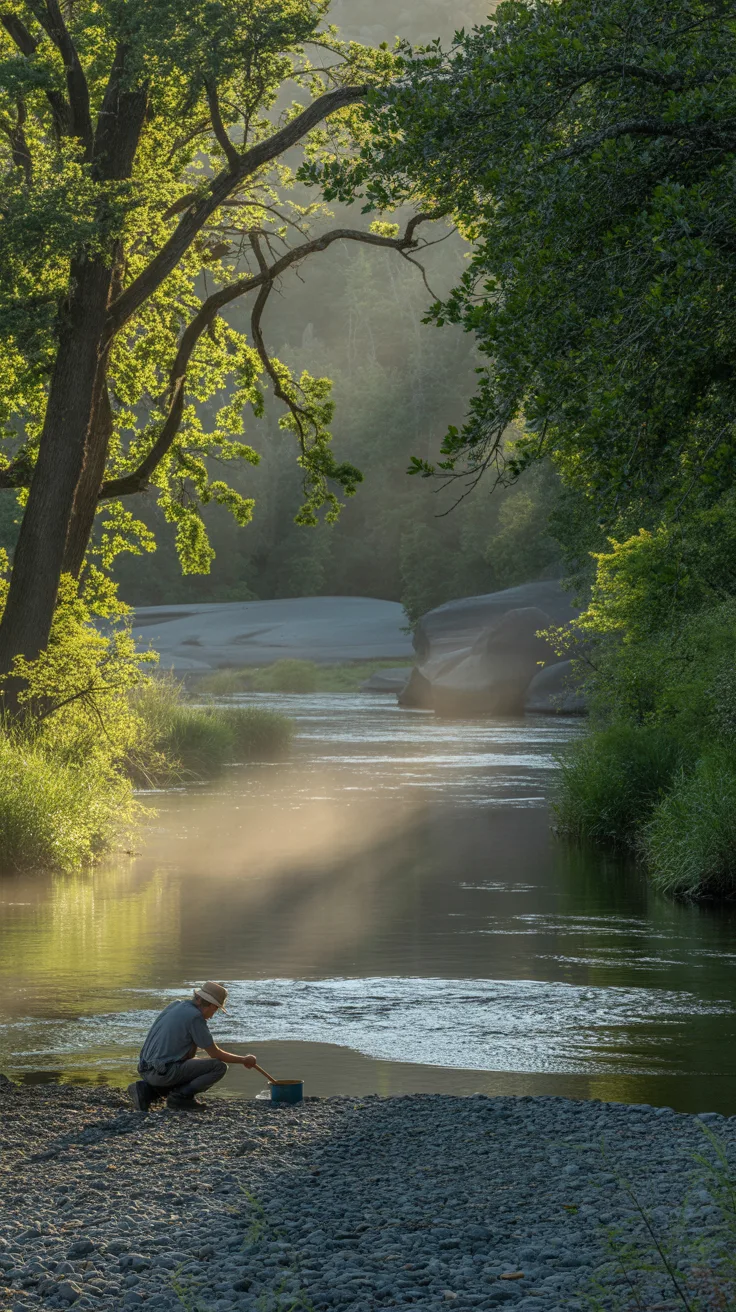
The Rogue River remains one of Oregon’s most productive gold-bearing waterways, with numerous access points that are often overlooked by casual prospectors. The river’s rich history dates back to the original Oregon gold rush, and its gravel bars continue to produce both fine gold and occasional nuggets.
Best Access Points:
- Grants Pass recreational mining areas
- Gold Ray Dam site
- Pleasant Creek confluence
- Galice Creek area
Optimal Prospecting Techniques:
| Method | Best Location | Expected Yield |
|---|---|---|
| Panning | Gravel bars | Fine gold, flakes |
| Sluicing | River bends | Mixed sizes |
| Metal detecting | Ancient terraces | Nuggets possible |
Tips for Success: Focus on areas where the river bends sharply, look for black sand deposits as a common gold indicator, check behind large boulders where gold often settles, and visit during low-water seasons (late summer and early fall) for easier access to exposed gravel bars.

View on AmazonAs an Amazon Associate, I earn from qualifying purchases.

View on AmazonAs an Amazon Associate, I earn from qualifying purchases.
2. Sumpter Valley: Oregon’s Gold Mining Legacy
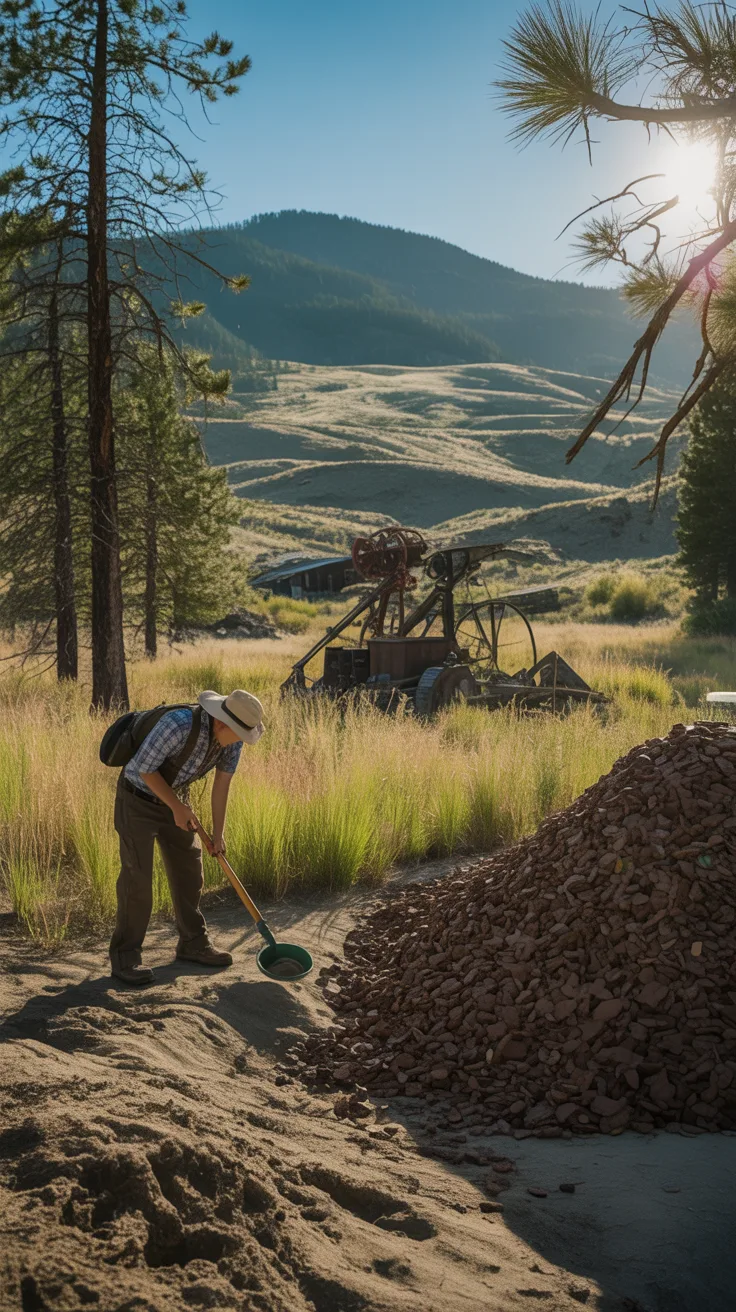
Sumpter Valley, located in Eastern Oregon, offers a unique combination of historical significance and modern prospecting opportunities. This area once hosted massive dredging operations, and the tailings still contain recoverable gold for today’s prospectors.
Essential Equipment:
- Gold pan and classifier
- Sluice box or highbanker
- Metal detector designed for gold detecting
- Digging tools and basic safety gear
- GPS device or mapping app for claim navigation
Seasonal Prospecting Guide:
| Season | Conditions | Recommended Activity |
|---|---|---|
| Spring | High water, cold | Metal detecting on tailings |
| Summer | Ideal conditions | Panning, sluicing, detecting |
| Fall | Low water | Crevicing, panning, fine sampling |
| Winter | Limited access | Research and trip planning |

View on AmazonAs an Amazon Associate, I earn from qualifying purchases.

View on AmazonAs an Amazon Associate, I earn from qualifying purchases.
The valley’s dredge tailings provide excellent opportunities for both traditional prospecting and metal detecting. Focus on areas where the original dredges might have missed, particularly along the edges of tailing piles and near bedrock exposures.
3. Quartzville Creek: A Modern Prospector’s Paradise
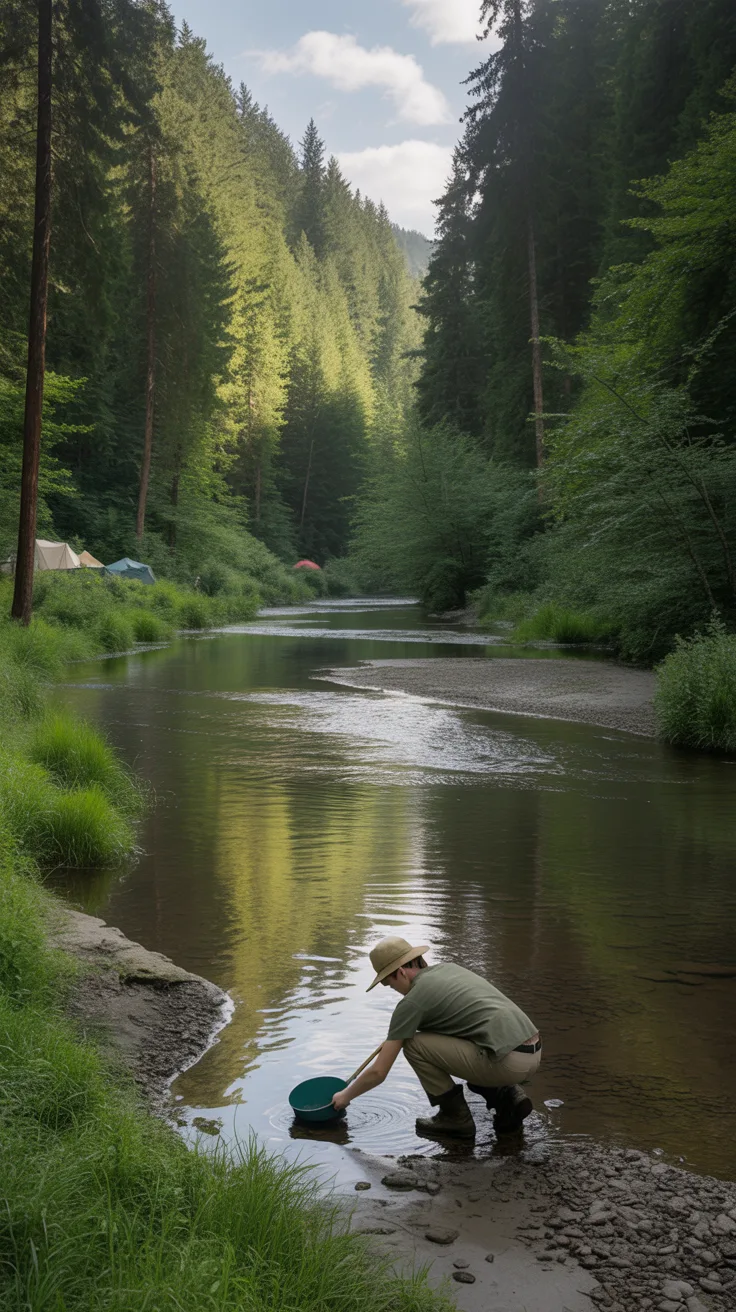
Quartzville Creek, designated as a recreational mining area, offers excellent opportunities for both beginners and experienced prospectors. Located in Linn County, this creek is known for its consistent gold production and relatively easy access.
Key Features:
- Designated recreational mining corridor
- Multiple camping locations nearby
- Seasonal road access depending on weather
- Known for producing both fine gold and the occasional small nugget
Prospecting Strategies:
- Work the inside bends of the creek where gold naturally settles out of the current
- Target exposed bedrock and cracks that act as natural gold traps
- Sample multiple spots before committing to one area for the day
- Watch for heavy black sand concentrations as a good sign you’re in the right zone

View on AmazonAs an Amazon Associate, I earn from qualifying purchases.

View on AmazonAs an Amazon Associate, I earn from qualifying purchases.
The creek’s geology creates numerous natural traps where gold accumulates, particularly in areas where the water flow changes direction or speed. The presence of quartz outcroppings in the area often indicates potential gold-bearing zones.
4. South Umpqua River’s Golden Waters
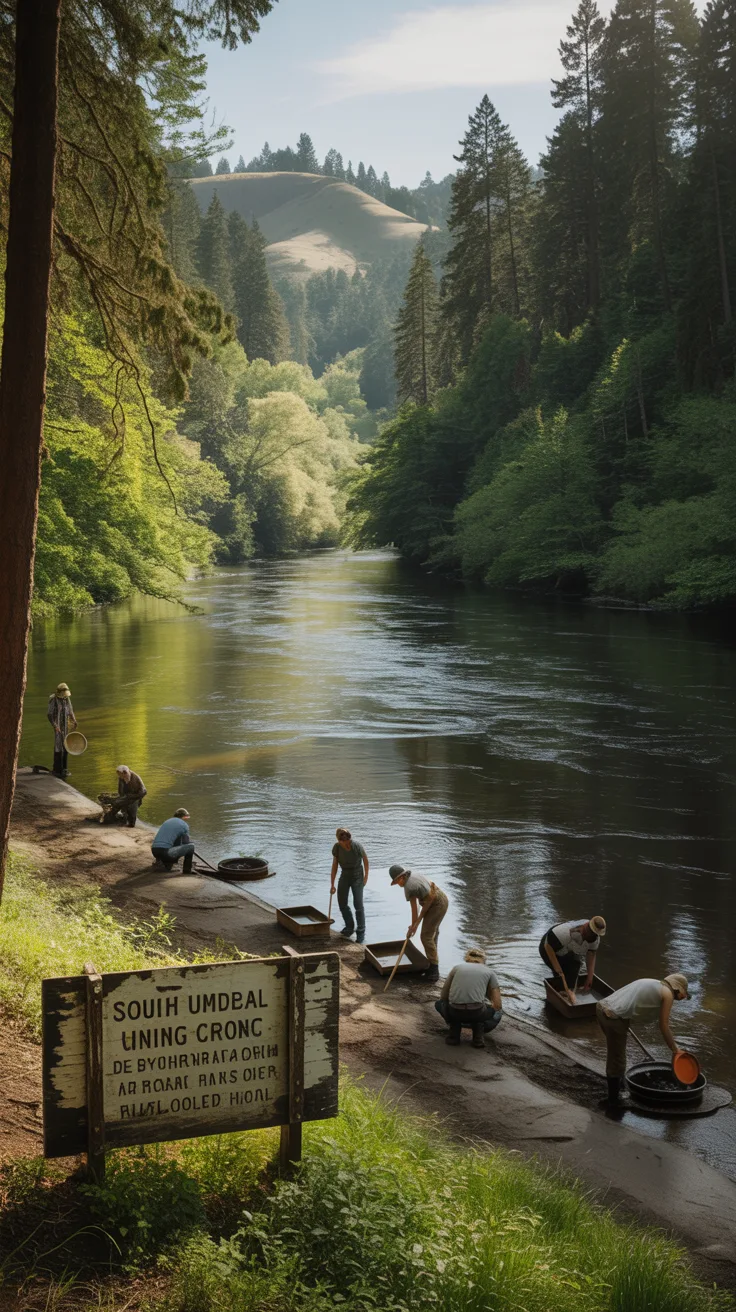
The South Umpqua River system offers some of the most accessible gold prospecting opportunities in southwestern Oregon. This area is particularly notable for its combination of historical mining sites and stretches of ground that still see relatively little pressure.
Location Highlights:
- Multiple public access points along the river
- Year-round prospecting possibilities, depending on water levels
- Rich mining history with documented gold production
- Suitable for panning, sluicing, and in some areas, detecting
Recommended Equipment Setup:
| Activity Level | Essential Equipment | Optional Gear |
|---|---|---|
| Beginner | Pan, classifier, small shovel | Snuffer bottle, vials |
| Intermediate | Sluice box, bucket, shovel | Lightweight metal detector |
| Advanced | Highbanker or small dredge where legal | Detailed mining maps and GPS |
Always confirm current regulations for dredging or motorized equipment in this watershed before planning a trip, as rules can change over time.
5. Burnt River Canyon: Eastern Oregon’s Golden Gateway
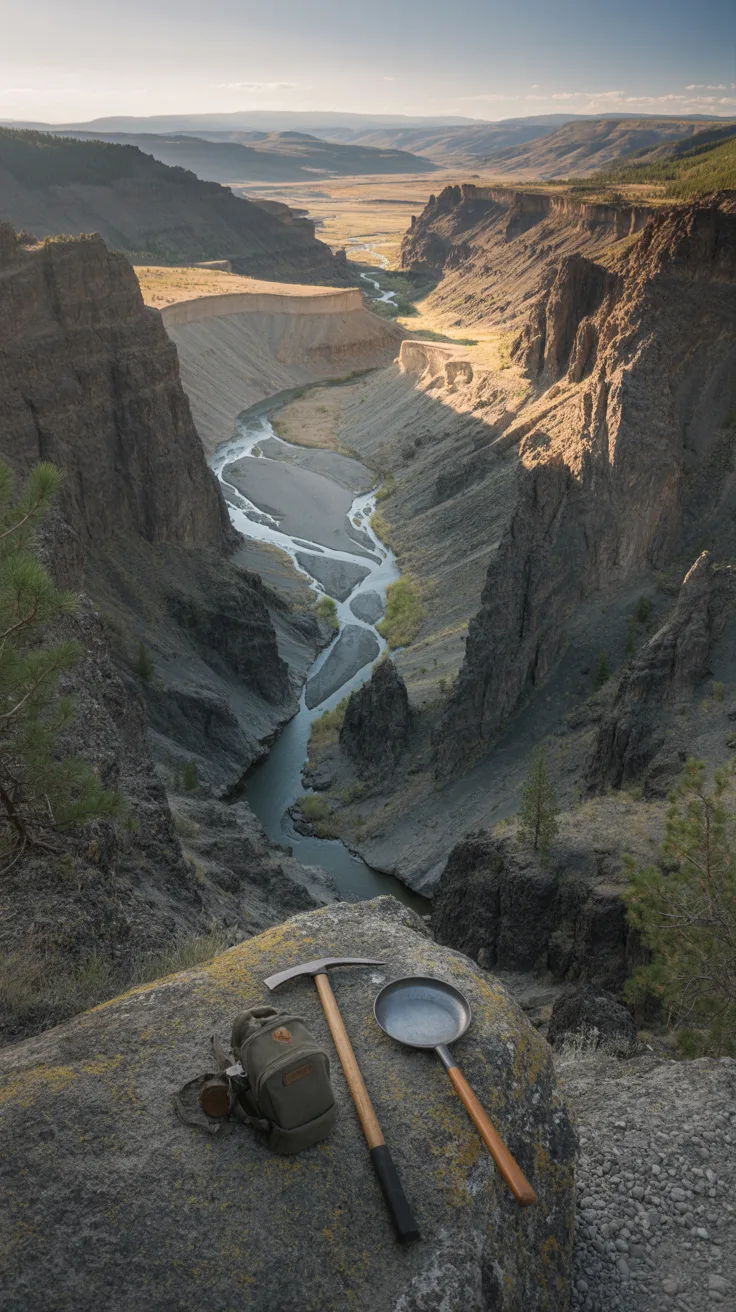
Burnt River Canyon represents one of Eastern Oregon’s most promising yet underutilized prospecting locations. The area’s unique geology and historical placer workings make it a prime target for modern prospectors willing to do some hiking and research.
Best Prospecting Locations:
- Canyon mouth and downstream benches
- Historical placer deposit zones
- Tributary confluences where smaller streams meet the main river
- Ancient river terraces above current water level
Success Strategies:
- Research old mining reports and historical claim maps before your trip
- Focus on areas with exposed bedrock and visible quartz veins
- Sample systematically upstream from promising gravel bars
- Pay attention to changes in river gradient, which often create natural gold traps
The canyon’s structure creates numerous pockets where gold can settle, especially in tight bends, behind large boulders, and in narrow chutes where water velocity changes.
6. Illinois River: Southwest Oregon’s Golden Gem
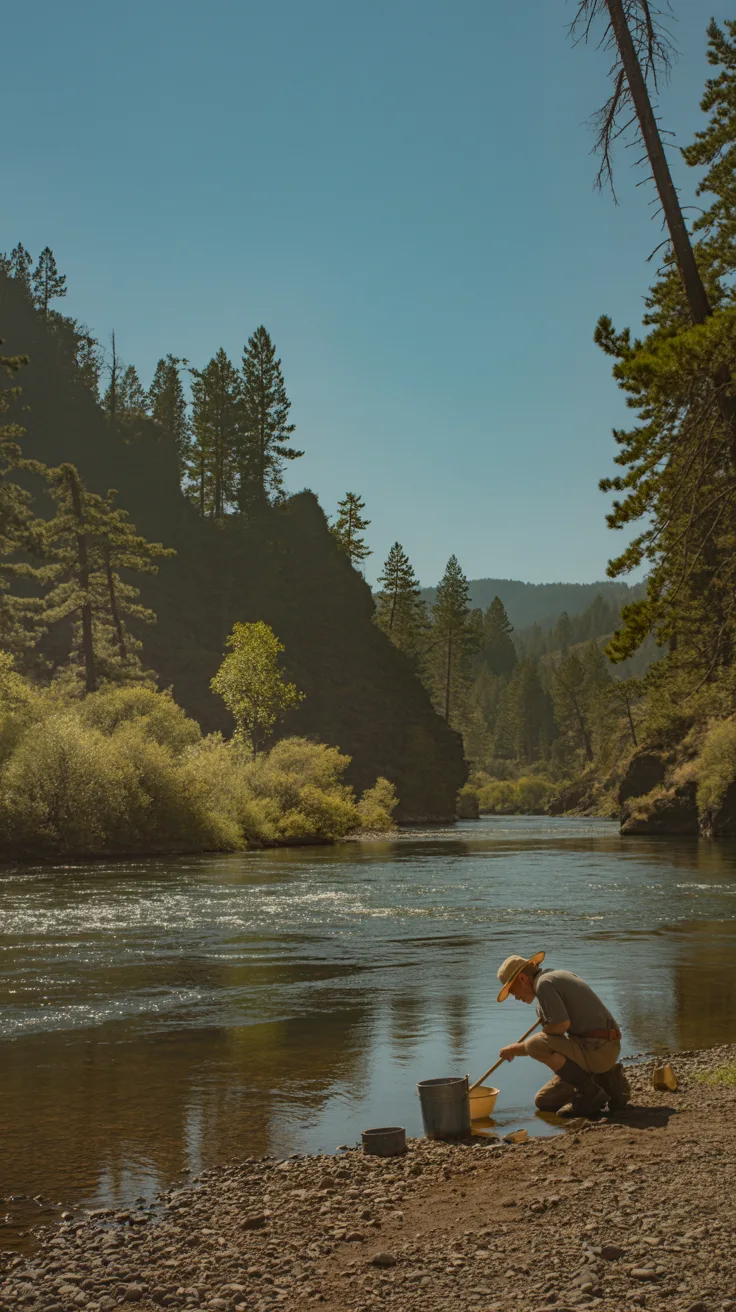
The Illinois River, a tributary of the Rogue, offers excellent prospecting opportunities with less competition than higher-profile locations. Its rugged, scenic character and remote stretches make it ideal for prospectors who enjoy a bit of adventure.
Seasonal Prospecting Calendar:
| Month | Water Level | Best Activities |
|---|---|---|
| March–May | High | Bank prospecting, scouting |
| June–September | Low | In-stream panning, sluicing, crevicing |
| October–November | Moderate | All methods, good for follow-up visits |
| December–February | Variable | Research, planning, limited fieldwork |
The river’s more remote access points often mean fewer people and more untouched gravels. Always be prepared with proper safety gear, maps, and plenty of supplies when exploring this region.
7. Powder River: Eastern Oregon’s Golden Stream
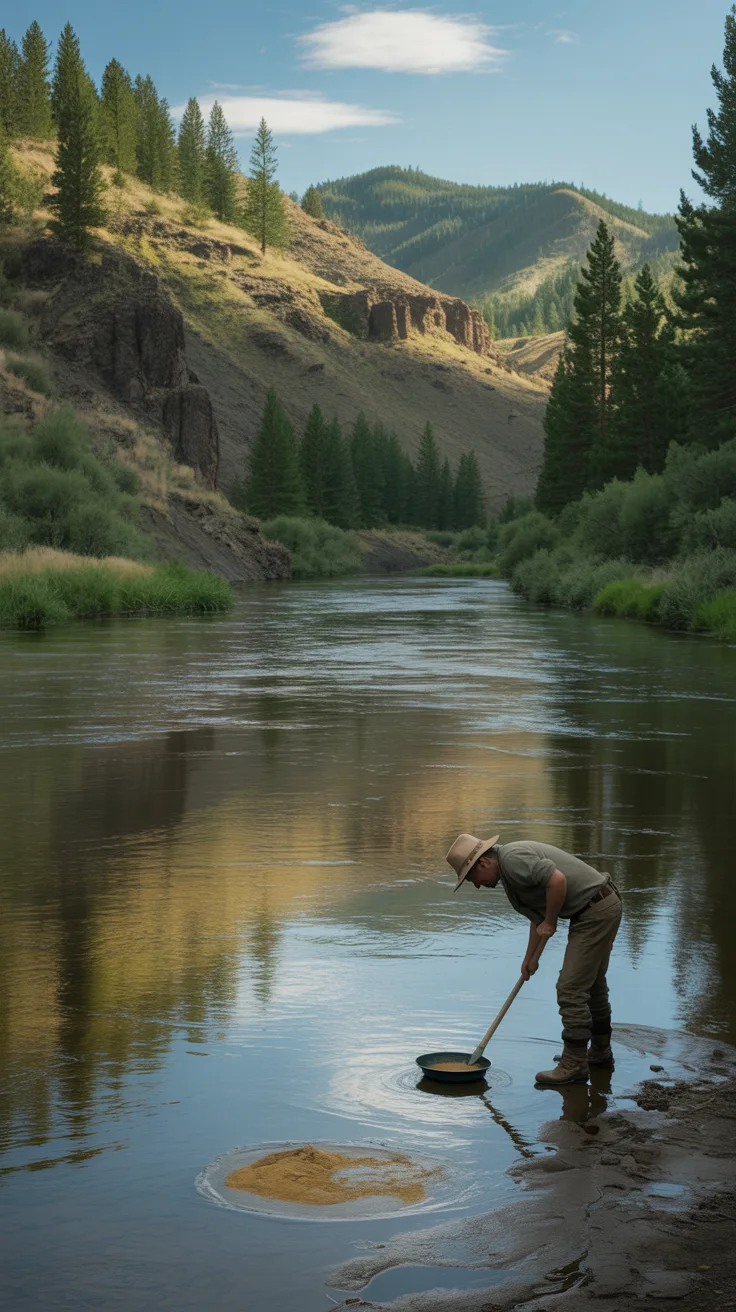
The Powder River region offers diverse prospecting opportunities, from easy-access recreational stretches to more challenging, remote locations. Its rich mining history and continued productivity make it a must-visit area for serious Oregon prospectors.
Key Success Factors:
- Understanding local geology and pay streak patterns
- Timing trips around favorable water levels
- Choosing the right equipment for the specific stretch you’re working
- Being aware of active mining claims and respecting boundaries
Location Access Tips:
- Check forest service roads for seasonal closures or washouts
- Obtain any required recreational mining permits before setting up equipment
- Use updated maps and GPS to verify you’re on open ground
- Pack extra water and be prepared for changing weather conditions
Conclusion
Oregon’s gold prospecting scene remains vibrant and rewarding for those willing to put in the time and effort. Each of these seven locations offers unique opportunities and challenges for prospectors of all skill levels. From the legendary Rogue River to the lesser-visited canyons of Eastern Oregon, there is still plenty of color to be found in the Beaver State.
Always follow local regulations, obtain any necessary permits, and practice responsible prospecting techniques. With solid research, good field habits, and patience, these hidden hotspots could yield your next golden discovery.
Key Takeaways
- Research land status and permitting requirements before prospecting any new location
- Match your equipment to the terrain, water levels, and your experience level
- Each hotspot has optimal seasons and preferred techniques
- Understanding local geology and natural gold traps dramatically improves success rates
- Responsible prospecting and minimal impact practices help keep areas open for future generations
Frequently Asked Questions
Do I need a permit to prospect for gold in Oregon?
Yes, many locations require at least a basic recreational mining permit, and some areas have additional rules or claim restrictions. Always check with the Oregon Department of Geology and Mineral Industries (DOGAMI) or local land managers for current regulations.
What is the best time of year to prospect in Oregon?
Late summer and early fall often provide the best conditions, with lower water levels exposing more gravel bars and bedrock. However, the ideal season can vary by location and elevation.
What basic equipment do I need to start gold prospecting?
Most beginners start with a gold pan, classifier, shovel, bucket, and snuffer bottle. As you gain experience, you can add a sluice box, crevicing tools, or a metal detector.
Can I keep the gold I find?
In most cases, yes, you can keep gold found on public lands where recreational prospecting is allowed and you’re following all regulations. Always verify land ownership, claim status, and rules before collecting.
Are these locations suitable for beginners?
Many of them are. Spots like Quartzville Creek and certain stretches of the Rogue River and South Umpqua are especially beginner-friendly, with good access and clear recreational mining guidelines.
How much gold can I realistically expect to find?
Most recreational prospectors find small amounts of fine gold and flakes, with occasional pickers or small nuggets. Think of it as a hobby and outdoor adventure first—the gold is a rewarding bonus.
Is metal detecting allowed in these areas?
Metal detecting is allowed in many regions but may be restricted in some historic or environmentally sensitive areas. Always confirm current regulations for detecting and excavation before you go.
What safety precautions should I take while prospecting?
Prospect with a partner when possible, carry a basic first aid kit, stay aware of weather and water conditions, avoid unstable banks and old mine workings, and let someone know your plans and expected return time.
Can I prospect year-round in Oregon?
Some lower-elevation areas can be prospected year-round, but access to higher elevations and remote sites is often limited in winter due to snow and road closures. Always check conditions before traveling.
How do I identify promising spots within a river or creek?
Look for inside bends, large boulders, narrow channels, exposed bedrock, and areas where the current slows down. These natural features often act as gold traps where heavier material like gold settles out.
