


Disclaimer: As an Amazon Associate, I earn from qualifying purchases. Links in this article may be affiliate links.
Introduction
Missouri might not be the first state that comes to mind when you think of gold prospecting, but hidden within its streams and rivers lies a fascinating opportunity for adventure and discovery. While the Show-Me State isn’t known for massive gold deposits like California or Alaska, dedicated prospectors can still find placer gold in various locations throughout the state. As someone who’s spent countless weekends exploring Missouri’s waterways with a gold pan in hand, I can tell you that the thrill of seeing even a tiny gold flake in the bottom of your pan makes the entire experience worthwhile. In this guide, we’ll explore seven of the best locations where you can try your luck at finding gold in Missouri, along with essential tips, techniques, and gear recommendations to boost your chances of success. If you’re just getting started, a simple gold panning kit for beginners is an easy way to grab everything you need for your first trip.
Understanding Missouri’s Gold History
Before we dive into specific locations, it’s important to understand that Missouri’s gold deposits differ from those found in traditional gold-rich states. Most of Missouri’s gold is glacial gold, deposited during the last ice age when glaciers carried gold-bearing material from Canada and northern states. This means the gold pieces are typically smaller, but they can be found in more numerous locations than you might expect—especially where water has sorted and concentrated heavy materials over time.
Types of Gold Found in Missouri
| Gold Type | Characteristics | Common Locations |
|---|---|---|
| Placer Gold | Fine flakes and occasional tiny pickers | River bends and gravel bars |
| Glacial Gold | Very fine particles (“flour gold”) | Ancient glacial deposits and reworked gravels |
| Lode Gold | Rare, embedded in rock | Quarries and mineralized zones |

View on AmazonAs an Amazon Associate, I earn from qualifying purchases.

View on AmazonAs an Amazon Associate, I earn from qualifying purchases.
Pro Tip: Because much of Missouri’s gold is extremely fine, a good classifier and a pan with fine riffles are worth the investment. A compact classifier sieve set makes it much easier to separate out bigger rocks so you can focus on the heavy black sands and tiny flakes that actually hold the gold.
7 Prime Locations for Gold in Missouri
All seven of these locations have produced gold for patient prospectors. The key is to work slowly, target the right parts of the river, and pay attention to how water flows and drops heavier material.
1. Black River
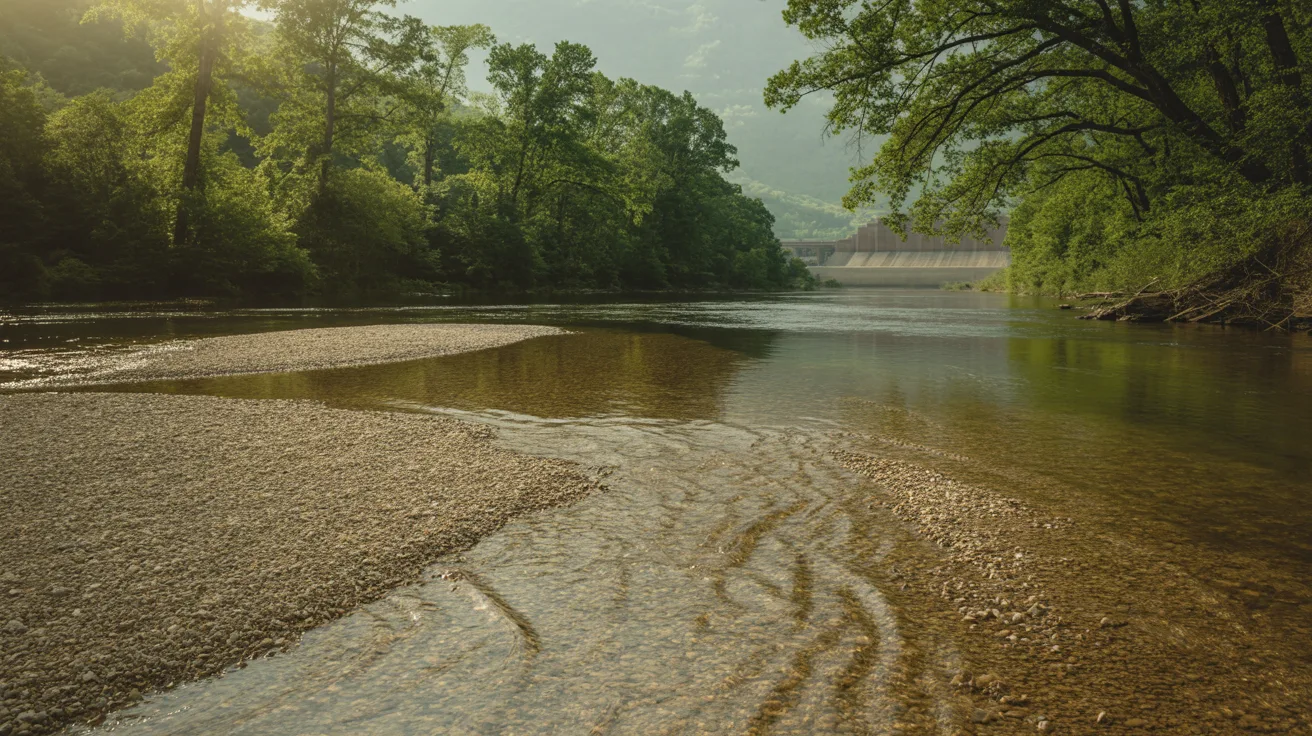
The Black River, particularly near Clearwater Dam, has been one of my favorite spots for gold panning. The river’s consistent flow and numerous gravel bars create perfect conditions for gold accumulation. The best results usually come from working the inside bends of the river, especially after spring rains have moved fresh material downstream. Take your time sampling several gravels bars until you find one with regular specks of color.
2. St. Francis River
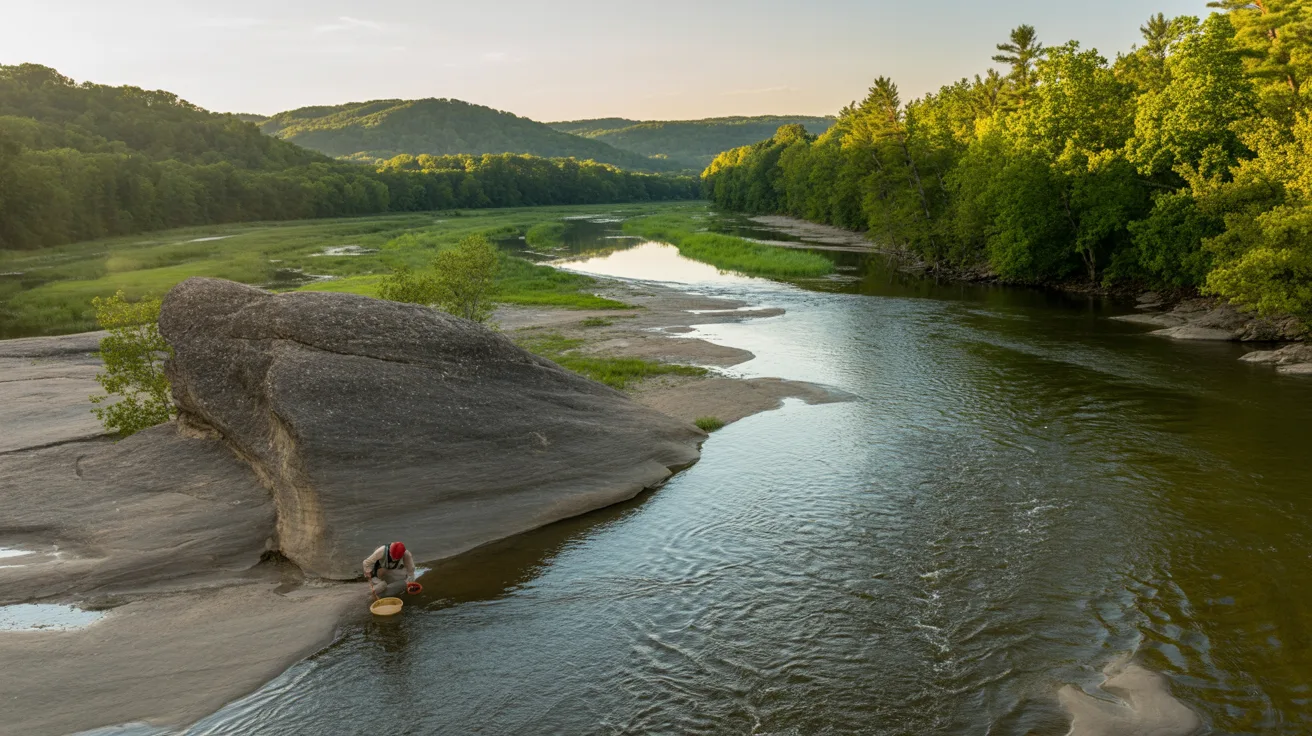
Located in southeastern Missouri, the St. Francis River offers excellent opportunities for gold prospecting. The area around Sam A. Baker State Park has yielded some interesting finds over the years. The river’s geology, with its ancient volcanic roots and exposed bedrock in some sections, makes it a prime location for both recreational prospectors and serious gold hunters. Focus on cracks in bedrock, behind boulders, and on the inside of sweeping bends.

View on AmazonAs an Amazon Associate, I earn from qualifying purchases.
View on AmazonAs an Amazon Associate, I earn from qualifying purchases.
3. Joachim Creek
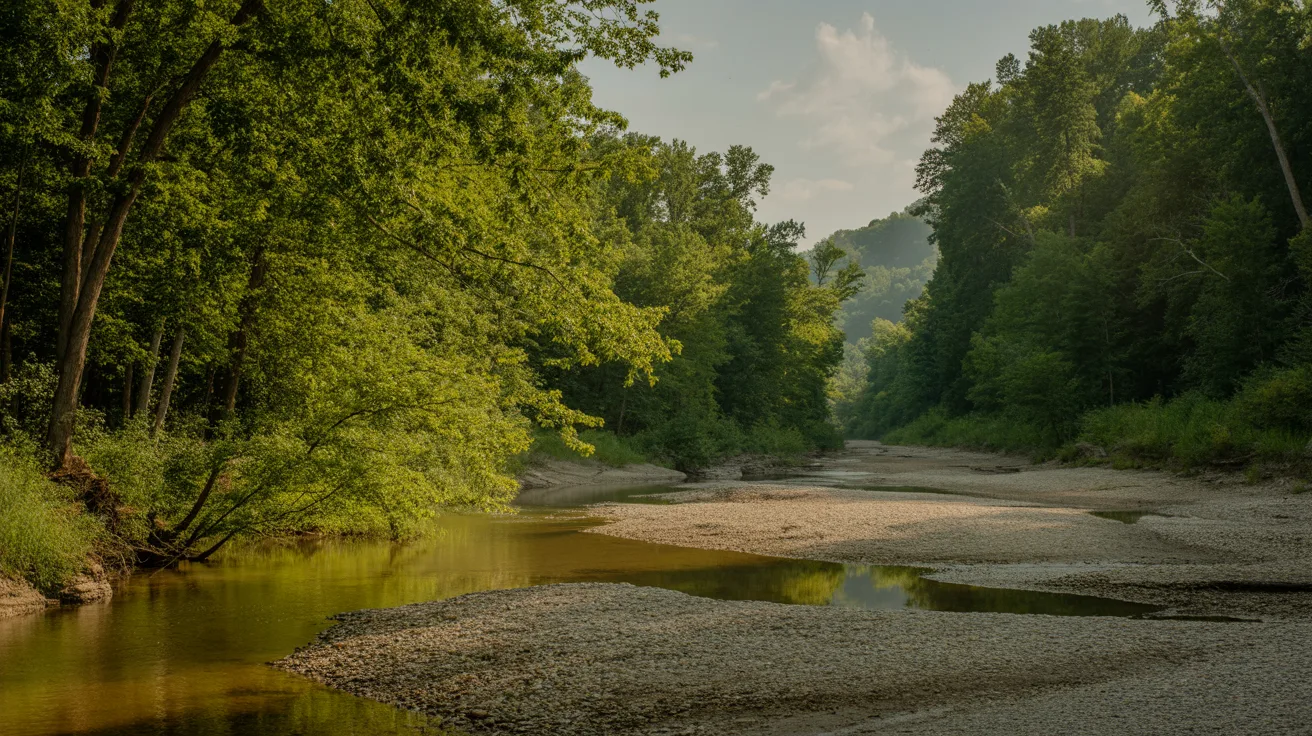
This lesser-known spot in Jefferson County has been a reliable location for finding fine gold. Joachim Creek’s meandering path through historical mining areas makes it particularly interesting for prospectors. I’ve had the best success here during late summer when water levels are lower and more gravel bars are exposed. Work the edges of those bars and dig down to denser, compacted layers rather than just skimming the surface gravels.
4. Big River
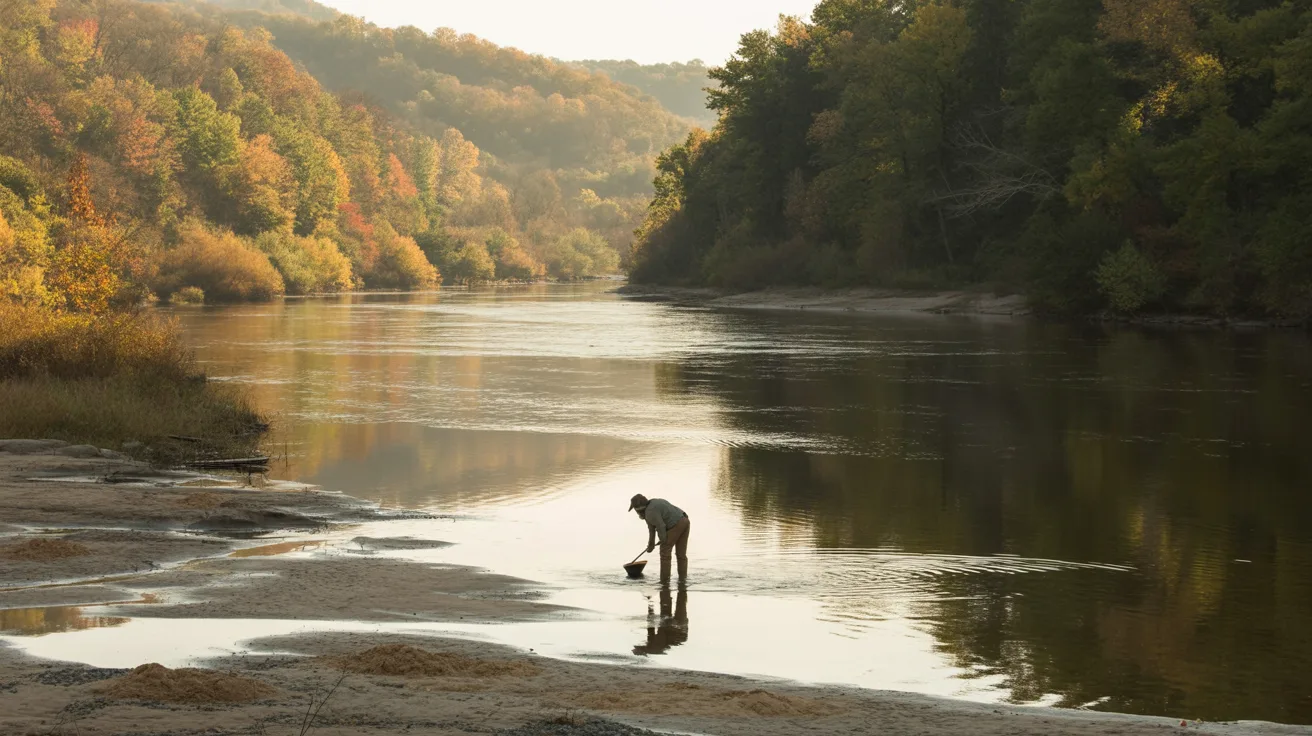
The Big River, especially near Bonne Terre, offers promising opportunities for gold panning. This area’s history of lead mining has created conditions where heavy minerals—including gold—can be found in the river’s sediments. Old mining tailings and reworked gravels often contain gold that early miners overlooked. Target inside bends, downstream of tailings piles, and areas where the river slows and drops its load.

View on AmazonAs an Amazon Associate, I earn from qualifying purchases.

View on AmazonAs an Amazon Associate, I earn from qualifying purchases.
5. Meramec River
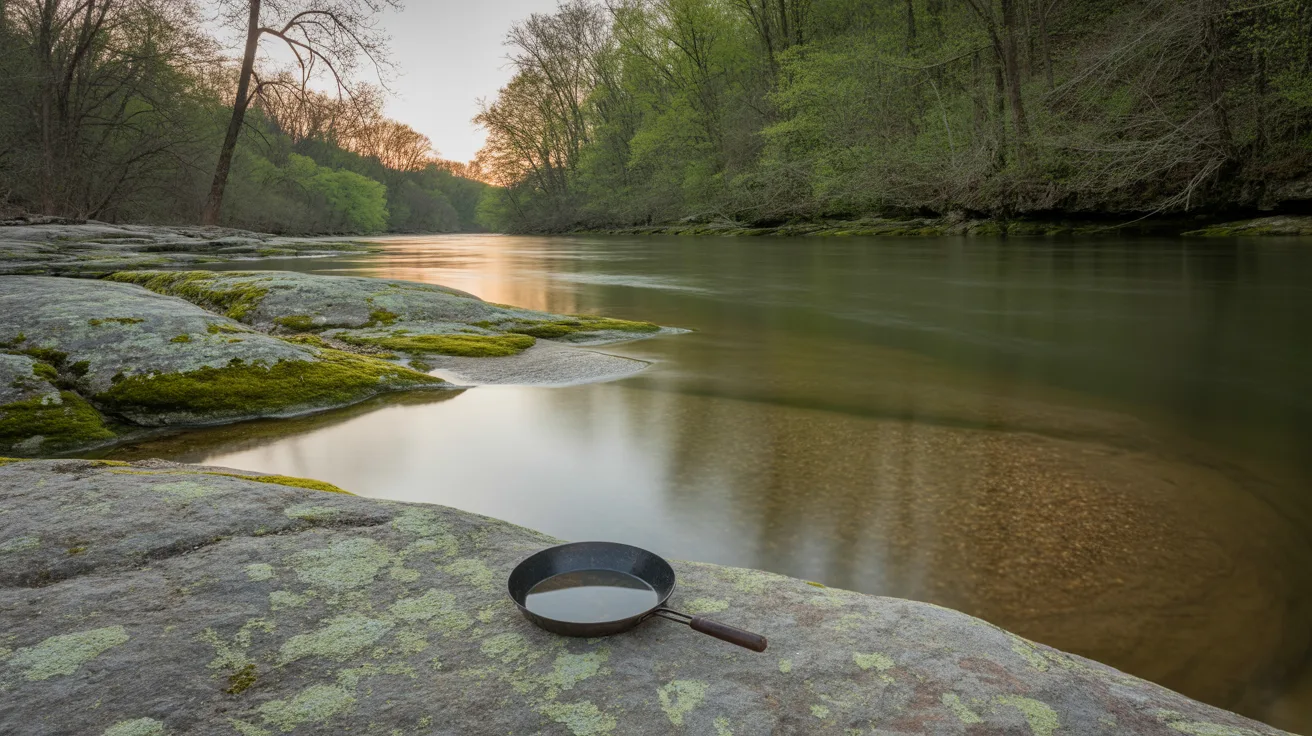
While primarily known for its recreational activities, the Meramec River holds secrets for patient prospectors. Focus on areas near old mining operations, bedrock outcrops, and confluence points where smaller streams join the main river. Early spring, after the winter thaw, is particularly productive here, as fresh material gets washed into natural gold traps like inside bends and behind obstructions.
6. Cuivre River
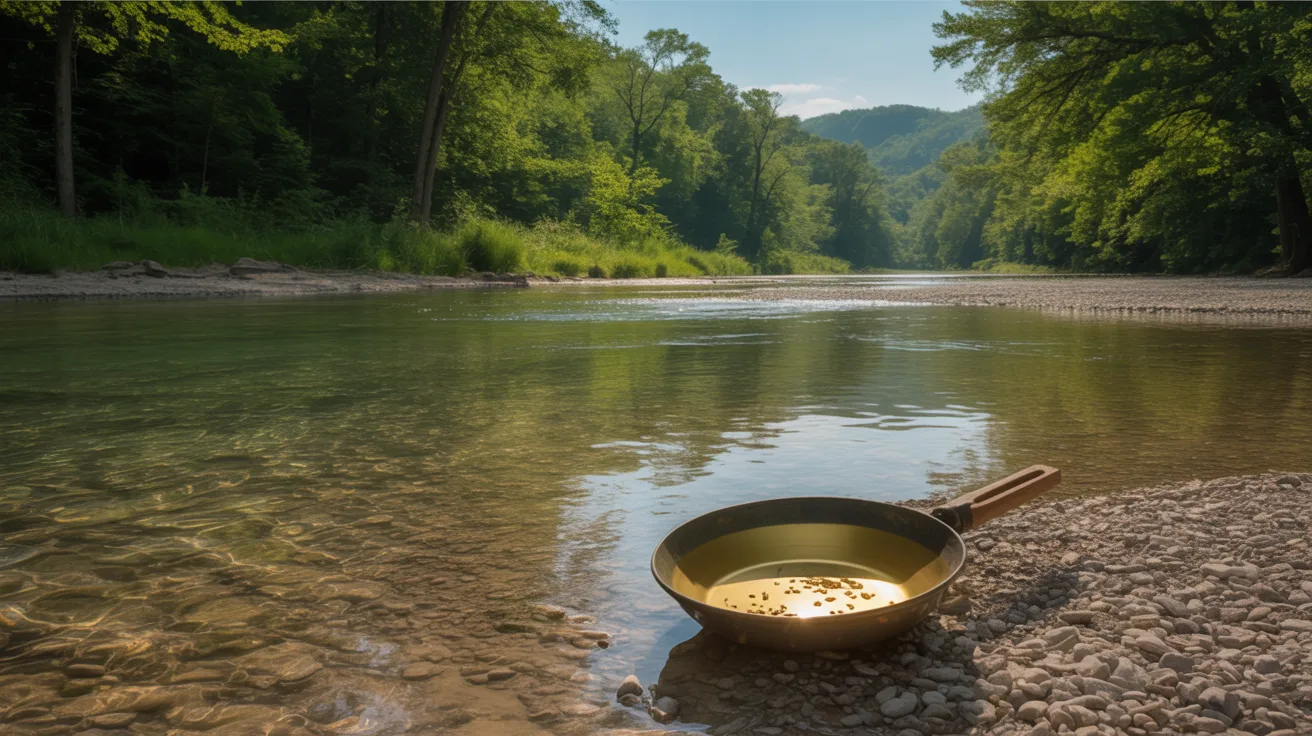
The Cuivre River area, particularly within Cuivre River State Park, offers good prospects for gold panning. The river’s gravel bars and connection to glacial deposits make it a worthwhile destination for both beginners and experienced prospectors. Stick to public-access areas, work the bars methodically, and look for patches of black sand that signal heavier material.

View on AmazonAs an Amazon Associate, I earn from qualifying purchases.

View on AmazonAs an Amazon Associate, I earn from qualifying purchases.
7. Mineral Fork Creek
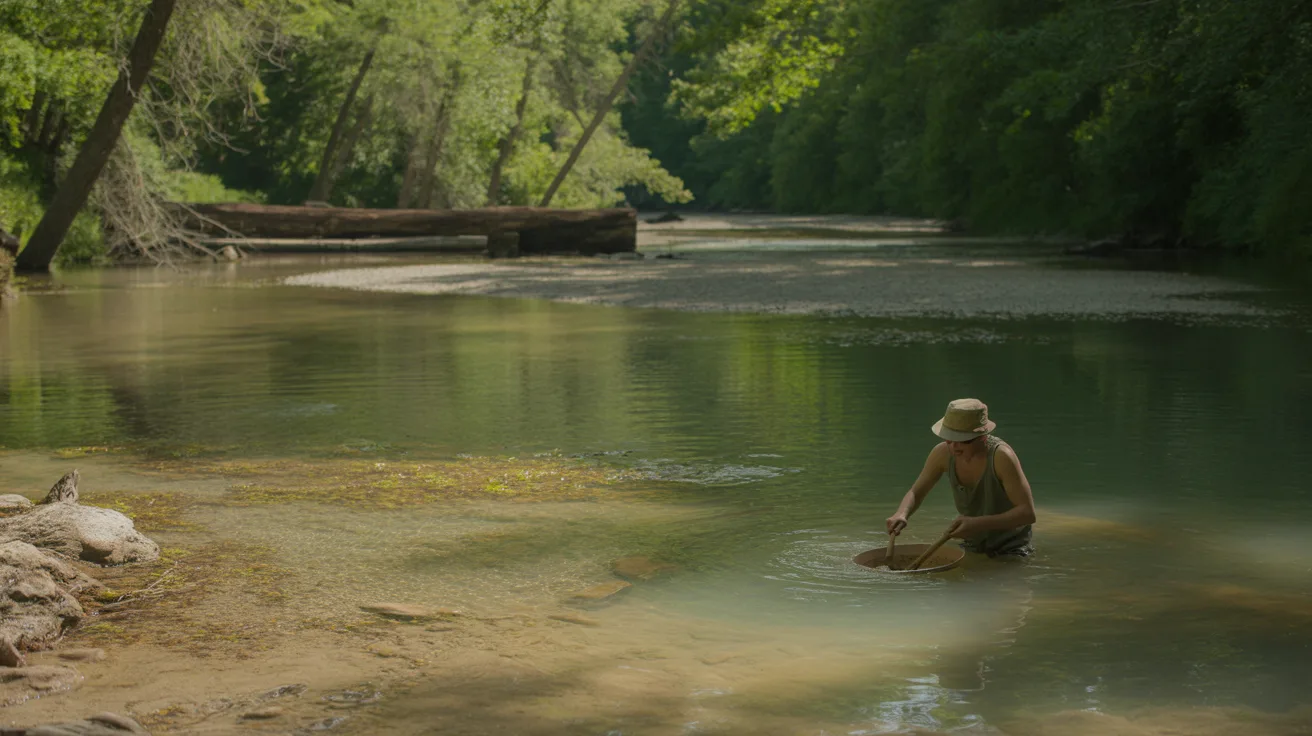
This tributary of the Big River has been known to yield interesting finds. The creek’s name hints at its mineral-rich nature, and its relatively peaceful flow makes it an excellent spot for practicing your panning techniques. Prospect along inside bends, around log jams, and anywhere the current slows enough to let heavy particles settle.
| Location | Best Season | Difficulty Level | Required Permits |
|---|---|---|---|
| Black River | Spring / Fall | Moderate | None on public access |
| St. Francis River | Summer | Easy | State park permissions may apply |
| Joachim Creek | Late Summer | Moderate | Local permission in some areas |
| Big River | Spring | Easy | None on public access |
| Meramec River | Spring / Fall | Moderate | None on public access |
| Cuivre River | Summer | Easy | State park permission/permit |
| Mineral Fork Creek | Summer / Fall | Challenging | Local permission |
Pro Tip: Missouri’s gold is often extremely fine, so you can lose a lot if you rush your clean-up. A dedicated cleanup pan or micro-riffle pan makes it much easier to separate gold from black sand. Look for a fine gold recovery pan if you want to squeeze every last flake out of your concentrates.
Essential Equipment for Missouri Gold Panning
Basic Equipment List
You don’t need a truckload of gear to get started in Missouri, but having the right tools will make your time on the water a lot more productive:
- Gold pan (12–14 inch size is a great all-around choice)
- Classifier sieve set for removing larger rocks
- Shovel (a collapsible or folding shovel is easier to pack)
- Snuffer bottle for sucking up fine gold
- Small vials or bottles for storing your finds
- Tweezers for picking out flakes and tiny pickers
- Safety gear (gloves, sturdy boots, sun protection)
- Basic first aid kit
Pro Tip: If you’re starting from scratch, it’s often cheaper and easier to buy a bundled gold panning kit that includes pans, classifiers, a snuffer, and vials instead of buying everything individually.
Advanced Equipment Considerations
Once you’re comfortable with the basics, a few “upgrade” tools can help you process more material and recover more of Missouri’s fine gold:
- Sluice box for processing larger volumes of gravel in flowing water
- Metal detector (for combining gold hunting with general detecting)
- Portable water pump (where regulations allow) for recirculating systems
- Cleanup pan or spiral wheel for final concentration
- Magnifying glass or loupe for examining tiny flakes and black sands
Pro Tip: A compact stream sluice is one of the best upgrades you can make once you know how to find decent gravel. Search for a sluice box gold prospecting kit that packs easily and includes riffle matting designed for fine gold.
Expert Tips for Successful Gold Panning in Missouri
Reading the River
Success in gold panning largely depends on your ability to read the river’s features. Gold is heavy, so it naturally collects where water slows down or is forced to drop its heavier load. Look for these key indicators:
- Inside bends where water velocity decreases and gravels pile up
- Natural barriers like boulders, log jams, and ledges that trap heavy materials
- Bedrock outcroppings and cracks that act like natural riffles
- Areas downstream from historic mining operations or old tailings
- Confluence points where smaller creeks join larger rivers
Seasonal Considerations
Each season offers different advantages and challenges for gold panning in Missouri:
| Season | Advantages | Challenges |
|---|---|---|
| Spring | Fresh deposits from spring rains and snowmelt | Higher water levels and stronger currents |
| Summer | Lower water levels and easier access to gravel bars | Heat, bugs, and occasional very low flows |
| Fall | Comfortable temperatures and stable water conditions | Shorter days and variable weather |
| Winter | Less competition and quieter rivers | Cold temperatures and limited access in some areas |
Pro Tip: In Missouri, spring and fall are usually the sweet spots—water is low enough to work gravels but still moving enough to keep things interesting. No matter the season, always keep an eye on the forecast and be aware of flash flood potential.
Conclusion
Gold panning in Missouri offers a unique blend of outdoor adventure and discovery. While you might not strike it rich, the experience of connecting with nature, learning to read the land, and understanding the state’s geological history makes it a rewarding hobby in its own right. With the right location, proper equipment, and a patient mindset, you can join the growing community of Missouri gold prospectors who find satisfaction in chasing tiny flashes of color in their pans.
Remember to respect private property rights, obtain any necessary permits, and follow leave-no-trace principles so these rivers and creeks remain healthy and accessible. Start with a basic pan and classifier, or grab a beginner-friendly gold prospecting kit, and you’ll have everything you need to see what Missouri’s waters are hiding.
Key Takeaways
- Missouri’s gold is primarily glacial in origin, resulting in smaller but more widespread deposits.
- The best locations combine historical mining areas with natural gold-trapping features like inside bends and bedrock.
- Proper equipment and careful technique matter more than any single “secret spot.”
- Seasonal timing can significantly impact water levels and your success rate.
- Always obtain necessary permits and permissions before prospecting and follow local regulations.
Frequently Asked Questions
Do I need a permit to pan for gold in Missouri?
While many public waterways don’t require specific permits for casual panning with hand tools, some locations—especially state parks and managed areas—may require permits or special permissions. Always check local regulations with the appropriate agency before you start prospecting.
What size gold can I expect to find in Missouri?
Most gold found in Missouri is fine “flour” gold or tiny flakes. Small pickers are possible, but larger nuggets are rare. Because of this, fine gold recovery techniques are especially important here.
What’s the best time of year for gold panning in Missouri?
Spring and fall typically offer the best conditions, with moderate water levels and comfortable temperatures. Summer can also be productive when water is lower and more gravel is exposed, but you’ll need to plan for heat and sun.
Can I keep the gold I find?
Yes, you can usually keep any gold you find on public lands where prospecting is allowed, as long as you’re following all rules and not operating commercially. Always verify specific regulations for the waterway you’re working.
How much does it cost to start gold panning?
Basic equipment—pan, classifier, snuffer bottle, and vials—typically costs between $50–$100, especially if you purchase a bundled kit. After that, your main “cost” is time and travel.
Is it possible to make money gold panning in Missouri?
Most people treat Missouri gold panning as a hobby rather than a source of income. While it’s possible to find enough gold to cover some of your costs, it’s best to pursue prospecting for fun, exploration, and the satisfaction of finding your own gold.
What safety precautions should I take?
Always work with a partner when possible, wear appropriate footwear, bring a first aid kit, stay hydrated, and be aware of rising water levels and changing weather conditions. Let someone know where you’re going and when you plan to return.
How can I tell real gold from fool’s gold?
Real gold is soft, heavy, and malleable. It won’t break or crumble when pressed, and it maintains its color in shadow. Pyrite (fool’s gold) is lighter, brittle, and often forms sharp crystals. When in doubt, test a small piece or ask a more experienced prospector.
What should I bring on my first gold panning trip?
Beyond your basic panning gear, bring water, snacks, sun protection, bug spray, a towel or change of clothes, and a small trash bag so you can pack out anything you bring in.
Are there any gold prospecting clubs in Missouri?
Yes, several prospecting clubs operate in Missouri and nearby states. Joining a club is a great way to learn from experienced prospectors, access group outings, and sometimes gain access to private claims.
